Trade disputes with Europe seen as top target for Trump's frustration
US troop reductions in Europe may accelerate amid security tensions
'Trump will seek scapegoats at home and abroad,' analysts warn
In an era when a single word from Donald Trump can shake global markets, keeping up with the flood of Trump news is no easy task. The Herald Business international desk, on the move from 5 a.m., cuts through the noise — from the latest Wall Street close to the Trump headlines most likely to move global assets — and delivers it all in a one-minute read. Subscribe at https://1day1trump.stibee.com/
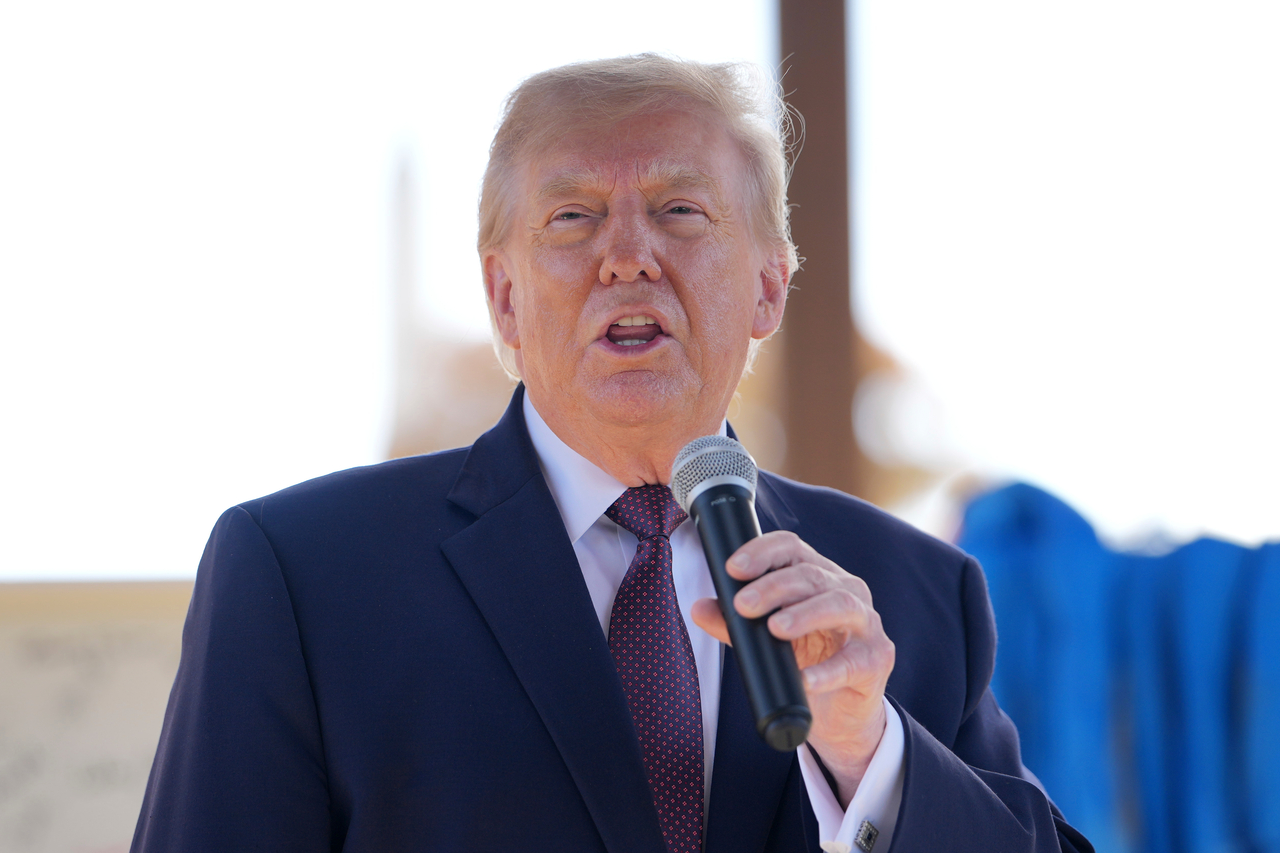
Analysts are increasingly warning that Donald Trump, reeling from a midterm election defeat, may take out his frustration on Europe.
Politico said Wednesday (local time) that "Europe is at risk of bearing the brunt of President Trump's frustration," identifying the continent as the most likely target for Trump to demonstrate that his power remains intact.
European outlet Euronews echoed that assessment the same day, warning that "Trump's defeat could make things difficult for Europe." It said Trump "may pivot even further toward foreign policy — where presidential discretion is far greater — to reclaim the initiative and cement his legacy," now that his domestic agenda faces stiff resistance in Congress. One EU diplomat told Euronews: "He could become a 'mad dog' rather than a 'lame duck.' The mood is quite realistic. Nobody expects the current problems to go away."
The Financial Times struck a similar tone, reporting that "Europe is trying to stay the course to avoid a backlash from a wounded Trump."
▶ Trade seen as top outlet for Trump's anger toward Europe
Analysts widely expect any Trump backlash against Europe to resurface first as a trade dispute. Bernd Lange, chair of the European Parliament's trade committee, backed that view, warning that the "lame duck" could turn into an "angry duck." He said Trump offers "neither stability nor predictability" and predicted the president could push tariffs on European pharmaceuticals and industrial goods as a pressure tactic.
Analysts widely expect any Trump backlash against Europe to resurface first as a trade dispute. Bernd Lange, chair of the European Parliament's trade committee, backed that view, warning that the "lame duck" could turn into an "angry duck." He said Trump offers "neither stability nor predictability" and predicted the president could push tariffs on European pharmaceuticals and industrial goods as a pressure tactic.
Wolfgang Ischinger, chair of the Munich Security Conference, who argued at the MSC in February that the Trump administration was undermining the global order, advised Europe to "prepare for greater discord and more demands from Trump, not a more friendly transatlantic relationship."
Daniela Schwarzer, dean of the Hertie School of Governance in Berlin, warned that a defeated Trump "may try to reverse his domestic loss of power through foreign policy," adding that it was difficult to predict how Trump would behave in the wake of the election loss.
Brando Benifei, an Italian center-left lawmaker who chairs the European Parliament's committee on US relations, said Trump would "pursue a far more erratic foreign policy over the next two years, making things difficult for Europe," adding that "his decisions on Ukraine and the Middle East will have an enormous impact on us."
▶ Security issues also in the crosshairs
The reduction and redeployment of US troops in Europe, which has been gaining momentum this year, could also become a vehicle for Trump to vent his anger. The US Department of Defense announced in May that it would cut 5,000 troops stationed in Germany and has been reviewing broader redeployment options.
The reduction and redeployment of US troops in Europe, which has been gaining momentum this year, could also become a vehicle for Trump to vent his anger. The US Department of Defense announced in May that it would cut 5,000 troops stationed in Germany and has been reviewing broader redeployment options.
Trump has long accused NATO member states of free-riding on American security and has even raised the prospect of withdrawing from the alliance, pressing Europe to shoulder more of the defense burden. Within NATO, there are concerns that Trump may cut troop numbers in Europe further to rally his core supporters. Former US Ambassador to NATO Kurt Volker pushed back on that view, however, arguing that "the question of NATO withdrawal or troop reductions will not change significantly — Trump is isolated within the United States on this issue," noting that Trump's position on security diverges from broader American public opinion.
Even as the election confirmed American public opposition to Trump's approach, analysts note that the underlying reality has not changed: Europe can no longer rely on the United States for its security and must build up its own defense capabilities.
David McAllister, chair of the European Parliament's foreign affairs committee, told Euronews that "a shift in the balance of power does not guarantee change," adding that "Europe must continue to do more for its own defense and security."
▶ Democratic win offers little immediate relief on Ukraine support
For Europe, which has shouldered a growing share of military and fiscal support for Ukraine since the Trump administration took office, the Democratic gains in the midterms do not translate into immediate relief. Trump still holds veto power and other tools to neutralize congressional decisions, and foreign policy, security and trade are areas where the president retains wide discretionary authority.
Bronwen Maddox, director of Chatham House, said that "even if the Democrats decide to begin providing support, including funding, for Ukraine, it could take months or even years to materialize," adding that "it is hard to expect immediate salvation for Volodymyr Zelensky."
Fabian Zuleeg, CEO of the European Policy Centre, wrote in a blog post that "Trump will seek scapegoats at home and abroad, even if constrained by economic realities," and that "Europe and Ukraine must prepare for the possibility of negotiations with Russia based on a transit deal."
Germany, which has become Ukraine's largest supporter since Trump cut off US aid funding, said it would continue to work with the Trump administration. Defense Minister Boris Pistorius, speaking at the Berlin Security Conference that day, said he did not know what plans Trump had but that "the German government will maintain contact with both Democrats and Republicans."
kate01@heraldcorp.com