No provision to channel fines into fund; budget office flags stability concerns
National Tax Service reward budget up 41.98 billion won; Korea Customs Service allocation jumps 21-fold
Fair Trade Commission victim-relief projects questioned over overlap and relevance
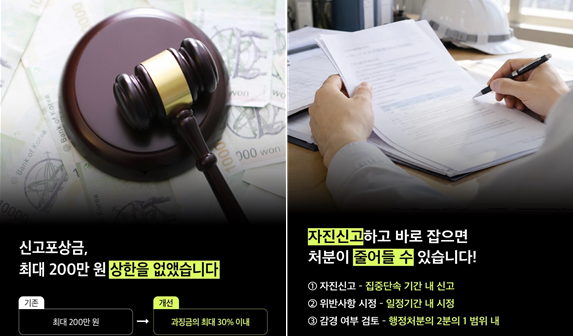
A proposed 300 billion won ($224 million) public-interest whistleblower incentive fund — designed to consolidate reward programs scattered across 17 government agencies — is facing questions over its funding structure before it even gets off the ground. Although the fund is premised on channeling fines collected through whistleblower tips into reward payments, the reward account would in fact draw entirely from the general budget. The National Assembly Budget Office has called on the government to reconsider whether a separate fund is necessary at all, and to shore up the justification for sharply increased reward budgets at the National Tax Service and Korea Customs Service.
According to the budget office's agency-by-agency analysis of the 2027 budget proposal released Thursday, the government plans to establish a public-interest whistleblower incentive fund totaling 305.5 billion won under the Ministry of Planning and Budget next year. The plan is contingent on the enactment of a bill introduced in September by Democratic Party of Korea lawmaker Jo In-cheol.
The fund would consist of two accounts: one for reward payments and another for indirect relief to victims of unfair business practices. The idea is to pool reward resources currently managed separately by each ministry and to buffer against potential shortfalls when large-scale illegal activity is uncovered.
No fine-revenue link, full reliance on general budget: 'Reconsider the need'
The central issue is that monetary penalties secured through whistleblower reports would not flow directly into the fund. The bill designates as funding sources government contributions, transfers from the general account, investment returns, clawbacks of overpaid rewards, and borrowings from the Public Fund Management Fund — but contains no provision requiring that fines or other monetary sanctions levied on the basis of tips be deposited into the fund.
As a result, the entire 294.6 billion won earmarked for the reward account next year would come from general-account transfers. The budget office concluded it is difficult to regard this as the "specific dedicated revenue" that the National Finance Act requires as a condition for establishing a fund. Citing insufficient linkage between the fund's revenue sources and its stated purpose, as well as weak long-term financing stability, the office said the government "needs to reconsider whether establishing a new fund is necessary."
The office also argued that the desire to consolidate reward programs does not by itself justify creating a separate fund. It noted that streamlining payment standards and procedures while managing the relevant programs together within the general budget could equally address the inefficiencies of fragmented agency-by-agency operations.
Creating a new fund would also add administrative costs for drafting management plans, conducting audits, and overseeing performance. The office flagged a further concern: because the Ministry of Planning and Budget would manage the fund while 17 agencies execute the 21 individual reward programs, responsibility for allocating resources and carrying out programs would be split.
The Ministry of Planning and Budget said it opted to set general-account transfer amounts by factoring in fine-collection results and actual reward payment demand, rather than earmarking a fixed share of penalty revenue directly, because fine-collection figures are too volatile. It added that pooling reward programs from multiple agencies would spread the risk from fluctuations in payment demand.
NTS reward budget up more than 40 billion won; customs agency's allocation jumps 21-fold
The budget office also raised concerns about individual agencies' reward allocations. The National Tax Service's reward budget for public-interest tax reporting next year stands at 58.59 billion won, up 41.98 billion won from 16.62 billion won this year. The figure covers rewards for reporting tax evasion and hidden assets, among other categories. The reward budget for reporting borrowed-name bank accounts also rises from 737 million won this year to 2.84 billion won next year, an increase of 2.1 billion won.
The NTS said the increase reflects higher demand following policy changes including the removal of caps on reward payments, but the budget office said the underlying calculations are not sufficiently supported. It noted that the agency applied last year's elevated tax-collection growth rate — itself inflated by a base effect from the prior year — when projecting the tax-evasion reward budget, and did not adequately account for the lag between a tip being filed and a reward actually being paid.
For the borrowed-name account reward, the NTS projected 2,737 payment cases next year — roughly 1.9 times the highest annual figure recorded over the past five years, which was 1,434 cases. The budget office said the agency needs to provide concrete grounds for expecting such a large increase.
The Korea Customs Service's reward budget for smuggling reports next year comes to 17.48 billion won, 21.2 times this year's 824 million won. The jump follows a September overhaul of the reward system that removed caps on payouts for smuggling and drug trafficking reports and tripled the maximum reward for internal whistleblowers.
The budget office highlighted that, based on last year's data, an average of 270 days elapsed between a report being filed and a reward being paid. It said the agency should calculate next year's actual funding needs by accounting for that lag and for a policy change that allows deferred payment to the following year when funds run short. It also called for detailed calculations to support the additional budget requested for bonus rewards on major cases and internal tips.
Victim-relief projects that the Korea Fair Trade Commission included in the fund also came under scrutiny. The commission budgeted 24.82 billion won for whistleblower rewards, along with 3.11 billion won for consumer victim relief and 1.5 billion won for small and medium-sized enterprise victim relief.
The budget office said it is unclear whether post-litigation support programs are directly connected to the fund's stated purpose of encouraging public-interest reporting. It particularly noted that the SME victim-relief budget duplicates an existing general-account contribution program run through the Korea Fair Trade Mediation Agency, and said the overlap needs to be resolved.
fact0514@heraldcorp.com