Seoul sales prices up 0.07%, narrowing from previous week
Gangnam falls 0.39%, Seocho drops 0.37% as declines deepen
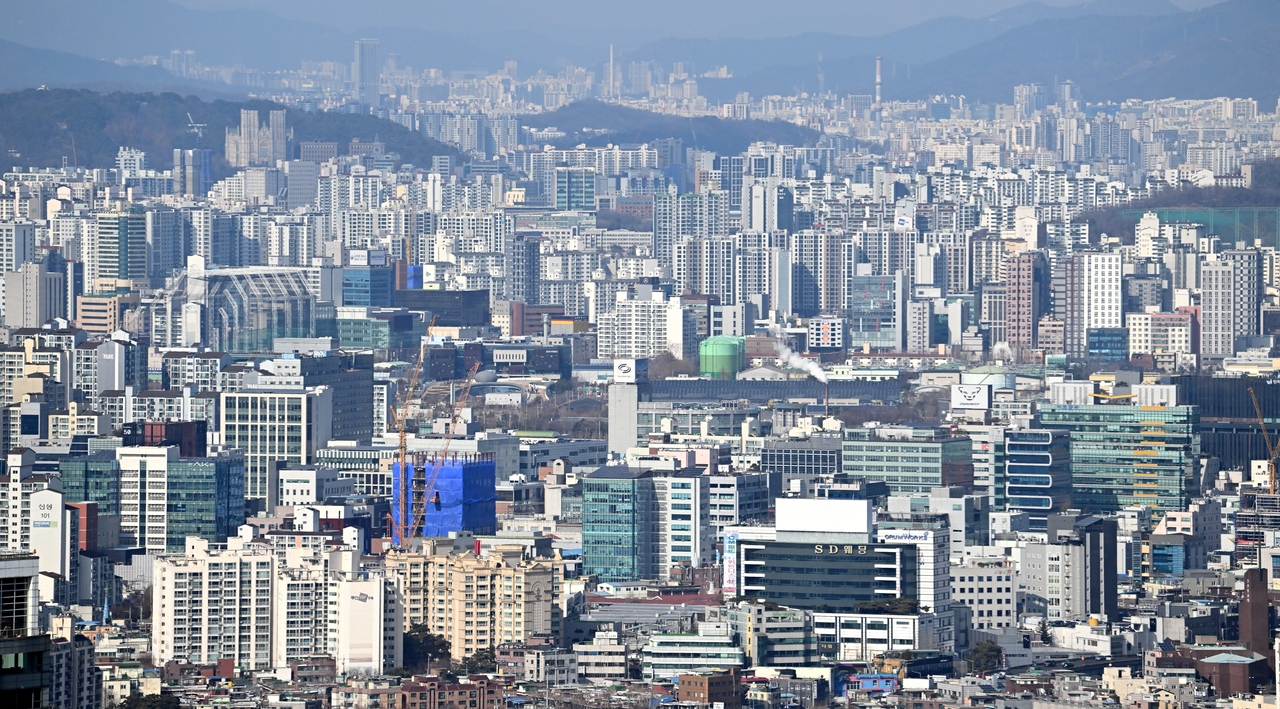
Seoul apartment prices rose for the 91st consecutive week, even as the three major Gangnam districts — Gangnam-gu, Seocho-gu and Songpa-gu — extended their declines, with gains in the city's outer neighborhoods driving the overall increase. In Gyeonggi Province, southern areas including Yongin's Giheung district and Gunpo continued to outperform.
According to the Korea Real Estate Board's weekly apartment price survey for the first week of November 2026 (based on Monday's data), Seoul apartment prices rose 0.07% this week. The pace of gains eased from the previous week's 0.09%, but the upward streak has now stretched to 91 weeks.
Outer Seoul neighborhoods led the advance for the second consecutive week. Seodaemun-gu posted the city's highest gain at 0.31%, driven by sales contracts for small- and mid-sized units in Hongeun-dong and Namgajwa-dong. Geumcheon-gu rose 0.3%, led by Siheung-dong and Doksan-dong, while Seongbuk-gu also gained 0.3%, with transit-oriented areas in Donam-dong and Jeongneung-dong leading the way. Jungnang-gu climbed 0.28% on the back of major complexes in Myeonmok-dong and Sinnae-dong, and Gangbuk-gu advanced 0.26%, with Mia-dong and Beon-dong driving gains.
The three Gangnam districts, however, deepened their declines. Gangnam-gu's drop widened from 0.37% to 0.39%, led by large complexes in Apgujeong-dong and Gaepo-dong. Seocho-gu's decline expanded from 0.35% to 0.37%, with Banpo-dong and Jamwon-dong leading the fall. Songpa-gu fell 0.17%, pulled down by Jamsil-dong and Munjeong-dong.
A Korea Real Estate Board official said price-adjusted listings emerged in some complexes, generating downward transactions, while upward contracts were signed in large complexes and transit-oriented areas where demand remained strong. "Mixed movements by district resulted in an overall gain for Seoul as a whole," the official said.
In Gyeonggi Province, Giheung district in Yongin — widely regarded as a core part of the semiconductor belt — rose 0.65%, led by major complexes in Mabook-dong and Dongbaek-dong. Gunpo, which sits outside the regulated zone, gained 0.57% on small- and mid-sized units in Sanbon-dong and Geumjeong-dong. Anyang's Dongan district climbed 0.55%, driven by large complexes in Hogye-dong and Gwanyang-dong.
Meanwhile, Seoul jeonse prices rose 0.17%, matching the previous week's pace. Seongbuk-gu led with a 0.41% gain, concentrated in Gireum-dong and Donam-dong, followed by Nowon-gu at 0.37% on large complexes in Wolgye-dong and Sanggye-dong. Dongdaemun-gu rose 0.29% in Jeonnong-dong and Jangan-dong, while Seongdong-gu gained 0.28% on small- and mid-sized units in Seongsu-dong 1-ga and Hawangsimnidong. Gangbuk-gu also advanced 0.25%, led by Mia-dong and Suyu-dong.
Songpa-gu fell 0.05% in jeonse prices, with reconstruction-targeted complexes in Jamsil-dong and units in Garak-dong leading the decline. Seocho-gu edged down 0.01%, with Jamwon-dong and Banpo-dong softening.
In Gyeonggi Province, Giheung district in Yongin saw jeonse prices rise 0.47%, led by major complexes in Yeongdeok-dong and Jungdong. Hwaseong's Dongtan district gained 0.36% on recently built units in Cheongye-dong and Mokdong, while Gwangmyeong rose 0.33%, driven by Haan-dong and Cheolsan-dong.
hss@heraldcorp.com