Agrivoltaic Business Act takes effect Dec. 17
Shading rate below 30%, structure height at least 2.5 meters
Song Mi-ryeong: 'An energy transition that protects farming'
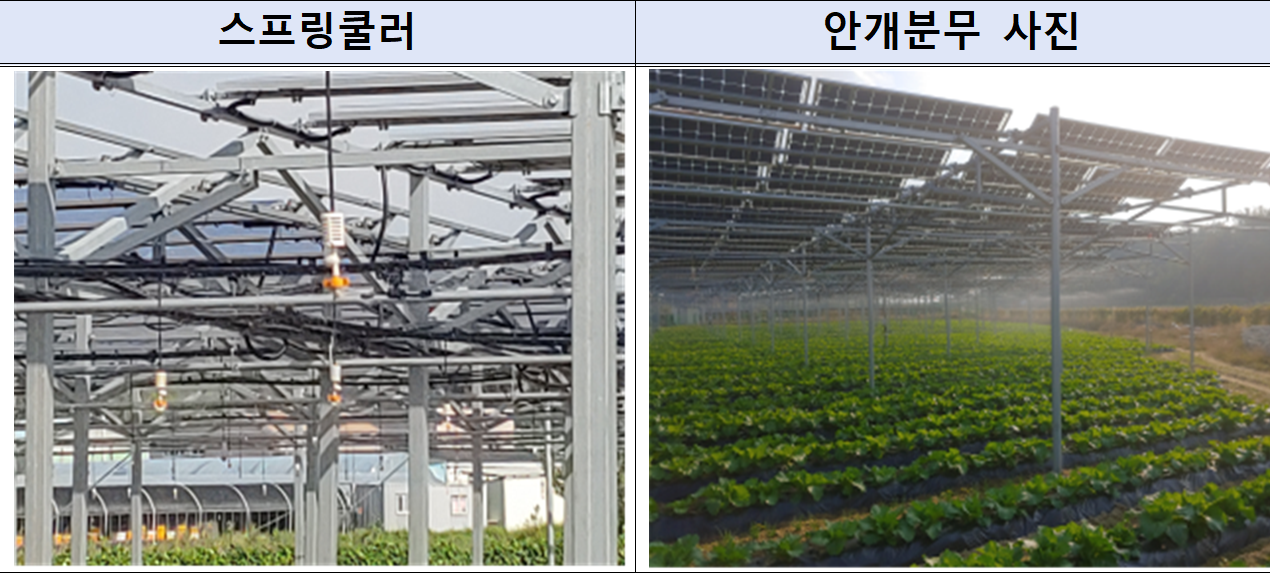
Starting next month, farmers will be able to earn income from solar power generation while continuing to work their land under a new agrivoltaic regime. Even with solar installations in place, farmers must cultivate at least 80 percent of the total project site. The government also plans to set installation standards to ensure solar equipment does not interfere with crop production.
The Ministry of Agriculture, Food and Rural Affairs said it held an "Agrivoltaic Harmony Forum" on Friday in Cheongju, North Chungcheong Province, with about 220 participants including farmers, local government officials, relevant agencies and experts.
The event was organized to explain the government's policy direction and project participation criteria ahead of the Dec. 17 implementation of the Agrivoltaic Business Act. It marked the first time the government has held a direct dialogue with farmers specifically on the subject of agrivoltaics.
Agrivoltaics refers to a system in which solar panels installed above farmland generate electricity while crops are grown below. The model has drawn attention as a new income source for farmers, as it allows them to maintain agricultural production while earning additional revenue from power generation.
The Agrivoltaic Business Act, enacted in June, is set to take effect Dec. 17. The ministry is preparing subordinate regulations in time for the launch, working to spell out the farming obligations of power project operators, procedures for gathering residents' opinions, and mechanisms for returning a share of power revenues to local communities.
The central standard the government has put forward requires farming on at least 80 percent of a project site's total area. The intent is to ensure agricultural production continues even when farmland is used for solar power generation.
Installation standards for solar equipment will also be established. The ministry said it plans to cap the shading rate of solar panels below 30 percent, set a minimum structural height of 2.5 meters, and require at least 4 meters of spacing between support posts — all to secure adequate space for crop growth and agricultural machinery operations.
Plans for sharing power revenues with local communities will also be fleshed out. The ministry said it intends to include in the subordinate regulations the procedures and methods for gathering residents' input, as well as mechanisms for resident-participation cooperatives and agricultural corporations to return power revenues to local communities.
At the forum, farmers raised a range of questions about what to watch out for during project preparation and about the equipment installation standards. The ministry said that because farming and power generation must run in parallel over the long term, thorough review before joining a project is essential.
Once the subordinate regulations are finalized, standard manuals and educational materials will be provided to farmers and local government officials. The ministry said it will offer guidance on eligibility requirements for operators and project sites, the power business licensing process, and required documentation.
Agriculture Minister Song Mi-ryeong said agrivoltaics "should not be a power business that replaces farming, but an opportunity to sustain agriculture while raising farmers' new income," stressing the importance of an energy transition that protects farming.
Song added that the ministry would "draw on the diverse field opinions raised at this event to develop agrivoltaic guidelines and farmer education programs, and push for the establishment of a farmer-centered agrivoltaic regime," pledging to "continue cooperating with relevant agencies and local governments for a stable rollout."
adastra@heraldcorp.com