Forum on proposed youth income deduction held as youth issues rise on political agenda
Speakers suggest adding a dedicated youth deduction under the income tax law's additional deduction provisions
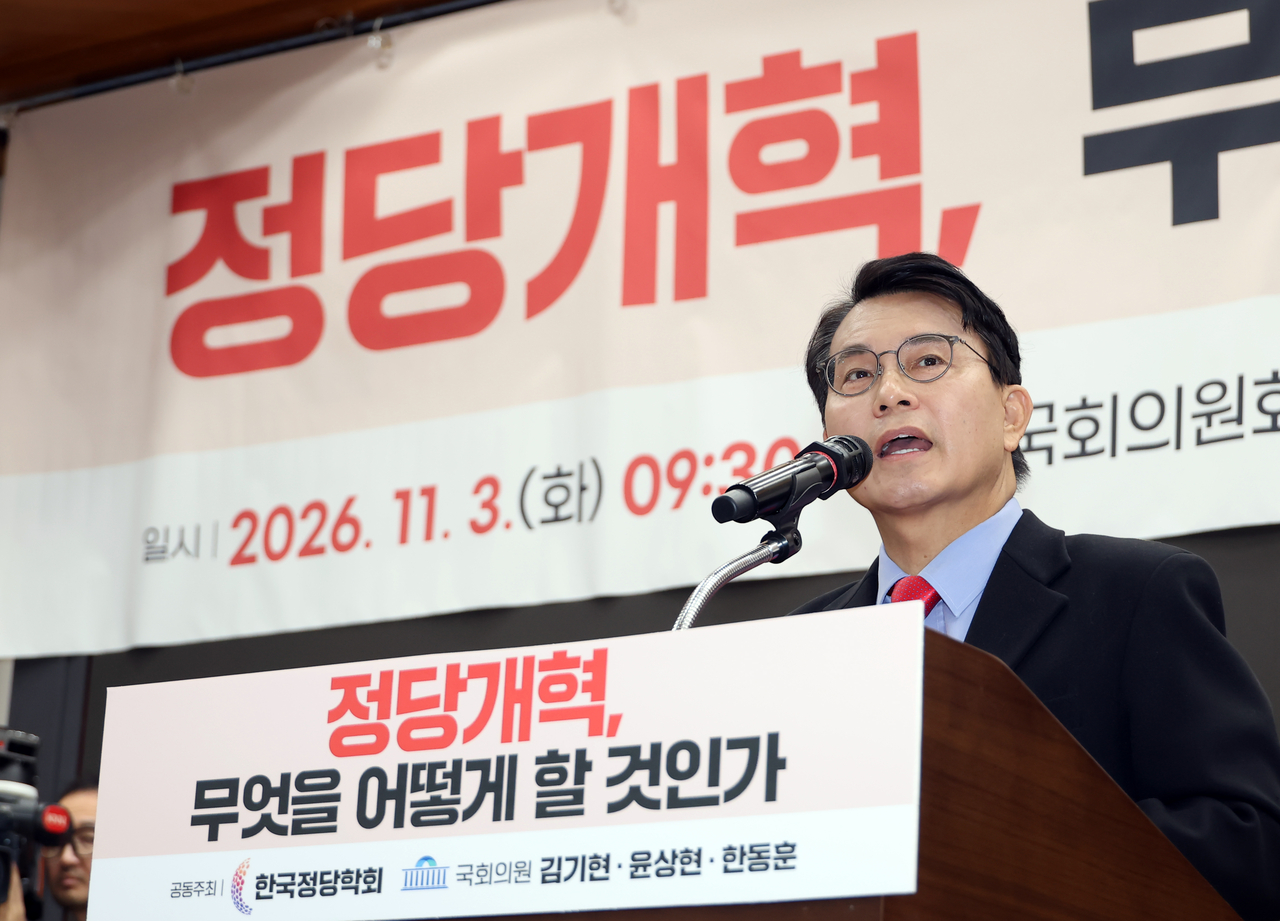
People Power Party lawmaker Yoon Sang-hyun hosted a forum on a proposed youth income deduction Friday, as youth issues have emerged as a major social concern and political parties compete to roll out a wave of youth-related policies.
The forum, held at the National Assembly Members' Office Building, focused on legislative directions and system design challenges aimed at easing the tax burden on young people early in their working lives and filling gaps in existing tax support for employment and entrepreneurship.
Yoon said the barriers to employment and the cost of living keep rising, making it difficult for young people to sustain their lifestyle and build assets on their wages alone. "We need to find ways to ease the burden at the start of working life so that young people's efforts can lead to genuine independence," he said.
Turning to the government's youth asset-building support policies, Yoon said support programs spread across multiple ministries are overly complex, and that frequent policy changes with each new administration have created confusion. He added that even savings accumulated over three to five years tend to be spent on marriage or residential costs, making it difficult for young people to build long-term assets in any meaningful way.
As an alternative, Yoon proposed introducing a youth income deduction to increase the disposable income young people can actually use, going beyond support through short-term savings products.
He noted that tax support is currently available for young people employed at small and medium-sized enterprises, but said the scope of that support is not broad enough. "We need to find ways to preserve the intent of existing support while also easing the tax burden on young people who fall outside it," he said.
Yoon called for establishing an income deduction system that benefits a wider range of young people, saying the youth income deduction must be created through amendments to relevant legislation.
He also noted that young people who are employed can receive income deductions, while those without jobs cannot. "We also need to think about supplementary measures for young people who cannot get sufficient help through tax support alone," he said.
Park Sung-ho, a professor at Konkuk University who presented at the forum, proposed adding a dedicated youth deduction under the additional deduction provisions of the income tax law. Under the proposal, young workers and self-employed individuals aged 19 to 34 at the end of their first qualifying year would receive an income deduction of 3 million won ($2,240) per year for five consecutive years, with the deduction phasing out for those earning more than 50 million won annually and eliminated entirely for those earning 70 million won or more.
Park also presented a tax credit of 300,000 won per year as a comparative alternative, saying the method of introducing the system should be determined after reviewing the actual distribution of beneficiaries and the fiscal cost involved.
Yoon said he plans to pursue the creation of a youth income deduction by reviewing the eligible recipients, deduction method and application period based on the opinions presented at the forum.
He also said he intends to draft legislation that takes into account equity with existing tax support and fiscal burden, so that young people can receive practical help at the start of their working lives and build a foundation for independence.
shindw@heraldcorp.com