PEM electrolysis and other production technologies on display
Passenger, commercial and rail mobility solutions exhibited
Test rides, academy sessions among side events
Group joins global hydrogen industry conference to discuss investment and international cooperation
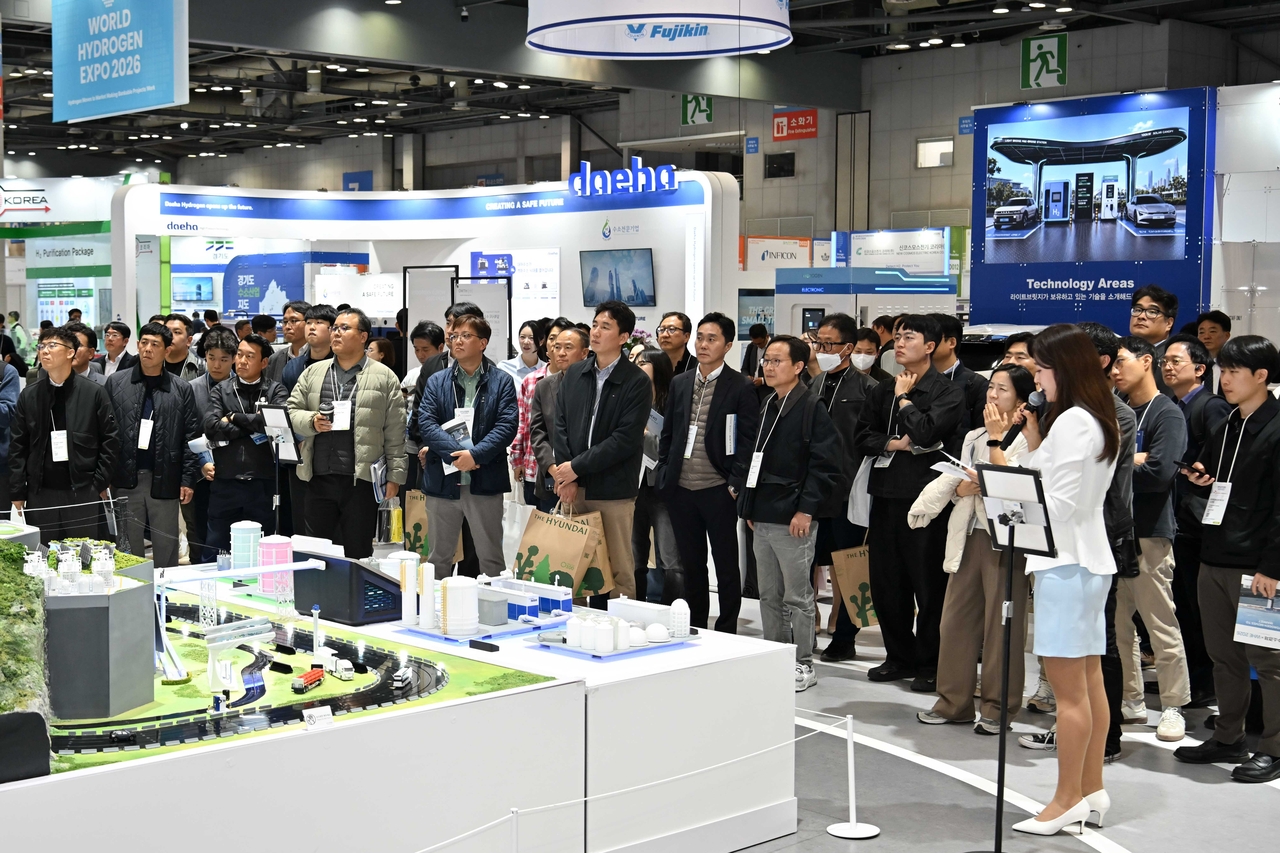
Hyundai Motor Group announced Sunday that it successfully concluded its participation in World Hydrogen Expo 2026, held Wednesday through Friday at Kintex in Goyang, Gyeonggi Province.
Now in its seventh edition, WHE 2026 is the largest hydrogen industry business event in the Asia-Pacific region, combining a trade exhibition with an international conference.
Held under the slogan "Hydrogen Moves to Market: Making Bankable Projects Work," the event drew 197 companies and institutions from 12 countries. Over three days, more than 18,600 visitors attended — including Vice Minister of Climate, Environment and Energy Lee Ho-hyun and National Assembly members Lee Jong-bae and Ahn Ho-young — to follow the latest hydrogen technology trends and take part in hands-on programs.
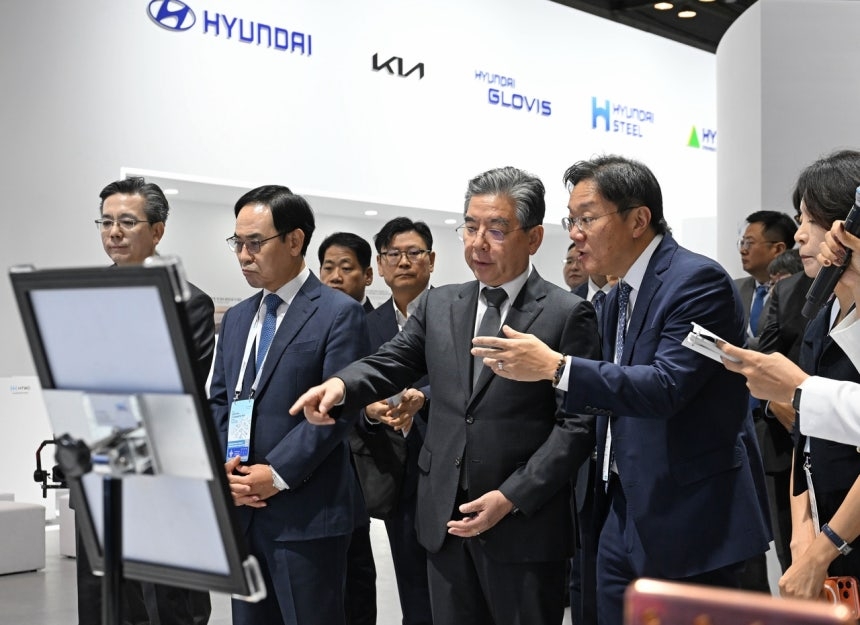
At the event, Hyundai Motor Group set up a 720-square-meter pavilion and unveiled for the first time a 5-megawatt-class electrolyzer stack module (ESM) configuration, an enhanced-durability commercial fuel cell system, the BlueLink Uptime Care fleet management solution, a hydrogen fuel cell vehicle automatic charging robot (ACR-H) and a diorama of the Saemangeum AI Valley concept.
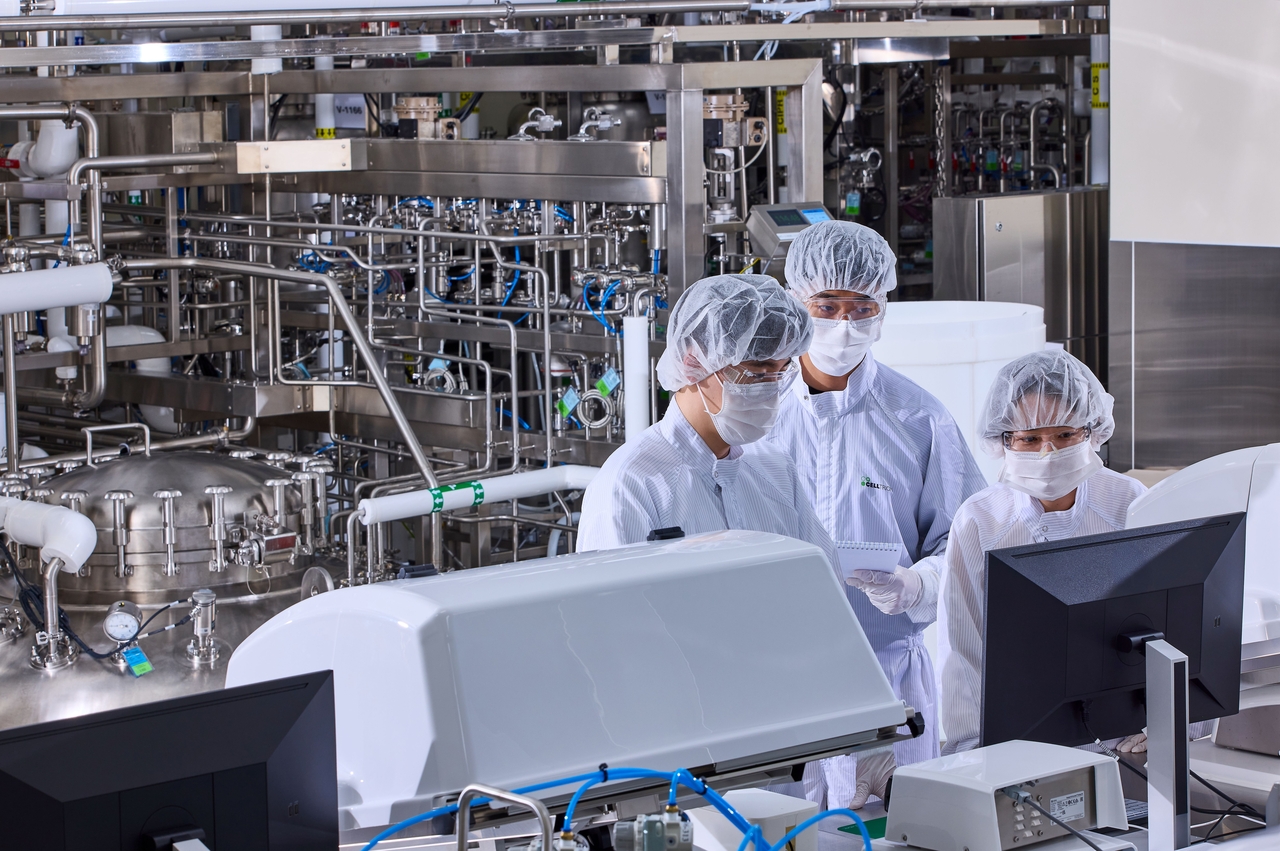
The group showcased its proton exchange membrane (PEM) water electrolysis plant technology alongside a waste-to-hydrogen production model called W2H. For the PEM technology in particular, the group displayed not only an existing electrolysis stack but also revealed how 12 stacks can be integrated into a single 5-megawatt-class ESM unit — with multiple ESMs connected in parallel to scale up to a water electrolysis plant of several hundred megawatts.
In the mobility segment, the group exhibited the 2027 Nexo passenger vehicle, a commercial fuel cell system with improved durability, and a hydrogen locomotive model with a flat-type fuel cell module for rail applications, along with a truck-charging demonstration of the ACR-H. The group also presented BlueLink Uptime Care, an integrated fleet management system for hydrogen commercial vehicles covering everything from vehicle supply to operations management.
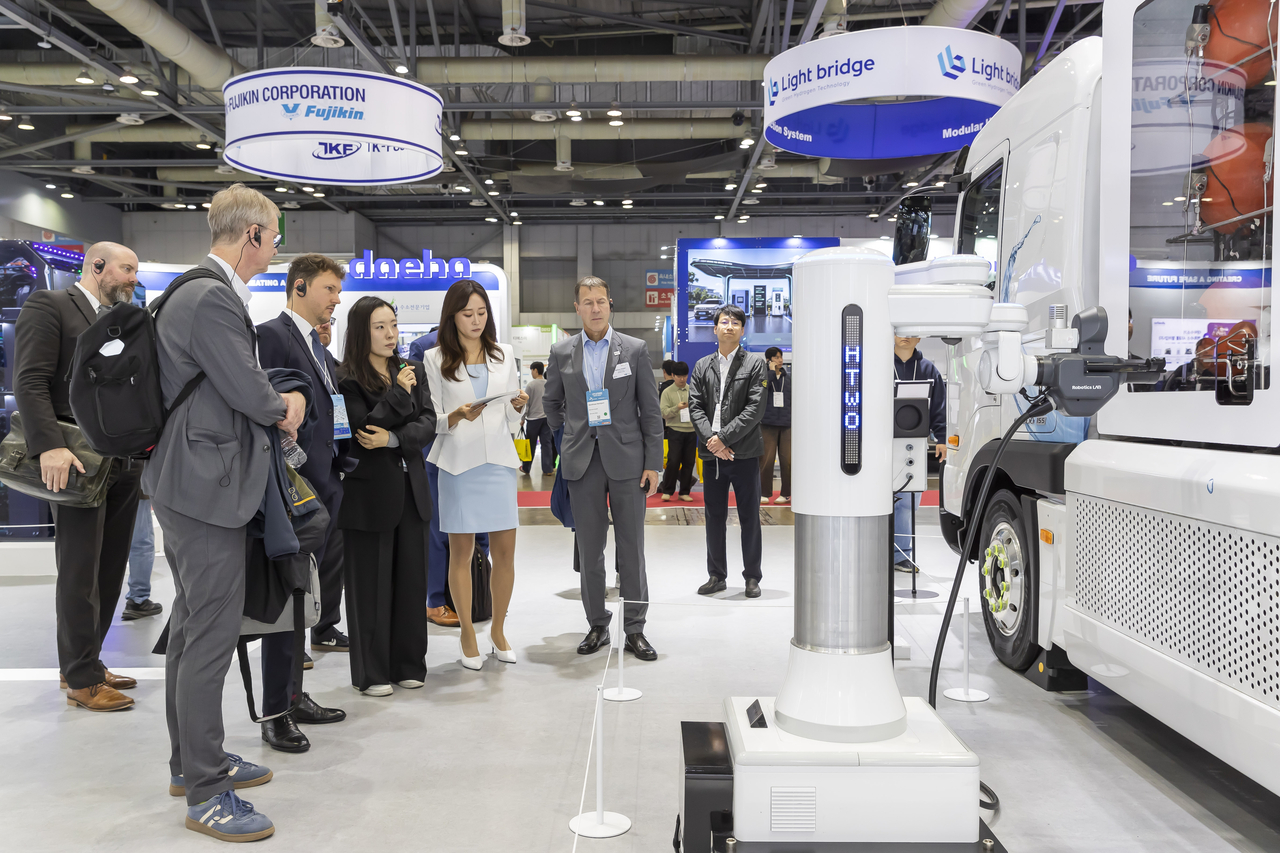
The ACR-H earned recognition for its technology by winning an excellence award at the H2 Innovation Awards, co-organized by the WHE organizing committee and the Korea Evaluation Institute of Industrial Technology (KEIT).
Hyundai Motor Group also presented its Elec City hydrogen fuel cell low-floor intercity bus, currently under development to meet a mandatory introduction requirement set for 2027 under the Act on Promotion of Transportation Convenience for Mobility Disadvantaged Persons.
A test-ride program for the upgraded Universe hydrogen electric bus and the new Xcient hydrogen electric truck, held Wednesday and Thursday, also drew considerable attention. A total of 181 participants — including representatives from transport and logistics companies in Taiwan, Japan and China — rode the vehicles for about 15 minutes each along a 6.2-kilometer route around the exhibition venue, experiencing the vehicles' quiet ride firsthand.
The hydrogen ecosystem solutions exhibition featured a diorama depicting a future industrial city model centered on the Saemangeum AI Valley concept, where renewable energy, hydrogen, AI data centers, robotics and urban infrastructure converge, as well as hydrogen ecosystem scenarios tailored to different regional and industrial contexts — urban lifestyle, port logistics and manufacturing.
During the event, representatives from domestic and overseas transport industry players — including Seonjin Networks, K1 Mobility, Zero Cool Tour and Sinbaekseung Travel, as well as companies from Japan and Taiwan — visited the pavilion. Hyundai Motor Group used the meetings to further develop concrete application plans in areas such as hydrogen mobility adoption and operations, charging infrastructure expansion and clean hydrogen production, while exploring practical cooperation opportunities.
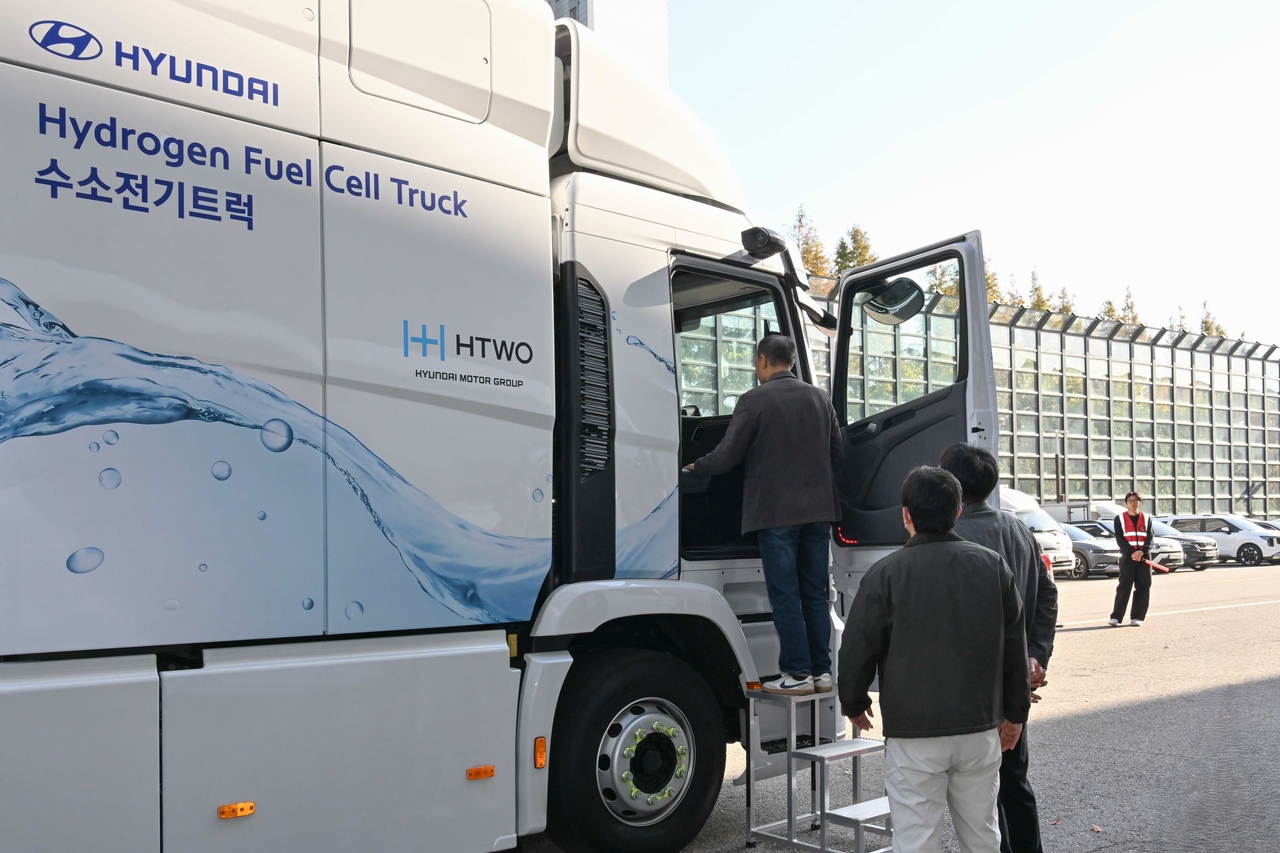
Hyundai Motor Group also ran HTWO Academy sessions to help visitors better understand hydrogen technology and business, with presentations on technology development, business progress and collaboration cases from group affiliates including Hyundai Steel, Hyundai Rotem and the HMG Construction Technology Research Institute, as well as key partners.
Meanwhile, Hyundai Motor Group joined the global conference "Leadership Insight" held Wednesday to discuss ways to boost investment in hydrogen projects and advance international cooperation with major domestic hydrogen companies.
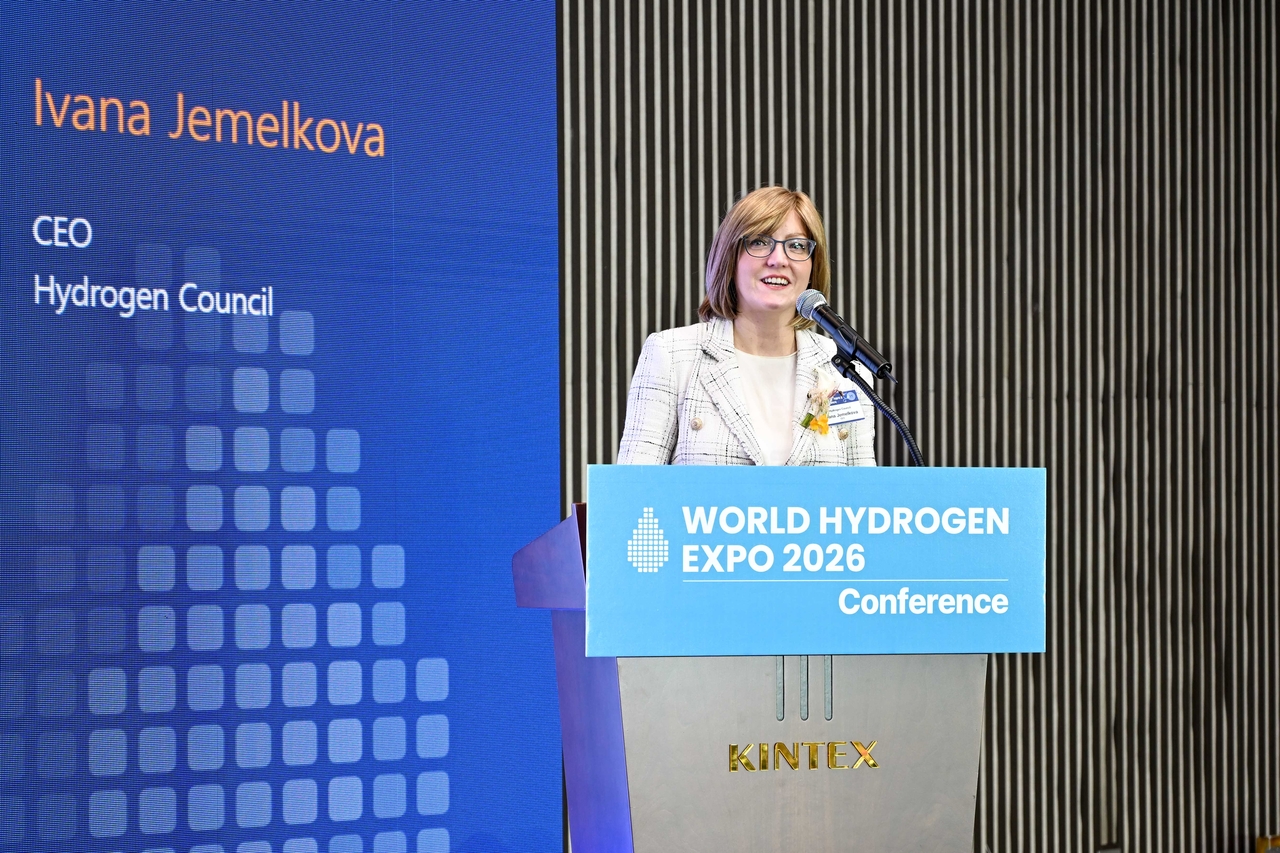
Ivana Jemelkova, CEO of the Hydrogen Council, presented at the conference on the progress of global hydrogen projects and the investment outlook, noting that the industry's focus is shifting from technological feasibility to building viable business models.
"Korea has strong potential to expand into water electrolysis and industrial applications, building on its experience developing a hydrogen mobility ecosystem," Jemelkova said. "What is needed is consistent policy implementation, predictable demand creation and a stable market environment."
Hyundai Motor Group, participating in a panel discussion, said hydrogen mobility "is a critical foundation for generating real hydrogen demand and driving the growth of charging infrastructure, supply chains and parts and materials industries, thereby expanding the scale of the hydrogen sector as a whole." The group added that "the government, industry and academia must work together to create a virtuous cycle in which demand expansion, investment and infrastructure development reinforce one another."
Separately, Vice Chairman Jang attended a field meeting organized by the Democratic Party of Korea's Mega Growth Special Committee at the Saemangeum Energy Convergence Complex integrated support center in North Jeolla Province, where he briefed attendees on the progress of the Saemangeum AI Valley project. The meeting also covered the policy support and challenges needed to advance the project.
Hyundai Motor Group plans to invest about 9 trillion won ($6.71 billion) in the 1.12 million-square-meter Saemangeum site. The largest share — 5.8 trillion won, accounting for more than 60 percent of the total — is earmarked for AI data centers. The remaining investment is allocated across solar power facilities at 1.3 trillion won, a water electrolysis plant at 1 trillion won, a robotics manufacturing and components cluster at 400 billion won, and an AI hydrogen city at 400 billion won.
likehyo85@heraldcorp.com