Breakthrough expected by mid-November, which would make South Korea the world's fourth-largest exporter; trade surplus with US tops $100 billion for first time
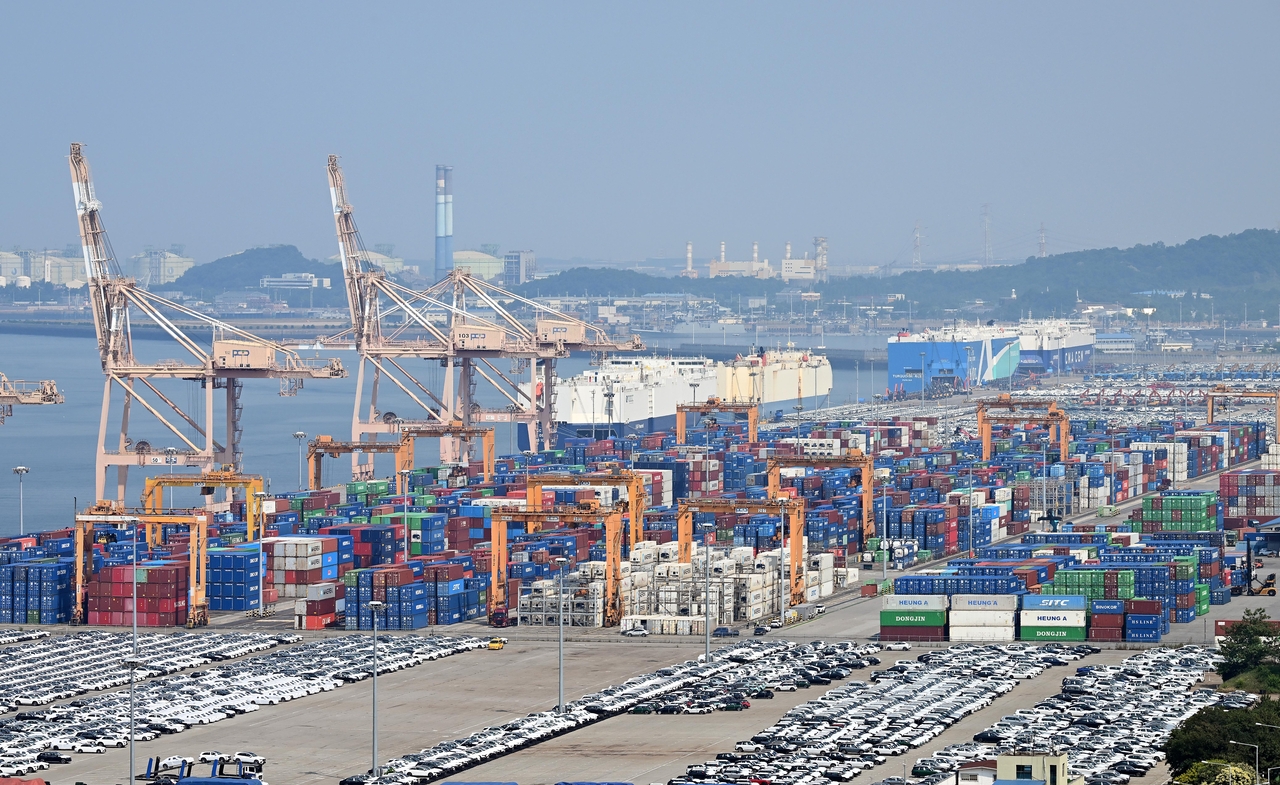
South Korea's annual exports are on the verge of crossing the long-coveted $1 trillion mark, with the milestone expected to be reached by mid-November.
The surge, driven largely by a semiconductor boom, has pushed South Korea's trade surplus with the United States past $100 billion for the first time in history. The record is raising concerns that the Donald Trump administration — which has made reducing the US trade deficit a cornerstone of its policy — could use the widening imbalance as justification to impose additional tariffs or press Seoul for greater investment in the United States. The concerns come amid the ruling Republican Party's defeat in the US midterm elections, which could embolden the administration to further intensify pressure on trade imbalances.
South Korea's cumulative exports from January through October reached $930 billion, up 60.6 percent from the same period last year, according to the Ministry of Trade, Industry and Energy and the Korea Customs Service. It marks the first time annual exports have exceeded $900 billion.
South Korea crossed the $100 billion export threshold in 1995, then surpassed $200 billion in 2004, $300 billion in 2006, $400 billion in 2008, $500 billion in 2011 and $600 billion in 2018.
Last year, exports hit a record $709.3 billion — the first time the $700 billion level had been cleared. This year, the country has blown past both the $800 billion and $900 billion marks in quick succession.
The Ministry of Trade, Industry and Energy projects that, at the current pace, South Korea will achieve the unprecedented annual export figure of $1 trillion by mid-November. If annual exports exceed $1 trillion, South Korea would rank fourth in the world, behind the United States, China and Germany.
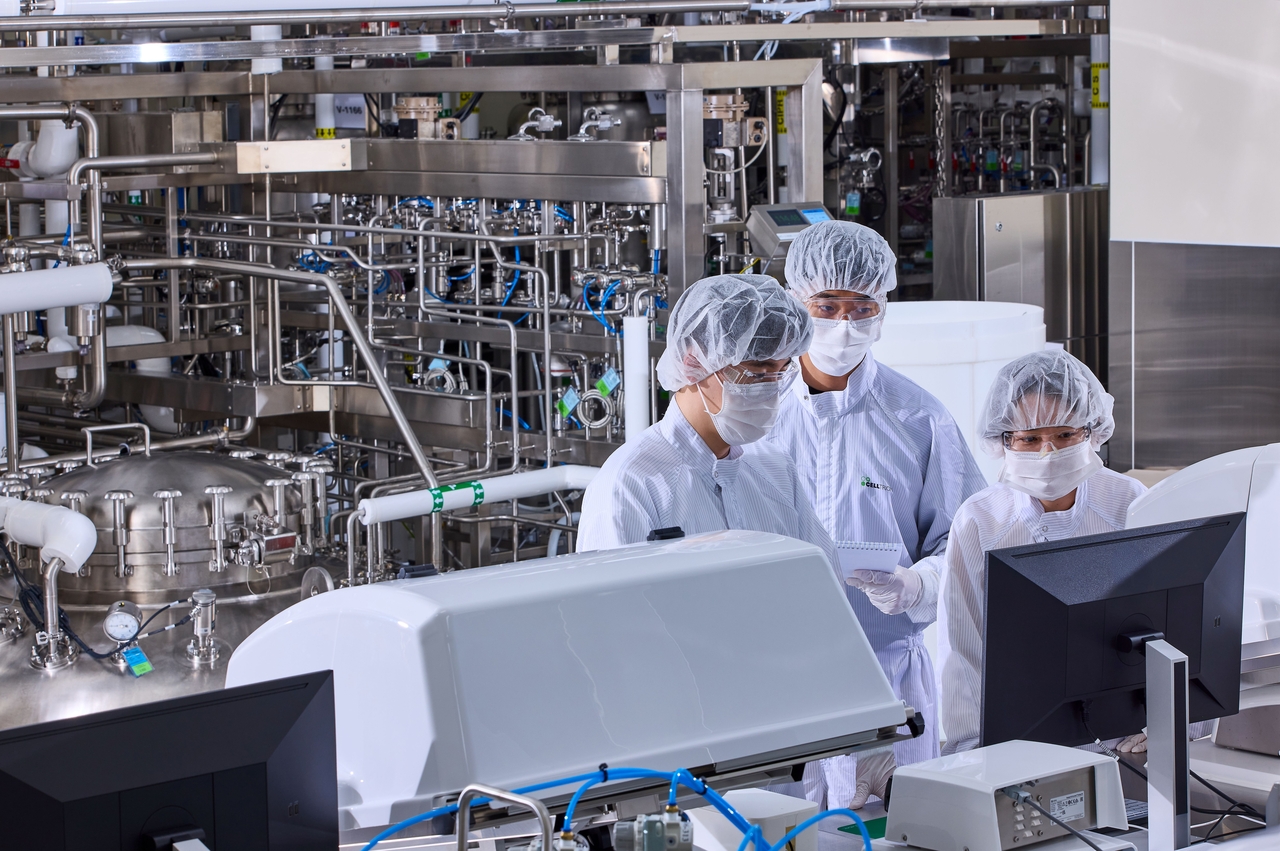
Semiconductors were once again the driving force behind the record performance. Semiconductor exports from January through October totaled $396.76 billion, accounting for roughly 43 percent of all exports — meaning more than two in every five export items were chips. Sustained capital spending by global technology giants racing to secure dominance in AI kept both chip prices and shipment volumes elevated.
South Korea's exports to the United States from January through October came to $176.7 billion, while imports from the US stood at $74.5 billion, yielding a trade surplus of $102.2 billion — the first time the bilateral surplus has surpassed $100 billion.
The monthly trade surplus with the US was $5.2 billion in January, $6.9 billion in February, $9.2 billion in March, $8 billion in April, $8.5 billion in May, $12.1 billion in June, $8.5 billion in July, $8.9 billion in August, $17.3 billion in September and $17.6 billion in October.
South Korea's annual trade surplus with the US was $22.7 billion in 2021, $28 billion in 2022, $44.4 billion in 2023, $55.6 billion in 2024 and $49.5 billion in 2025.
The sharp expansion in the US trade surplus this year was again driven by the semiconductor boom. Semiconductor exports to the US from January through October totaled $51 billion, up 419 percent from the same period a year earlier.
Alongside the semiconductor surge, rising demand for server solid-state drives also fueled a sharp increase in computer exports. Cumulative computer exports to the US through October reached $23.6 billion, up 514 percent year on year.
The record surplus is stoking concern that it could strain South Korea's trade relationship with Washington. The Trump administration, which has made shrinking the US trade deficit a central policy goal, may cite the growing surplus to demand additional tariffs or push for expanded Korean investment in the United States. The administration can pursue tariff measures under existing statutes — including Section 301 of the Trade Act and Section 232 of the Trade Expansion Act — without requiring separate congressional approval.
oskymoon@heraldcorp.com