Personalized recommendations, infinite scroll in regulators' sights
SNS has become a key communication and learning channel for youth
Debate centers on striking the right balance between protection and access
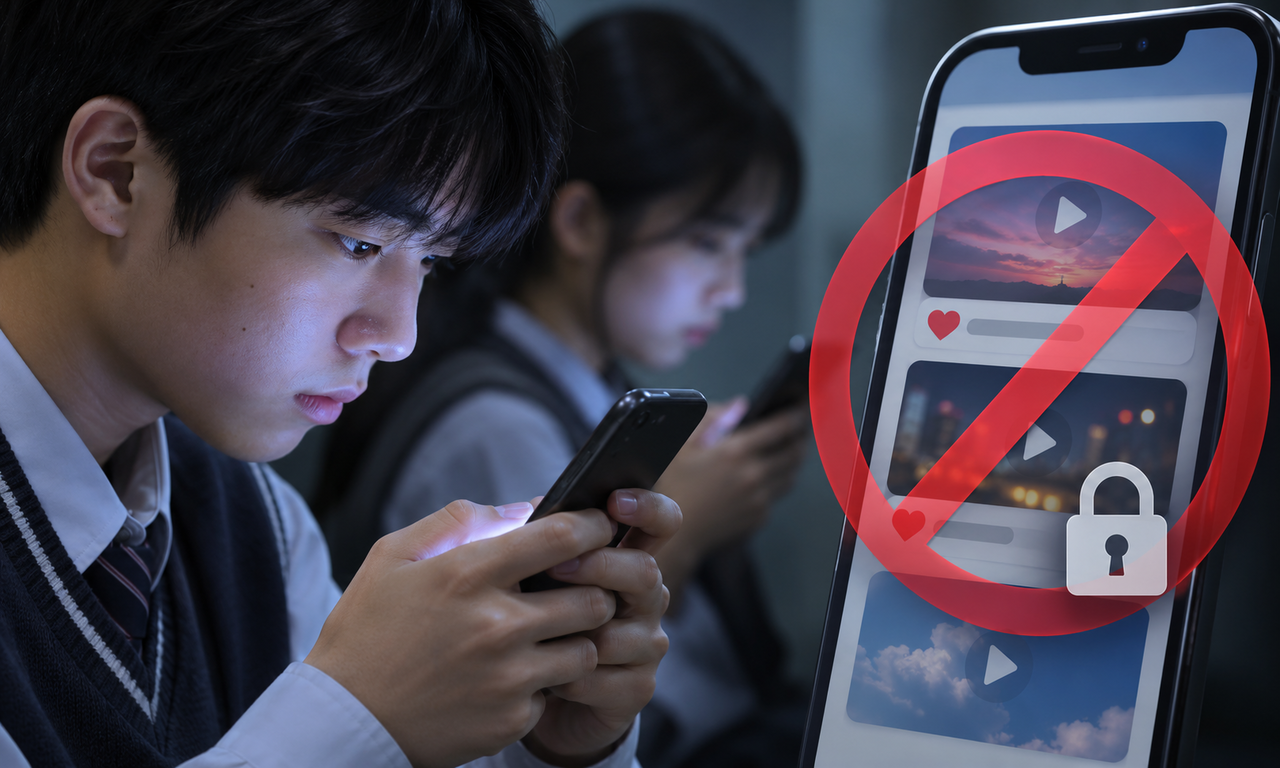
As social concerns mount over minors' unregulated exposure to social networking services, South Korea is moving toward formal discussions on restricting SNS use — with proposals ranging from age-based sign-up limits to curbs on personalized recommendation algorithms. Among the measures under consideration are banning users under 14 from registering on SNS platforms while disabling features such as personalized content recommendations and infinite scroll for accounts held by minors, in a bid to strengthen platforms' duty of care.
The Korea Communications Commission said Sunday that the government is reviewing options including age-based registration restrictions and limits on service features that can fuel excessive engagement.
The commission had earlier told the president's office in July that it would explore amending the Act on Promotion of Information and Communications Network Utilization and Information Protection to ban SNS sign-ups by users under 14 and to require platforms to verify users' ages.
It also proposed that accounts held by users under 19 be set by default to exclude personalized recommendation features — which analyze a user's interests and viewing history to surface content — as well as infinite scroll. The proposal targets the very design of services engineered to keep users scrolling or lingering on a platform.
The commission is currently reviewing which features contribute to excessive SNS dependence among minors, though it has not yet determined which functions to restrict or to what degree. It plans to continue discussions on the specific protective measures and their scope.
A key question in those discussions will be whether responsibility extends beyond protecting young users to holding platforms accountable for how they are designed and operated. Unlike earlier approaches that focused primarily on blocking harmful content, attention is now turning to the structural design of services that can encourage excessive use.
Personalized recommendations offer the benefit of surfacing content aligned with a user's interests — but critics warn that constant exposure to similar content ultimately drives up time spent on the platform.
Infinite scroll and autoplay features have also drawn criticism for heightening the addictive quality of SNS use among minors.
At the same time, regulators will need to weigh the risk that restrictions could limit minors' access to useful information and content, alongside the challenge of setting objective standards.
How much liability to impose on platforms is expected to be another contentious issue.
Age verification requirements raise their own concerns, including the potential for excessive collection of personal data and its use for unintended purposes. Circumvention — through borrowed accounts or falsified information — also remains an unresolved enforcement challenge.
For regulations targeting platform operators, how rules would apply to overseas providers has yet to be worked out.
Above all, despite the various concerns, SNS has in practice become an integral part of minors' lives — serving as a channel for communicating with peers and accessing information, education and cultural content. That reality makes finding the right level of regulation all the more important.
Korea Communications Commission Chairman Kim Jong-cheol said in July that "a minimum level of regulation is necessary, as education alone cannot solve the problem," while also stressing that minors should be seen not merely as subjects of protection but as rights-bearing individuals.
The remarks were widely interpreted as a call to incorporate young people's voices directly into the process and build broad social consensus — so as not to repeat the failure of the earlier "game shutdown" policy.
The commission plans to work with related ministries to gather input from a wide range of stakeholders, including minors themselves.
shindw@heraldcorp.com