Gov't plan sets different thresholds for owner-occupants and non-residents
Lawmakers from greater Seoul area raise concerns over tax reform proposal
Finance committee to begin tax bill talks this month; Dec. 2 deadline looms
Ruling party urges passage of urban renewal bill; parties remain at odds
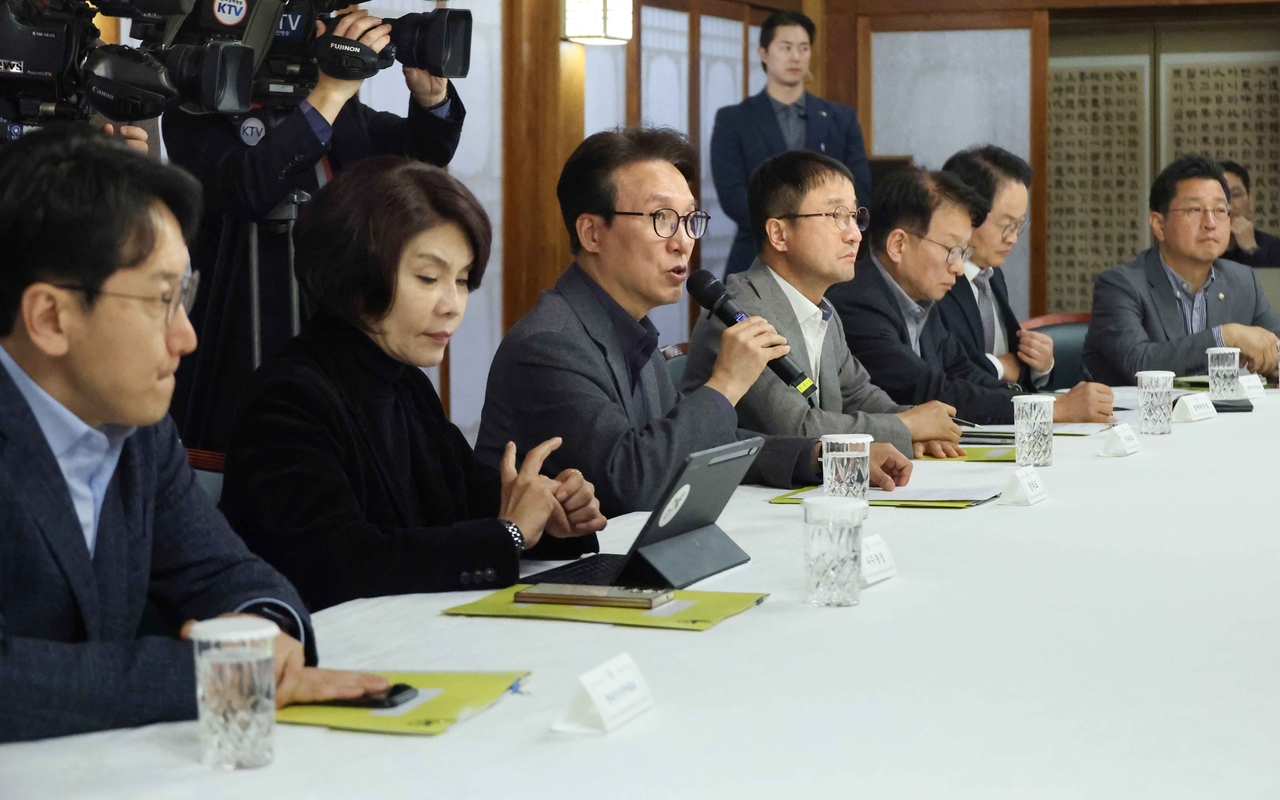
The Democratic Party of Korea has asked the government to raise the basic deduction threshold for the comprehensive real estate tax — known as jongbusae — to a flat 1.4 billion won ($1.03 million) for all single-home owners, regardless of whether they live in the property. The government's current proposal would raise the deduction to 1.4 billion won for owner-occupants while keeping it at the existing 1.2 billion won for non-resident single-home owners.
Kim Young-bae, a lawmaker who chairs the party's Seoul chapter, told reporters at the National Assembly's press briefing room on Monday that "as far as I know, the party conveyed to the government its view that, while moving in the direction of providing stronger protection for single-home owners, it would be better to apply the comprehensive real estate tax uniformly to non-resident single-home owners as well."
Kim said there are people struggling with jeonse and monthly rent issues, as well as first-time buyers trying to enter the housing market, even as overall real estate prices show signs of stabilizing. "I believe the party's request was intended to find a way to catch two birds with one stone — providing stronger protection for single-home owners while at the same time pursuing price stability in the real estate market," Kim said.
Kim added that the party also conveyed the view that measures addressing jeonse and monthly rent issues need to be given serious weight.
Concerns have been raised within the Democratic Party, particularly among lawmakers from the greater Seoul area. A Democratic Party lawmaker on the National Assembly's Finance and Economy Planning Committee said in a phone interview that "questions about the government's proposal are being raised actively, mainly by lawmakers from the metropolitan area, and I fully sympathize with those concerns," adding that the reaction reflects the views of the market and taxpayers. "We cannot ignore this reality," the lawmaker said.
Views are divided even among Democratic Party members on the finance committee, however. Further discussions on adjustments to the comprehensive real estate tax deduction are expected during the National Assembly's review process.
Kim said the real estate tax bills are classified as budget-linked legislation and are scheduled to be taken up by the finance committee in the third and fourth weeks of November. "Since the government still needs to finalize its position, additional party-government consultations are expected to follow. I expect the fourth week of November will be the last possible deadline," Kim said. Dec. 2 is the deadline for passing next year's budget bill.
Meanwhile, lawmakers affiliated with the Democratic Party's Seoul chapter held a press conference at the National Assembly on Monday, urging the People Power Party to swiftly pass an amendment to the Act on the Improvement of Urban Areas and Residential Environments. The amendment includes provisions to shorten approval procedures for redevelopment and reconstruction projects, resolve construction cost disputes, and grant floor-area-ratio exemptions for public urban renewal projects.
The ruling and opposition parties remain at odds over whether to extend to private urban renewal projects a provision that would allow floor-area ratios of up to 1.3 times the legal ceiling for public projects. Lawmaker Kim Nam-geun said negotiations are still ongoing and the gap is not large, adding that the principle is not to push the bill through by force.
thanks@heraldcorp.com