
The 32.9-kilometer Gyeongwon Line underground project is among newly added initiatives in the plan, which covers 67.6 kilometers and 39 stations proposed by the Seoul Metropolitan Government
Seven districts along the Gyeongwon Line pushed jointly for inclusion, with the plan expected to reconnect divided neighborhoods and reshape urban space
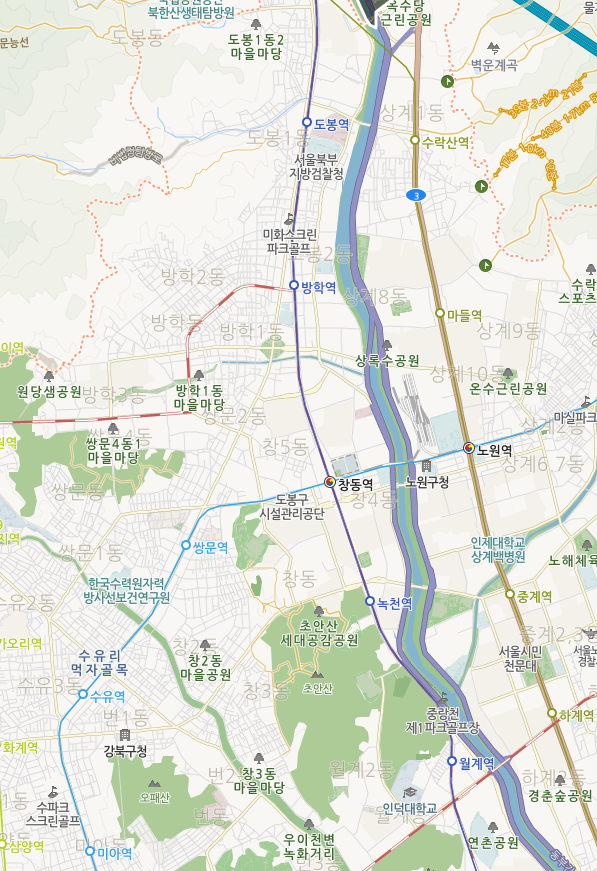
Expectations for urban development in Dobong-gu are rising after the Gyeongwon Line underground railway project was included in the government's comprehensive master plan for integrated underground railway development.
Dobong-gu welcomed the news that the Gyeongwon Line underground section proposed by the Seoul Metropolitan Government to the Ministry of Land, Infrastructure and Transport has been designated as a newly added initiative in the government's comprehensive master plan for integrated underground railway development.
The plan, announced Thursday at a public hearing hosted by the Ministry of Land, Infrastructure and Transport, includes 67.6 kilometers and 39 stations as newly added projects — comprising the 34.7-kilometer Gyeongbu Line and the 32.9-kilometer Gyeongwon Line, both proposed by the Seoul Metropolitan Government.
The outcome is credited to the sustained efforts of Dobong-gu and other relevant districts, which have consistently raised the need for the Gyeongwon Line to be placed underground and pushed for the project to move forward.
Dobong-gu joined six other Seoul districts through which the Gyeongwon Line passes — Yongsan, Seongdong, Dongdaemun, Jungnang, Seongbuk and Nowon-gu — to form the Gyeongwon Line Underground Promotion Council and coordinate a joint response to secure the line's inclusion. On Oct. 21, the seven districts issued a joint statement calling on the Ministry of Land, Infrastructure and Transport to include the Gyeongwon Line in the target routes and finalize the comprehensive plan without delay.
The underground project goes beyond simply relocating the railway below ground. It aims to reconnect neighborhoods that have long been divided by the tracks and to eliminate noise and vibration that have troubled residents. The above-ground railway site would be repurposed as green space and cultural and business facilities, with the project expected to improve the urban environment and lay new foundations for regional growth.
Dobong-gu plans to use the inclusion in the master plan as a springboard, strengthening cooperation with the central government, the Seoul Metropolitan Government and neighboring districts to move the project into an active implementation phase.
"I am very pleased that the Gyeongwon Line underground project has been included in the government's comprehensive master plan," Dobong-gu District Mayor Kim Dong-wook said. "This is welcome news for residents who have long endured inconveniences caused by the railway, and it marks an important turning point that opens up new possibilities for Dobong-gu's development." Kim added that the district would work closely with relevant agencies to advance the underground project as quickly as possible and connect the neighborhoods that have been cut off by the railway, "so we can open a new future for the region."
seouldream01@heraldcorp.com





