Same blood centers repeatedly make errors, fail to identify root causes
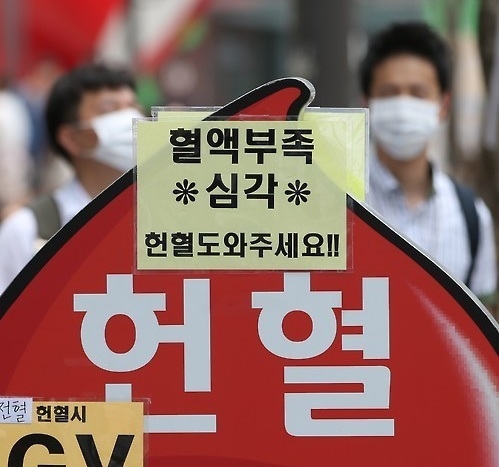
About 100,000 packs of donated blood are discarded every year in South Korea, an audit has found. The managing authority also failed to properly analyze the causes behind repeated discards and operational errors at certain blood centers.
510,000 packs discarded in 5 years, with some centers showing persistently high rates
According to the Ministry of Health and Welfare's comprehensive audit report on the Korean Red Cross, released Tuesday, between 2.42 million and 2.63 million people donated blood each year from 2021 to 2025, producing between 6.17 million and 6.45 million blood product packs annually.
Blood products are processed packs made from donated blood for use in transfusions and treatment. A significant portion of these packs, however, were discarded before reaching any patient.
By year, 95,943 packs were discarded in 2021, rising sharply to 128,559 in 2022. The figure then stood at 100,186 in 2023 and 92,016 in 2024, before climbing again to 95,274 in 2025.
The total number of packs discarded over the five-year period reached 511,978. The discard rate as a share of total output rose from 1.55 percent in 2021 to 2.08 percent in 2022, then eased to 1.59 percent in 2023 and 1.47 percent in 2024, before edging up to 1.48 percent in 2025.
Particularly notable is that among the country's 15 blood centers, only a handful have maintained persistently high discard rates for several consecutive years.
Blood center O, in particular, ranked last in output among all 15 centers for five consecutive years from 2021 to 2025, yet its discard rate remained in the top 20 percent nationwide throughout that period.
Center O recorded the highest discard rate in the country in three of those years — 1.77 percent in 2021, 1.69 percent in 2024 and 1.78 percent in 2025. Centers L and M, which ranked 12th and 13th in output respectively, also repeatedly discarded a disproportionately large share of their output.
Same discard causes — from coagulation to damaged bags — repeat year after year
Reasons for discarding blood packs vary widely, including abnormal test results, coagulation, bacterial contamination, expiration of the storage period and damaged bags.
Center F ranked among the top centers for discards due to coagulation or contamination for five consecutive years, with center I also appearing in the top tier for four or more years. Center E consistently recorded a high proportion of discards caused by broken seals or torn labels on blood bags for all five years.
Centers C and D stood out for five straight years in discards caused by poor inventory management that allowed blood to exceed its storage period. Centers B and H appeared in the top tier for five consecutive years for discards resulting from drawing too much or too little blood during collection.
Cases in which blood was discarded due to clear staff errors were also handled inadequately after the fact.
Looking at each center's share of error-related discards nationwide, center F ranked in the top tier for four consecutive years and center I for three. Although both centers conducted one internal review each in 2023 and 2025, the Korean Red Cross headquarters did not separately monitor the recurring errors or investigate their root causes.
In response, the Ministry of Health and Welfare ordered the Korean Red Cross president to conduct a comprehensive analysis of discard trends, intensively manage centers with high discard rates or recurring causes, identify the underlying problems and develop improvement measures.
thlee@heraldcorp.com