
Gimpo Hangang 2 district announced 4 years ago, yet to begin land compensation
Metropolitan transport plan for Line 5 extension, GTX-D still unresolved
Traffic infrastructure seen as key hurdle for Gimpo Ara development
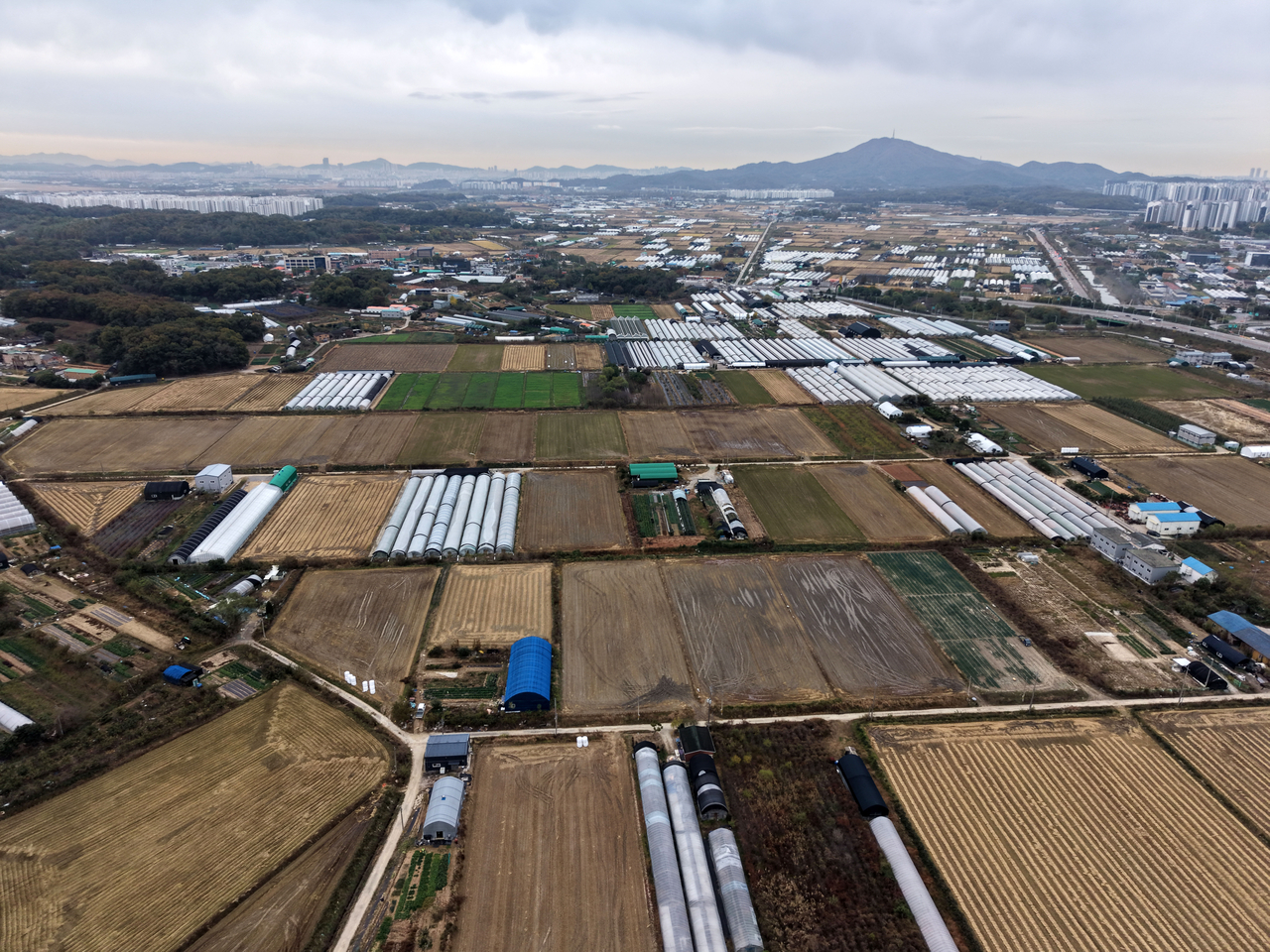
The government has announced plans to supply 37,000 homes in the Gochon-eup area of Gimpo, Gyeonggi Province — branded as "Gimpo Ara" — but a separate large-scale housing project in the same area announced four years ago has yet to begin land compensation procedures and is struggling to finalize a transport plan. Concerns are growing over the viability of the new supply plan at a time when even the existing development cannot gain momentum.
Gimpo Hangang 2 district yet to begin compensation — project delayed at least 2 years
According to a public consultation result document on the environmental and climate impact assessment draft for the Gimpo Hangang 2 district development — released Tuesday by the Ministry of Land, Infrastructure and Transport — the project has been conducting surveys of structures and fixtures on the land since July. Such surveys identify buildings and facilities on a site ahead of land compensation and must be completed before compensation plans can be drawn up and negotiations begin.
The Gimpo Hangang 2 public housing district was announced in 2022 as a smart, self-sufficient city to be developed with a metropolitan transport network and employment facilities, but four years on it has yet to enter the land compensation stage. The government had originally planned to supply about 51,540 homes through high-density, mixed-use development with an integrated transport network designed to give residents easy access to transit stations.
The original schedule called for district designation to be completed in the second half of 2023, a district plan approval in 2025 and the first move-in recruitment in 2027. To date, only the district designation has been completed. The district plan approval is currently at the application stage and is expected to be granted in the first half of next year.
Metropolitan transport improvement plan for Gimpo Hangang 2 still at planning stage
The slow progress stems largely from unresolved transport issues. Residents raised extensive demands for traffic solutions during the public review of the environmental impact assessment, but key projects — including the extension of subway Line 5 and the GTX-D metropolitan express rail line — remain works in progress, keeping community concerns alive.
The Line 5 extension, considered the centerpiece of the transport plan for the Gimpo Hangang 2 district, passed a preliminary feasibility study in March, and Gyeonggi Province launched a service contract this month to draw up a basic plan. That contract is not expected to wrap up until the first half of 2028. Further steps — including traffic and environmental impact assessments and final construction plan approvals — will follow, meaning actual completion is expected to take considerably longer than originally envisioned.
The Ministry of Land, Infrastructure and Transport said the preliminary feasibility study for both the Line 5 extension and the GTX-D line passed in March, but that neither route has been finalized because a basic railway plan has yet to be established.
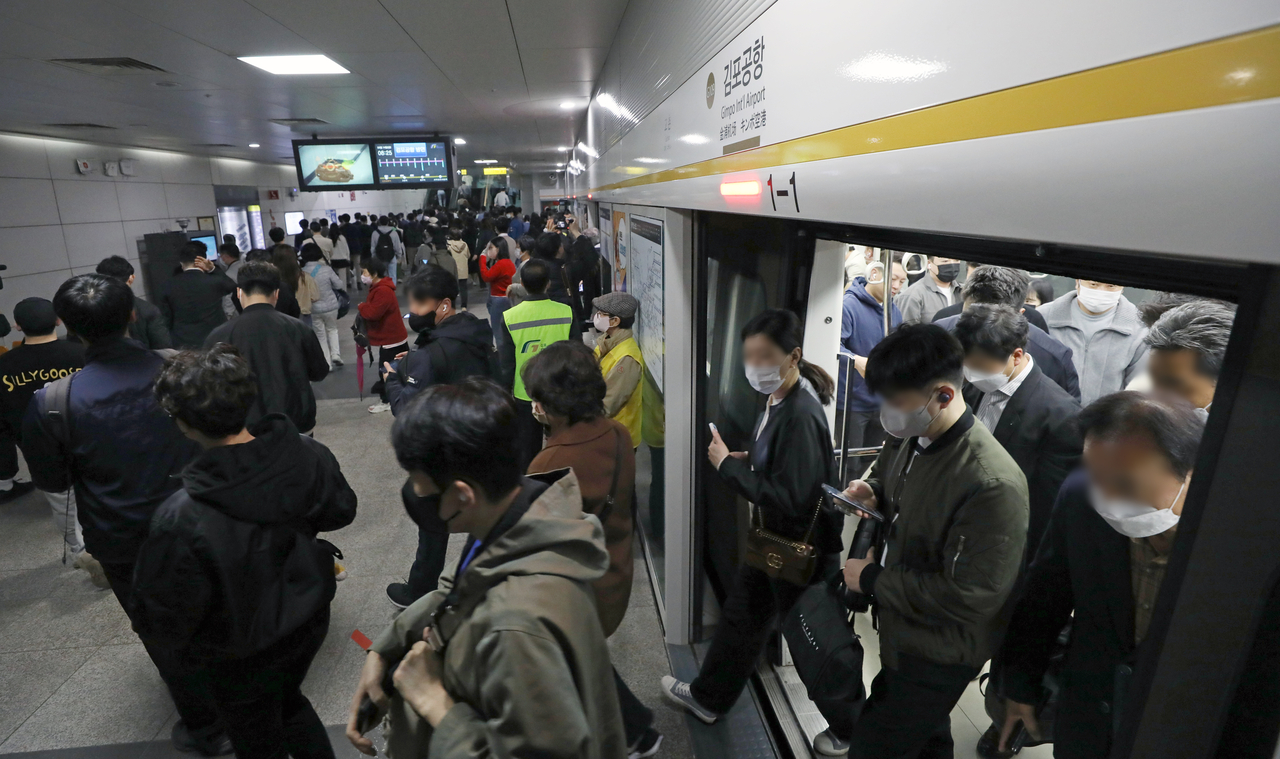
Residents are also calling for analysis of and solutions to congestion on routes toward Seoul. With the Gimpo Goldline light rail already severely strained beyond its capacity, they argue that additional transport links are essential.
In response, the ministry said it would "review and implement metropolitan transport improvement measures, including analysis of transport demand toward Seoul, in accordance with relevant laws such as the Special Act on the Management of Metropolitan Area Transport." In effect, even a metropolitan transport improvement plan has yet to take concrete shape.
The ministry also said it plans to conduct additional reviews and establish mitigation measures during the environmental impact assessment process, covering water quality management, sewage treatment, seasonal air quality surveys, noise and vibration from increased traffic, and sunlight impact. Further follow-up reviews of infrastructure and environmental factors will be needed as the project plan takes shape.
Gimpo residents: withdraw the 37,000-unit Gimpo Ara plan if traffic and other problems go unresolved
With no metropolitan transport plan in place, the government's decision to designate Gimpo Ara — the largest single site in its recent Greater Seoul housing supply package — for 37,000 homes has prompted nearby residents to go beyond opposition and demand the plan be scrapped. They argue that expanding housing supply without addressing existing problems such as traffic congestion and a lack of jobs amounts to a one-sided development policy that shifts the burden onto local communities.
Gimpo city said it attended a recent dinner meeting of Gyeonggi Province local government heads convened by the prime minister to discuss housing supply, where it presented its metropolitan transport improvement proposals for the Gimpo area and requested government-level support.
Experts say the sequencing of housing supply plans and transport measures must be carefully considered, given how long it takes to actually build out a metropolitan transport network. At the same time, some analysts note that a government under pressure to expand housing supply has little choice but to announce land development plans first rather than wait for transport infrastructure to be in place.
Kim Jin-yu, a professor in the department of urban planning and transportation at Kyonggi University, said the right approach is to implement metropolitan transport plans before pursuing land development, but that in South Korea, where resolving the housing problem is more urgent, the result is ultimately that housing supply ends up falling behind schedule.
hss@heraldcorp.com





