Electricity use up 3.8%, but pollution-linked deaths up 5.3%
Regions far from data centers face higher mortality risk
Researchers say air quality must factor into siting decisions

Every time someone asks an AI a question or has it interpret a horoscope, a data center somewhere draws electricity to handle the request. Yet few people stop to wonder which power plant generated that electricity.
When people do worry about data centers, the concerns tend to be local — that a nearby facility will drain water supplies for cooling, or that the hum of cooling fans will keep residents awake at night. Those without a data center nearby often assume the issue simply does not affect them.
But new research from the United States suggests that the air-pollution harm caused by data center electricity demand falls hardest on communities far from the facilities — including regions that have almost no data centers at all.
A research team led by Chen Yuang and Noelle Selin at the Massachusetts Institute of Technology published findings in the international journal Environmental Research Letters estimating that power-plant pollution driven by US data center electricity consumption in 2023 caused roughly 650 premature deaths per year.
"When people think about the harms of data centers, they usually focus on nearby residents," Selin said in a university press release. "If you think you're not affected because there's no data center near you, you should think again."
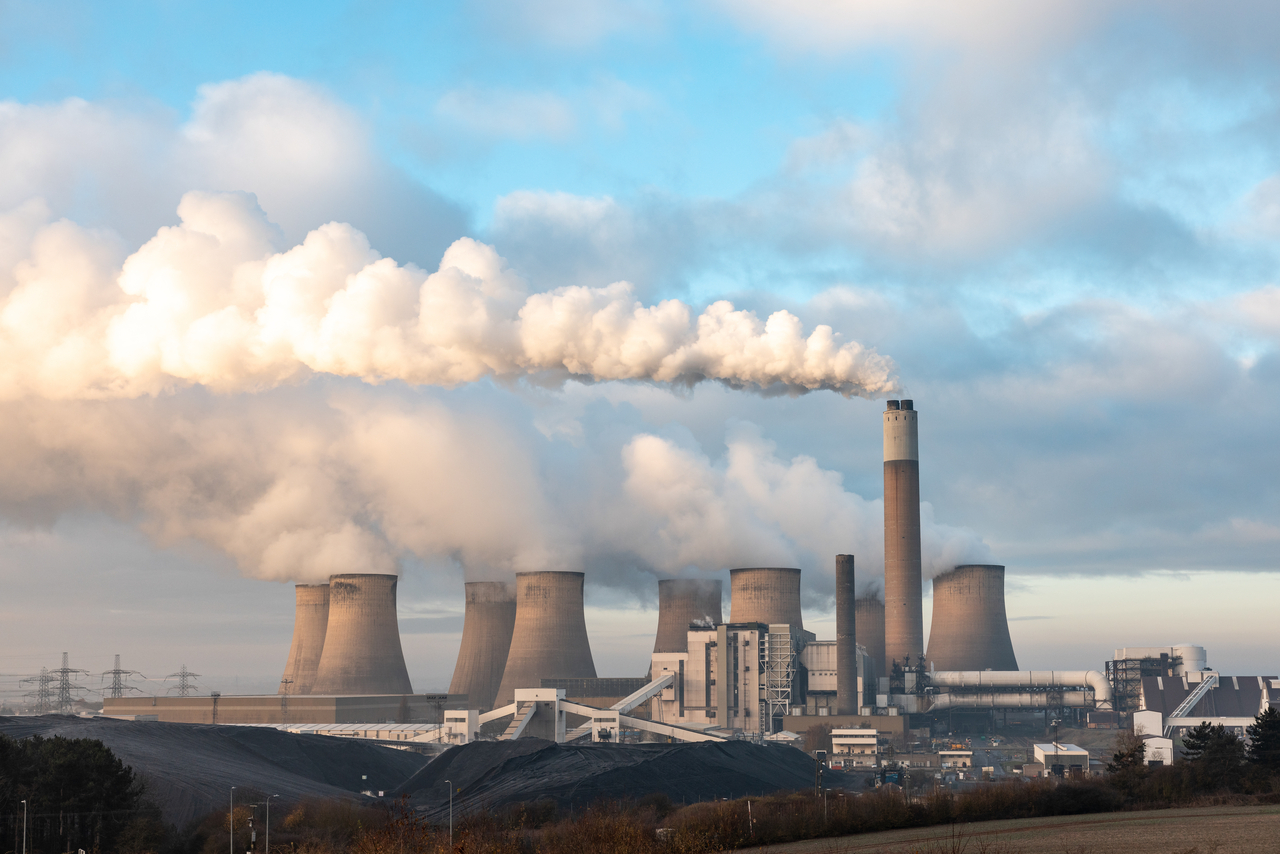
The dirtiest plants fire up first
When data centers draw more electricity, grid operators bring additional power plants online to meet the demand. The plants that typically spin up are coal and gas facilities that had been sitting idle.
"When you plug a data center into the grid and create a large new source of demand, you may end up having to run some really dirty power plants," Selin said.
The research team built a full computer model of the 2023 US power grid and compared scenarios with and without data center demand.
"There are more than 10,000 generators on the US grid," Chen said. "We had to cross-check the data for each generator against other sources to make sure it was accurate."

Data centers accounted for 3.8 percent of total US electricity generation in 2023. Meeting that added demand pushed nitrogen oxide emissions from power plants up 7.3 percent and sulfur dioxide up 5.6 percent above what they would otherwise have been — nearly twice the proportional increase in electricity consumption.
The research team estimated that the resulting rise in fine particulate matter and ozone causes roughly 650 premature deaths in the United States each year. The breakdown was 513 deaths attributed to fine particulate matter and 137 to ozone. These are not observed death counts but calculated figures derived from established relationships between air pollution and mortality rates.
The increase in airborne fine particulate matter amounts to just 0.02 to 0.08 micrograms per cubic meter — barely detectable against the US baseline of 5 to 12 micrograms. But the polluted air spreads across vast areas, and the cumulative effect of millions of people breathing it every day adds up.
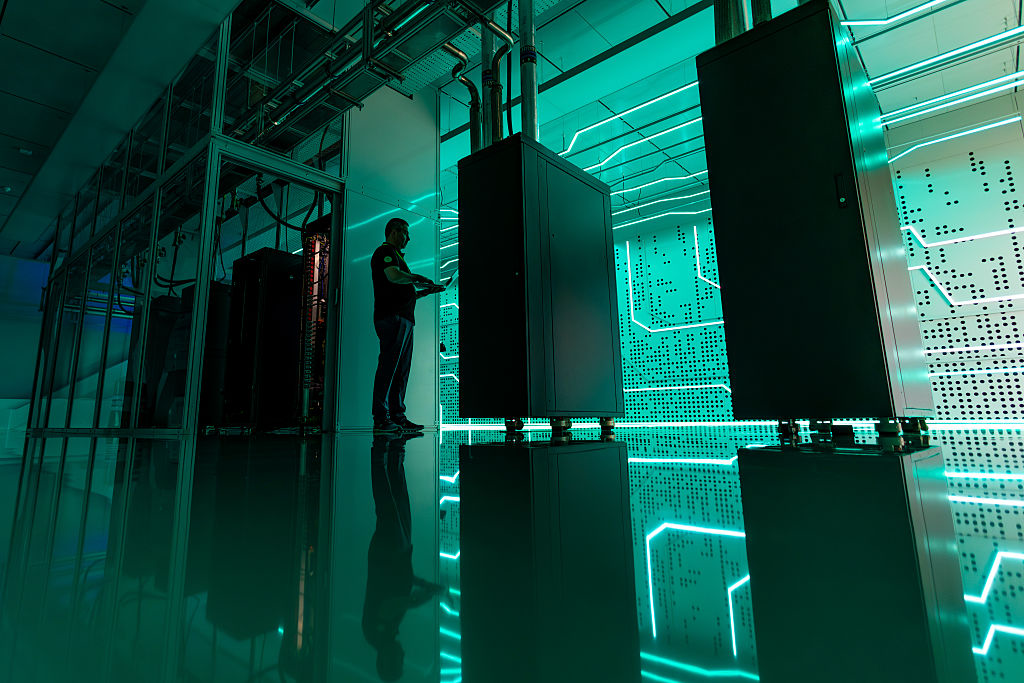
Areas with few data centers face the greatest risk
Virginia, which hosts more data centers than any other US state, sees those facilities consume a quarter of the state's total electricity. Yet its per-capita mortality rate from data center-related pollution ranked only in the middle of the pack.
Nebraska, by contrast, recorded one of the highest mortality rates at 6.5 deaths per 1 million residents. Its data center footprint is far smaller than Virginia's, but because the state's overall electricity demand is low, data centers account for 11.7 percent of total consumption. The added load was met largely by aging coal plants that should already have been retired.
The Midwest's vast farmland means the air already carries high concentrations of ammonia. When nitrogen oxides from power plants combine with that ammonia, they form fine particulate matter — which is why the same volume of emissions produces disproportionately more particulate pollution in the Midwest than elsewhere.
Kansas, South Dakota, Missouri and Arkansas all recorded elevated mortality rates despite having almost no data centers. The research team attributed this to a power grid that crosses state lines and to pollutants that travel on the wind.

"It's not surprising that a new source of pollution leads to deaths," Selin said. "What's different about data centers is that the deaths occur at different times and places than people expect."
When the researchers broke the country down to the county level and compared mortality rates by distance from data centers, they found almost no difference between nearby and distant communities. Rural areas actually recorded a higher rate — 0.27 deaths per 100,000 people — compared with 0.21 in urban areas.
The calculations did not include the diesel backup generators that data centers keep on standby for power outages. Earlier research estimated that those generators alone account for roughly 30 premature deaths per year. Direct health effects from particulate matter and nitrogen dioxide emitted straight from power plant stacks were also excluded.
The research team said the actual toll could be higher than these estimates suggest.
Another limitation is the assumption that data centers consume electricity at a constant rate year-round. During peak demand periods, when data centers add to an already strained grid, even dirtier plants may be brought online, worsening emissions further.
"When thinking about where to site and how to operate data centers, land costs and electricity prices cannot be the only considerations," Chen said. "Air quality must be part of the equation as well."
Reference
DOI: 10.1088/1748-9326/aebbd4
Y. Chen, S. Wang, J.R.L. Senga, A.S. White, A.Y.H. Wong, L.M. Freese, M.L. Bell & N.E. Selin, "Spatially distributed air quality and health impacts of data center electricity demand in the United States," Environ. Res. Lett. 21 (2026) 214046.
dbsdn1110@heraldcorp.com