District integrates AI and digital tools into traditional sewing sector, expands market access, generating 730 million won in economic value
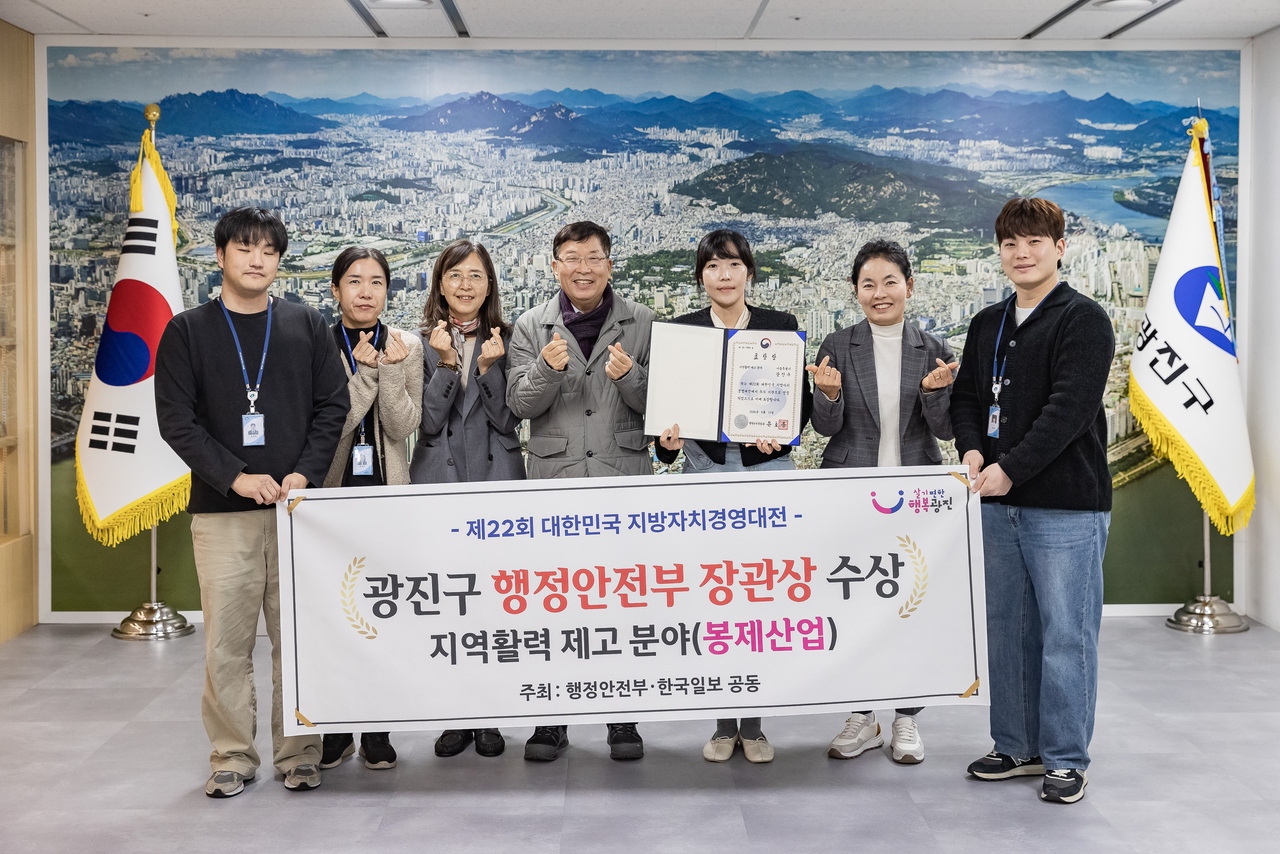
Gwangjin-gu in Seoul has won a Ministry of Interior and Safety minister's award for its efforts to revitalize the district's declining garment industry by integrating AI and digital technology and expanding market access for local businesses.
The district received the minister's award in the "regional vitality" category at the 22nd Korea Local Government Management Awards, co-hosted by the Ministry of Interior and Safety and other agencies, for its innovation in the local garment sector.
The Korea Local Government Management Awards is a policy competition held since 2004 to identify and share creative, high-quality local governance policies that draw on each region's distinct characteristics.
Gwangjin-gu has pursued a strategy of treating the struggling garment industry not as a dying sector but as a new engine of local growth. The district applied AI and digital transformation to traditional sewing techniques, collaborated with emerging fashion brands, participated in a Beijing order-placement fair, and expanded online sales channels. It has also run community-based sales events and education programs to strengthen the industry's competitiveness and embed it more deeply in local culture.
Particularly notable was the district's introduction of a "special-size bag support project" — the first of its kind in Seoul — which resolved a waste-fabric disposal problem that had long burdened small leather garment businesses, drawing recognition for its field-oriented, tailored approach.
These policy efforts drove strong results last year: the district's Garment Industry Comprehensive Support Center served about 3,130 users, recording 2,726 automated-cutting jobs, training for 441 people through sewing education programs, and 293 work-order referrals. Together, these activities generated a total economic value of 730 million won ($542,000).
Gwangjin-gu District Mayor Kim Kyung-ho said the achievement was "a precious result accomplished together with the garment workers in this community who have held their ground despite difficult conditions." Kim added that the district would "continue to actively support the garment industry so that it can generate new work and opportunities for young people and spread vitality throughout the local economy."
seouldream01@heraldcorp.com