Kim Woo-sung of the Democratic Party of Korea proposes legislation to standardize site selection, project review and public contributions for transit-area development
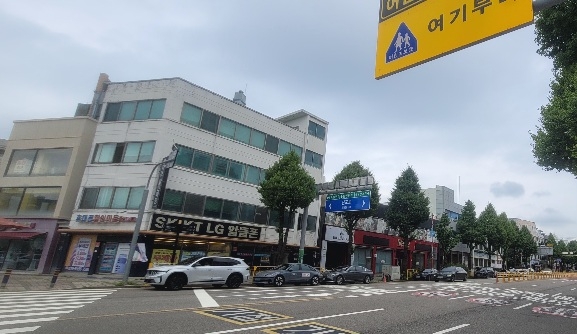
Incheon is moving to establish a regulatory framework that would transform transit-oriented areas across the city into mixed-use development hubs combining residential, commercial and business functions.
The initiative aims to introduce clear site-selection criteria and administrative support mechanisms for transit-area development — a sector that has seen wide variation in outcomes depending on individual project conditions — to improve urban spatial efficiency and stimulate the local economy.
Kim Woo-sung, a lawmaker on the Incheon Metropolitan Council's Urban Construction Committee representing the Democratic Party of Korea from Yeonsu-gu, introduced a draft ordinance Tuesday on the operation and support of transit-area revitalization projects in Incheon.
The core of the proposed ordinance is to build an institutional framework that moves transit-area development beyond simple land development, enabling it to be pursued as an urban planning project in which transportation, residential, commercial, business and lifestyle infrastructure are organically integrated.
Transit-oriented areas have long offered strong public-transit access and concentrated foot traffic along with residential and economic activity, yet development outcomes have varied widely depending on local conditions and the state of existing infrastructure.
Concerns have also been raised about the need to strike a balance between profitability and public interest, and to clarify the level of public contributions required and the procedures for advancing projects.
In response, the draft ordinance defines the scope of transit-oriented areas, revitalization projects and public contributions, and requires the Incheon mayor to establish policy for systematic project implementation and balanced regional development.
The ordinance also introduces specific criteria for the site-selection process.
Sites would be chosen through a comprehensive review of transportation conditions, land use, infrastructure levels, development potential and the expected impact on balanced regional development, with a provision allowing detailed selection criteria to be established separately.
Project planning and implementation procedures are also spelled out. The Incheon mayor would be empowered to draw up project plans directly for areas requiring revitalization, or to recommend that district mayors and county heads do so.
Prospective project operators would also be permitted to propose the drafting of urban management plans, district improvement plans and other project plans in accordance with relevant laws.
When reviewing project plans, the ordinance requires a comprehensive assessment of alignment with higher-level urban plans, actual feasibility, the impact on infrastructure and the appropriateness of public contributions.
A notable provision allows prior consultation with relevant statutory committees to be requested, enabling the validity and public interest of a plan to be secured from the earliest stages of a project.
Public contributions are also designated as a key area of oversight. The ordinance establishes a regulatory basis for ensuring that development gains are returned to the community appropriately, by requiring that the scope, scale, calculation method and fulfillment procedures for public contributions follow applicable laws and existing ordinances.
City-level project support functions will also be expanded. Working with agencies including Incheon Urban Corporation and the Incheon Research Institute, the city would provide consultation and guidance to landowners and project operators, manage the leasing and maintenance of public contribution facilities, monitor changes in transit-oriented areas and improve operational standards.
The ordinance also includes provisions for building a cooperative framework among districts, counties and relevant agencies, and for establishing detailed operational standards.
The aim is to reduce administrative confusion and inter-agency coordination problems that can arise during transit-area development and to improve the predictability of project implementation.
However, identifying concrete project sites and devising effective support measures will be critical to translating the ordinance into actual revitalization on the ground.
Because transportation and development conditions differ by area, the effort will need to be backed by planning that reflects local characteristics rather than a one-size-fits-all approach, along with a rational framework for setting public contribution standards.
"Transit-oriented areas are vital urban spaces where residents' mobility, daily life and the local economy converge," Kim said. "This ordinance is significant in that it lays the basic framework for pursuing transit-area development in a more planned and systematic way."
"To simultaneously achieve transit-centered urban development, efficient land use and balanced regional growth, we need clear standards and a support system covering everything from site selection and public contributions to inter-agency cooperation," Kim added. "I hope the enactment of this ordinance will serve as an opportunity to improve the predictability and public value of transit-area revitalization projects."
gilbert@heraldcorp.com