Smart tires to predict road hazards
Airless tire pilots expand to self-driving buses, shuttles
Puncture-free airless tire in development
Product with 90% sustainable materials developed
AI virtual design, global production expansion underway
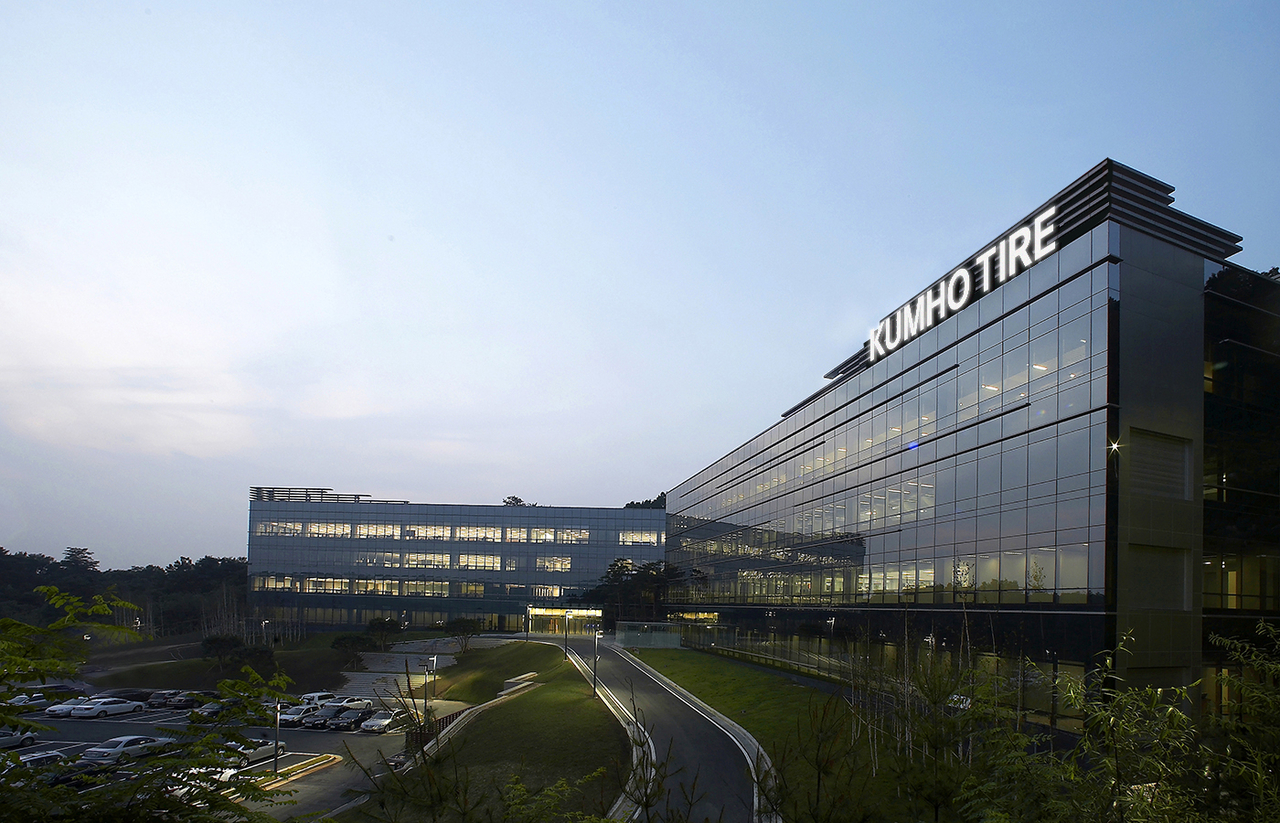
Tires are no longer just what keeps a car rolling. They are being reimagined as sensors that read road conditions, anticipate hazards and relay data to the vehicle. That is the vision Kumho Tire has been building toward since its founding in 1960 — and as the autonomous driving era approaches, the company is redefining what a tire is supposed to do.
Kumho Tire is developing smart tires and airless tires as its core technologies for the autonomous driving era, expanding both development and real-world testing, according to industry sources Wednesday.
The company sees autonomous driving and safety as the twin pillars of future mobility. When a human is behind the wheel, the driver can physically sense a slippery surface or a mechanical problem and react. In a self-driving vehicle, sensors and data must take over that role — which means tires, too, must be capable of detecting road conditions and feeding that information to the vehicle.
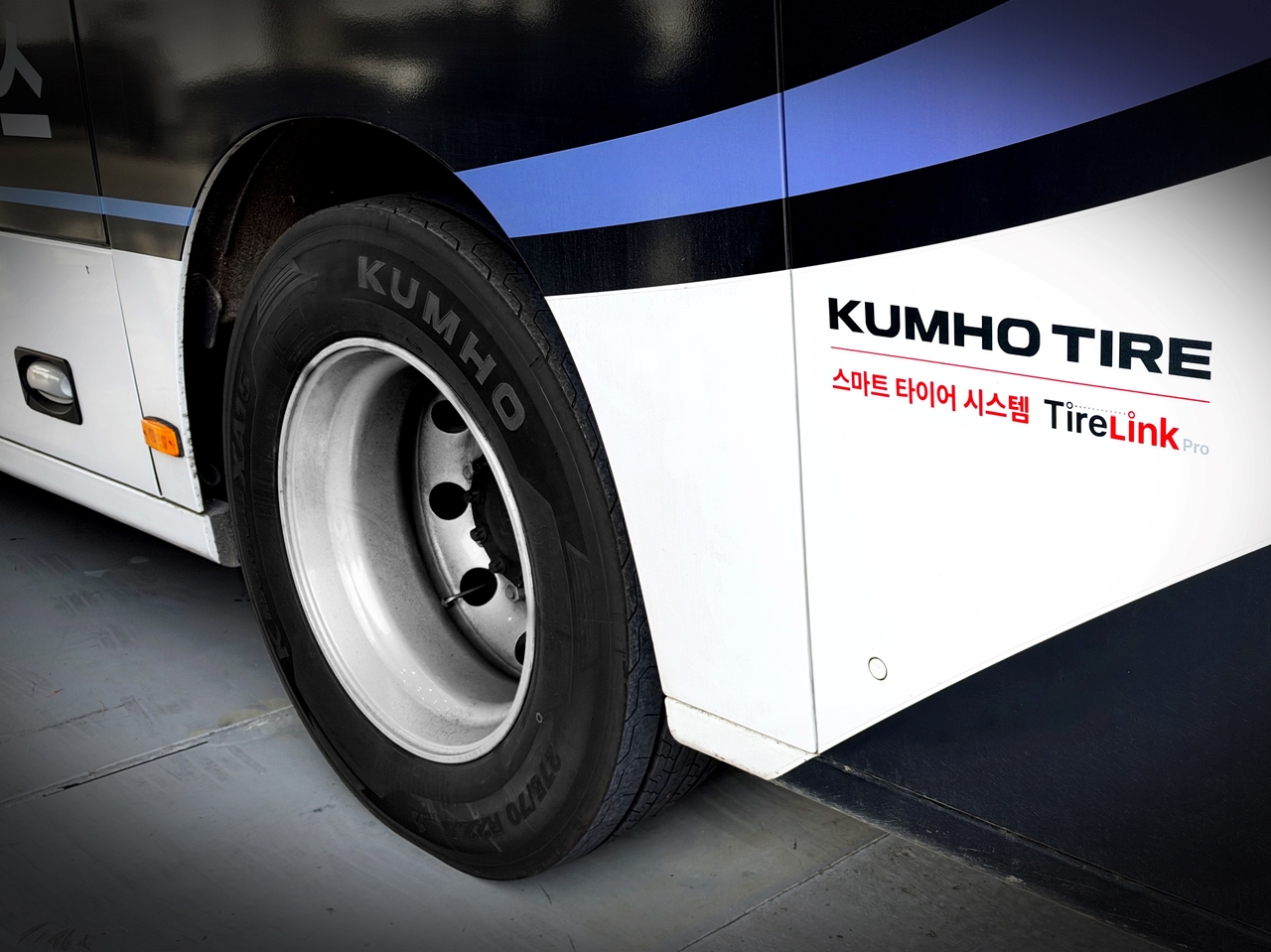
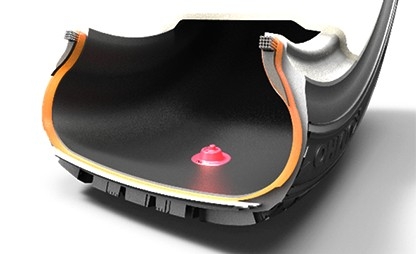
Kumho Tire's roadmap for smart tire development follows three stages: sense, predict and protect. In the first stage, sensors embedded in the tire monitor air pressure, temperature and location. The data collected is then analyzed to estimate tread wear and load, and to detect hazards such as potholes, icy roads and wet surfaces. The ultimate goal is to share road-hazard information with other vehicles or link it to a vehicle's control system to prevent accidents.
"The tire is the only point of contact between the vehicle and the road — the final piece of the puzzle that completes autonomous driving safety," Kumho Tire President Jung Il-taek said. "Tires must evolve into a core partner responsible for driving safety and data."
Not all of these capabilities are commercially available yet. Smart tires currently deployed on commercial vehicles mainly detect and alert drivers to abnormal air pressure and temperature. Technologies that predict road hazards and feed that information into vehicle control systems still require further development and validation.

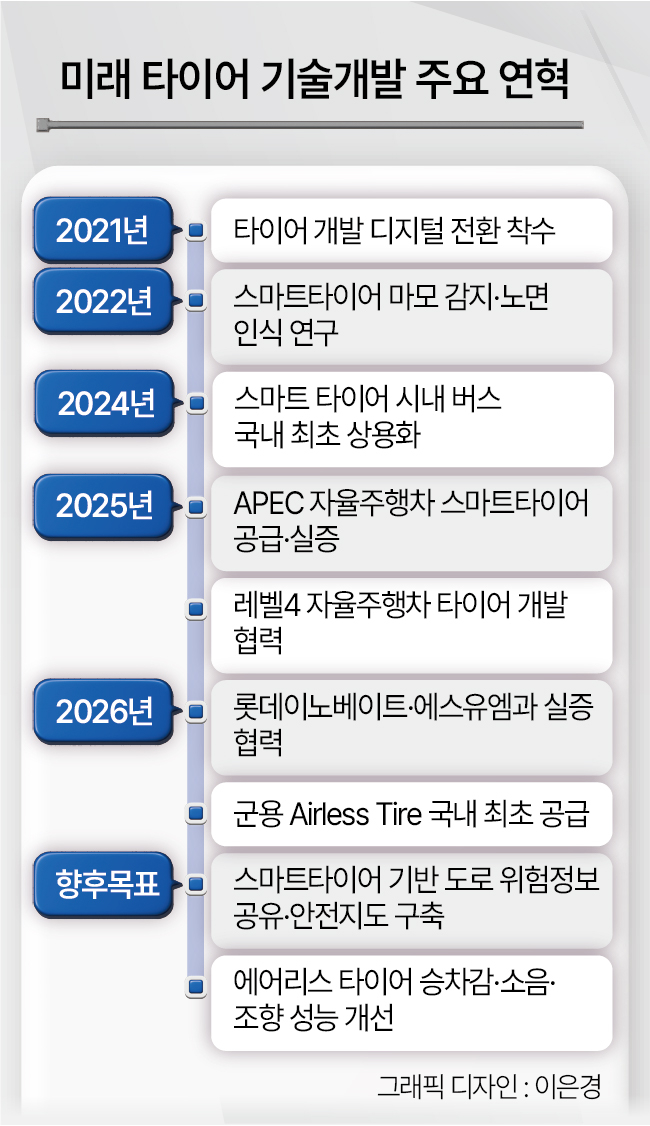
Real-world deployments are growing. Kumho Tire has been expanding its smart tire service since 2024, starting with Suncheon Transport buses. After fitting the fleet with TireLink, its real-time tire monitoring solution, annual fuel costs fell by an average of 2.7 percent for express buses and 2.6 percent for city buses.
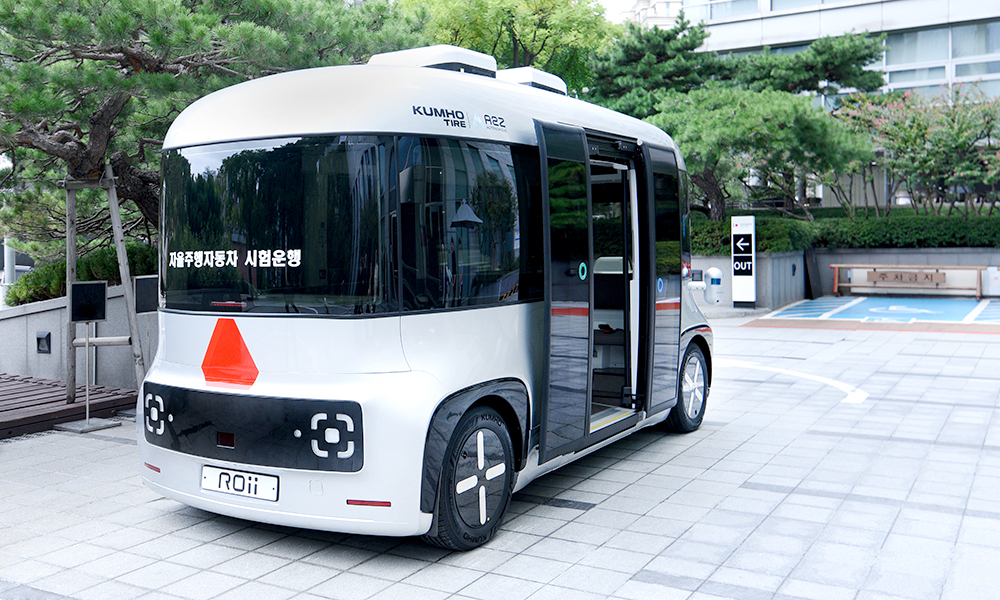
The company has more recently extended the technology to self-driving vehicles. It supplied smart tires for autonomous vehicles operated during last year's Asia-Pacific Economic Cooperation summit in Gyeongju and has been working on technology development with autonomous driving firm Autonomous a2z. This year, Kumho Tire is continuing pilot programs on self-driving buses and other vehicles in collaboration with Lotte Innovate and SUM.
Kumho Tire is also pursuing a "Driving Safety Map" that would share road-hazard data across vehicles. When a vehicle detects a pothole or a slippery stretch of road, it would alert following vehicles in advance. The company plans to develop this into a service that guides drivers along safer routes.
Puncture-free tires and beyond: expanding autonomous driving safety
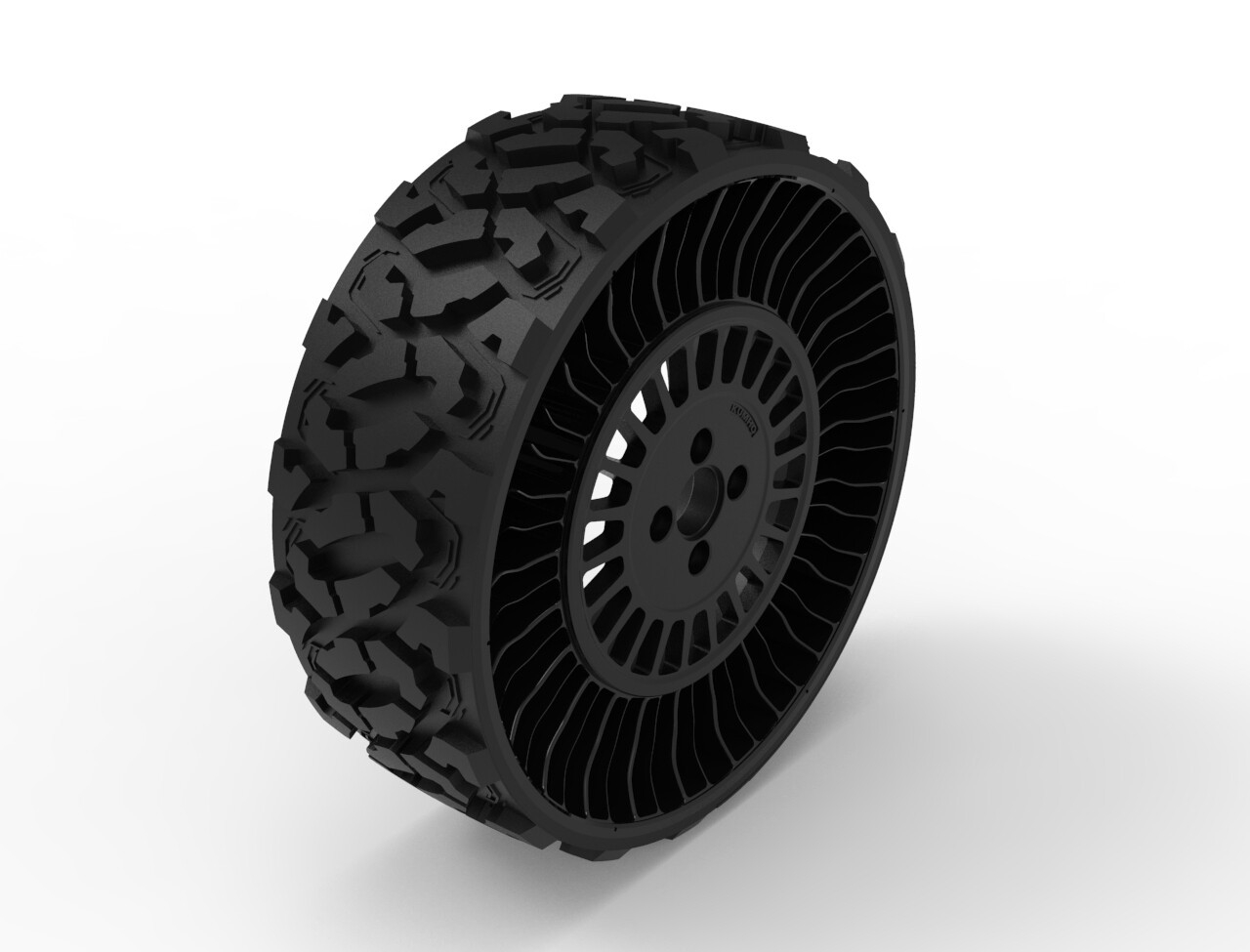
Alongside smart tires that sense road hazards, Kumho Tire is developing technology to reduce the risk of tire failure itself. Its airless tire — which runs without air — is the flagship effort.
Because airless tires contain no air, they eliminate the risk of punctures and pressure loss that can force a vehicle off the road. They also require less maintenance, with no need for regular pressure checks. The technology is seen as particularly well-suited to robotaxis and autonomous shuttles that operate without a driver. Airless tires are already being used on some vehicles, including electric carts and delivery robots.

Compared with conventional pneumatic tires, however, technical hurdles remain. Airless tires currently lag in steering performance — the ability to change direction smoothly in response to the wheel — and are relatively weaker at absorbing road shocks and reducing driving noise.
To overcome these limitations, Kumho Tire is focusing on proprietary structural design and materials development. The company has incorporated renewable eco-friendly specialty materials and developed a structure capable of withstanding high-speed driving. It has filed international patents and, in speed-endurance tests, successfully drove at speeds of up to 140 kilometers per hour.
Closing the performance gap with conventional pneumatic tires remains the next challenge. Kumho Tire plans to continue research and development aimed at improving steering performance, ride comfort and noise reduction.
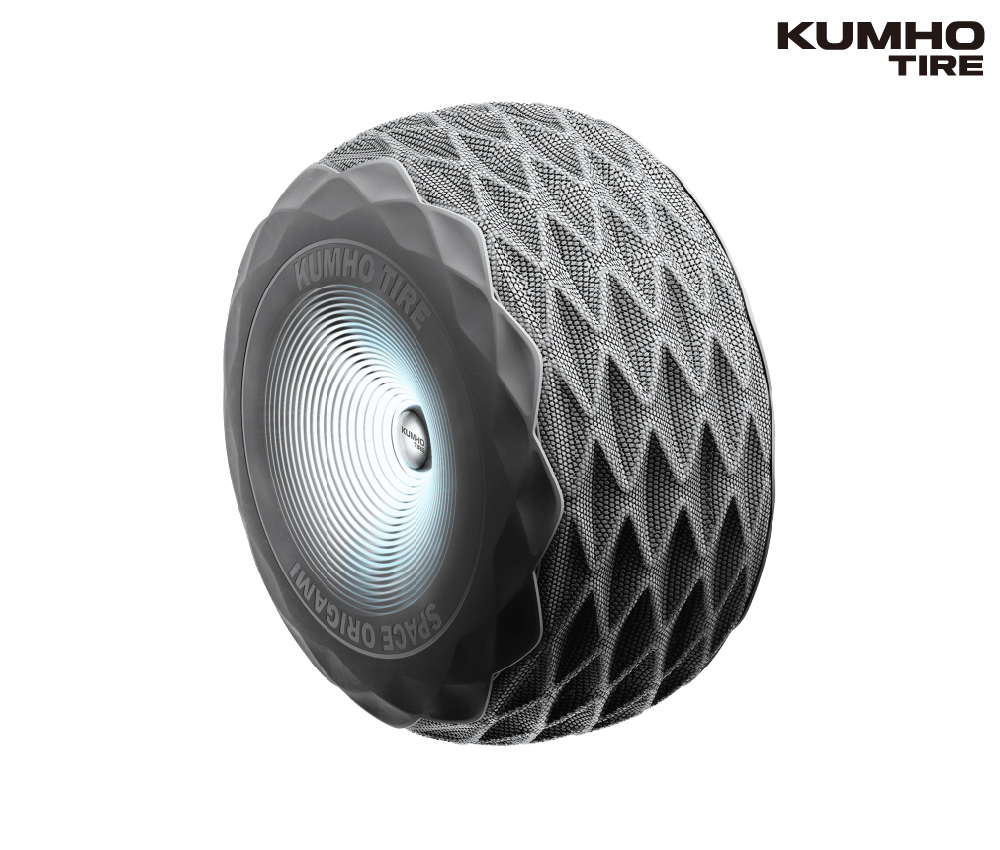
The company is also exploring broader applications for future tires. Two concept designs illustrate the ambition: Origami, a foldable tire designed with space exploration environments in mind, and Volume, a tire conceived to adjust its structure and function depending on driving speed and road conditions. Both remain future-oriented concepts rather than commercial products.
From scrapped tires to PET bottles: targeting 100% sustainable materials by 2045
The transformation of future tires extends to materials. Kumho Tire is reducing its reliance on petrochemical feedstocks and increasing the use of recycled materials. The company uses carbon black recovered from end-of-life tires and reinforcing agents made from recycled PET bottles, and is also developing materials derived from waste polystyrene and plant-based sources.
Results are beginning to show. This year Kumho Tire developed a tire incorporating approximately 90 percent sustainable raw materials. Its commercially released Majesty9 TA91 already applies about 47 percent sustainable materials.
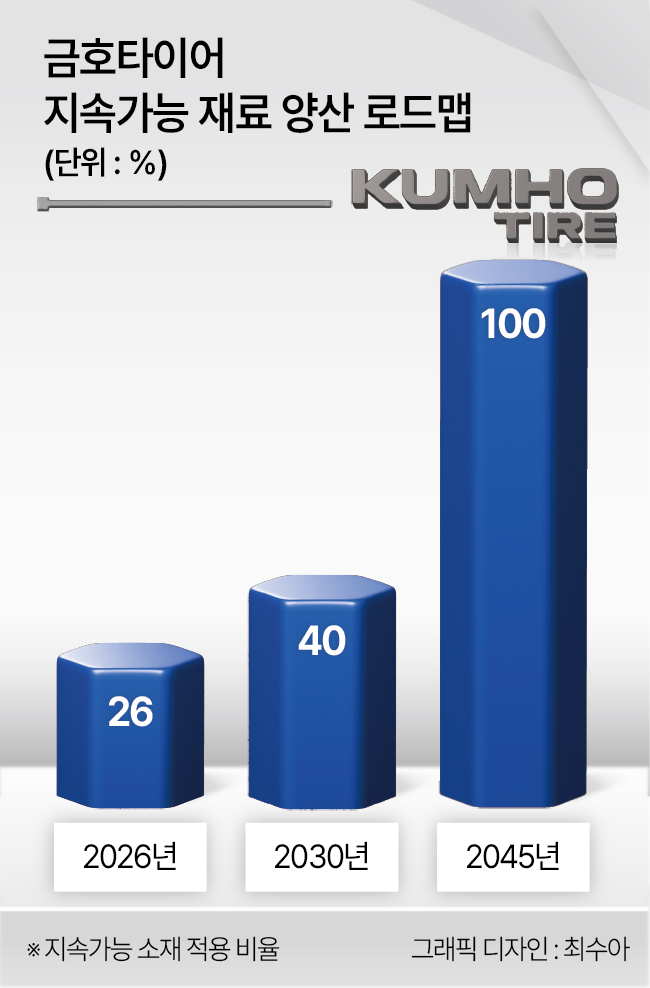
Sustainable materials accounted for just 25.7 percent of all raw materials Kumho Tire used last year. The company aims to raise that share to 40 percent by 2030 and to convert all raw materials to sustainable sources by 2045.
The push to reduce environmental impact goes beyond materials. Kumho Tire is also developing low-rolling-resistance tires to cut fuel consumption, high-wear-resistance tires for longer service life, and technologies to reduce driving noise and tire-wear particles. The company is also exploring the use of radio-frequency identification technology to track the full lifecycle of a tire from production through disposal.
These technological advances are directly tied to competitiveness in overseas markets. North America and Europe together accounted for about 63 percent of Kumho Tire's tire sales in the first nine months of this year. As demand for high-performance tires — particularly low-noise and high-durability products for electric vehicles and premium cars — intensifies in those markets, improving both materials and performance has become increasingly critical.
"We have identified sustainability as our survival strategy in a changing mobility industry," a Kumho Tire official said. "We will demonstrate Kumho Tire's commitment to securing competitiveness in carbon-neutral core technologies through alternative materials development, and to fulfilling our role as a sustainable mobility partner."
Design and test on a computer first: AI drives development innovation
As tire functions and materials evolve, so does the way tires are developed. Kumho Tire has built a digital twin system called i-MOVE, powered by AI and big data. The platform allows engineers to model a wide range of shapes and structures on a computer and test their performance virtually before a physical tire is ever made.
The system can predict braking performance, wear and noise, and identify the optimal design. By reducing the number of prototypes and physical tests required, the company aims to cut development time by about 33 percent — from 18 months to 12 months.

Research and development spending is also rising. Kumho Tire's R&D expenditure grew from 104.2 billion won ($77.4 million) in 2023 to 161.9 billion won last year, an increase of about 55 percent in two years. Kim Ki-woon, executive vice president and head of Kumho Tire's VPD Center, said the company is "innovating the tire development process," adding that the digital twin platform has strengthened its ability to respond to automaker requirements and develop premium products.
Production capacity is expanding as well. Kumho Tire currently operates eight factories across South Korea, China, the United States and Vietnam. Two new plants — in Hampyeong, South Jeolla Province, and Opole, Poland — are scheduled to begin operation in 2028. With annual production capacities of 5.3 million and 6 million tires respectively, the additions would bring Kumho Tire's total global production capacity to approximately 71.2 million tires.

The road ahead requires validating these technologies in real-world conditions and establishing safety standards for autonomous vehicle applications. "Industry, academia and government must work together to build the evaluation infrastructure, global technical standards and safety certification frameworks needed to commercialize future tires," Jung said. "We will contribute to realizing safety and social responsibility in future mobility through technological innovation and the assurance of safety."
kwater@heraldcorp.com