500 million won to eldest son called 'legitimate performance reward'
Wavve posted losses throughout Lee's tenure
Ruling and opposition parties clash over witness subpoena
Apology for past KBS failures deferred until after taking office
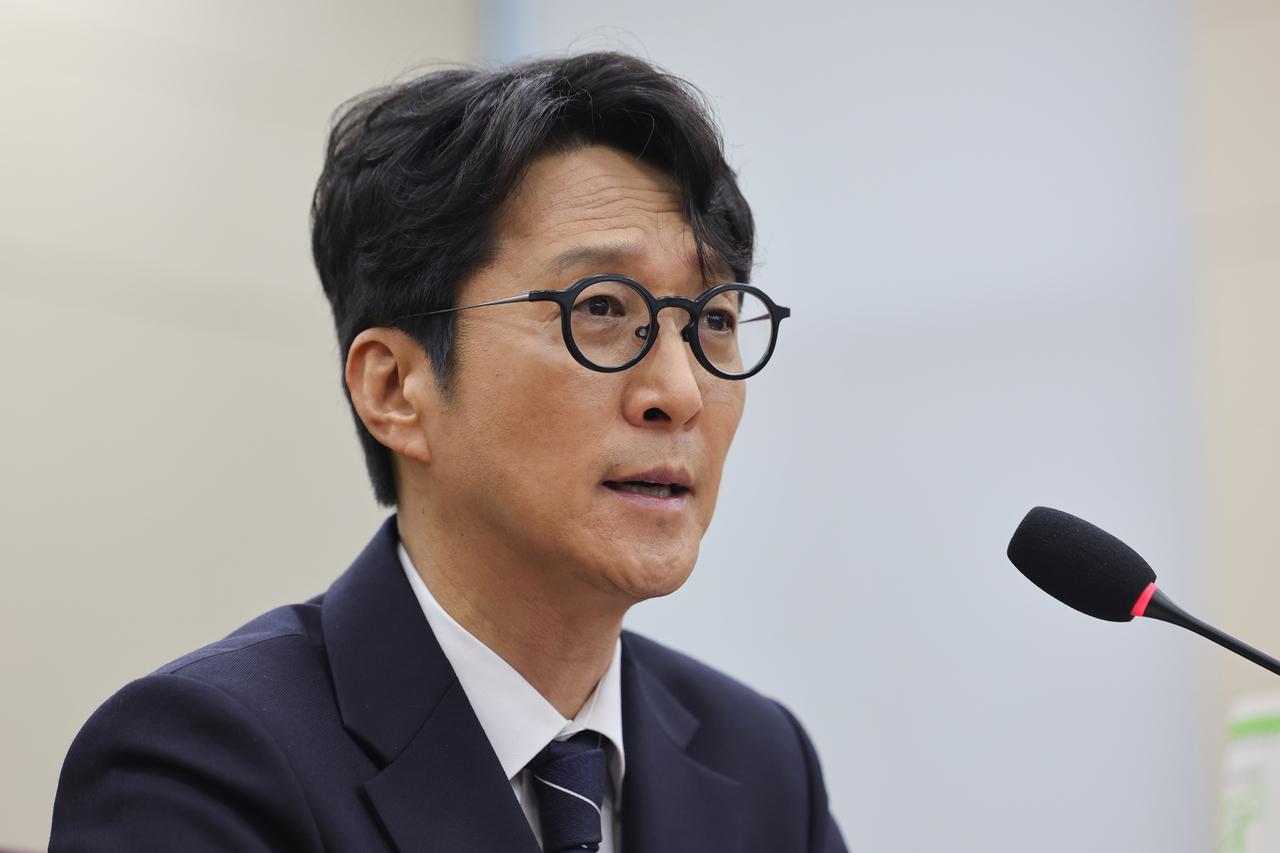
"I will make it a clear principle that the president does not interfere in individual news coverage, programming or production."
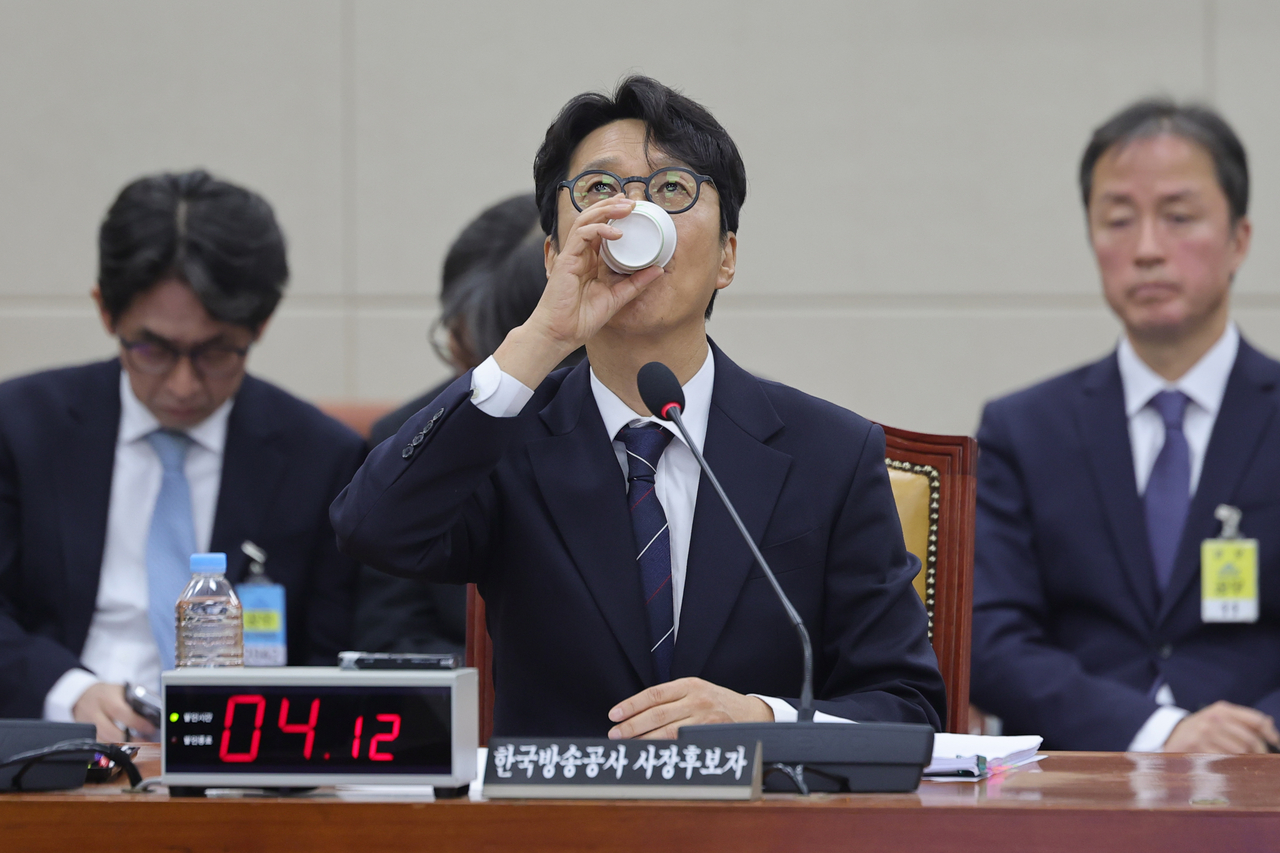
Lee Tae-hyun, nominee for KBS president, opened his confirmation hearing Tuesday by pledging to restore the public broadcaster's political independence as his first priority — a commitment to rebuild trust at KBS after a string of impartiality controversies under former presidents Park Min and Park Jang-bum, including the on-air description of a luxury handbag given to former first lady Kim Keon Hee as a "small pouch."
In his opening statement at the hearing before the National Assembly's Science, ICT, Broadcasting and Communications Committee in Yeouido, Lee said he would "create a virtuous cycle in which public trust forms the foundation of competitiveness, and the results of content and business ventures in turn raise the value of public broadcasting."
As first steps, he proposed normalizing the programming committee, introducing a consent requirement for appointing news directors, and strengthening the enforceability of the programming charter. He also said he would clarify accountability in editorial decisions by requiring bylines on desk editors and establishing a new AI verification team.
Alongside restoring impartiality, Lee identified stabilizing KBS's finances — which have deteriorated amid mounting deficits — as his other central task. He said he would "focus on cost efficiency rather than revenue growth" and pledged to return the broadcaster to profit by his third year in office. His plan calls for concentrated investment in flagship content each year, stable collection of the license fee, and new revenue streams from overseas content distribution, integrated advertising packages and archive licensing.
Once questioning began, however, the hearing shifted its focus from vision to the nominee's personal conduct. People Power Party lawmakers raised a series of allegations — gap investment in an apartment, fraudulent address registration, unreported rental income, and a 500 million won ($371,000) payment received by his eldest son — and questioned whether he was fit to lead a public broadcaster funded by viewers' license fees. Lee acknowledged the address registration fraud and the unreported rental income and apologized for both, but he denied any wrongdoing over the 500 million won his son received, calling it "compensation for legitimate performance."
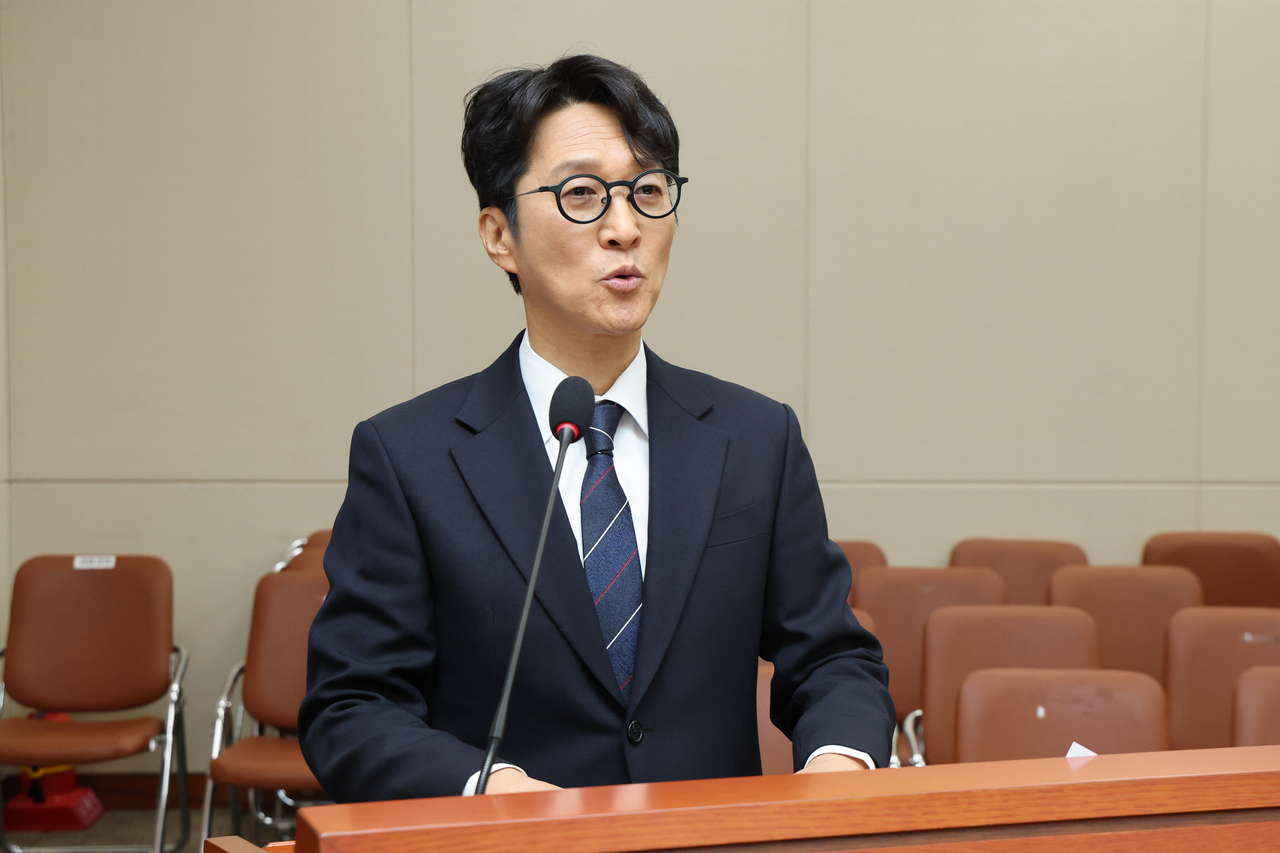
Apology for address fraud and unreported rent, but son's 500 million won called 'legitimate reward'
The first line of attack centered on an apartment in Jamwon-dong, Seocho-gu, Seoul, which Lee purchased from his mother-in-law in 2011 for 730 million won.
According to the office of People Power Party lawmaker Choi Hyeong-du, 86 percent of the purchase price was covered by an existing loan of 280 million won and a jeonse deposit of 350 million won from a tenant. Lee actually lived in the apartment for only two years and seven months, during which time its assessed value rose more than fourfold — from 540 million won to 2.25 billion won. That appreciation is why the People Power Party characterized the purchase as gap investment.
The same apartment also gave rise to allegations of fraudulent address registration. In December 2022, while living with his family in Yeoksam-dong, Gangnam-gu, Lee transferred his official residence registration to the apartment before moving it back to Yeoksam-dong. Choi's office noted that around that time, mortgage loans for high-priced homes in the Gangnam area had been reopened for landlords who moved in themselves, and suggested Lee may have shifted his registration to meet that lending requirement. Under questioning from People Power Party lawmaker Park Jeong-ha, Lee explained that he had followed his real estate agent's advice to register at the address after a tenant vacated due to a boiler leak, in order to prevent unauthorized occupancy. He nonetheless acknowledged that he had registered there without actually living in the unit and apologized.
The monthly rent Lee collected from tenants then raised questions about taxes and national health insurance premiums. Lee received close to 20 million won in monthly rent each year but failed to report four years of rental income from 2022 onward, filing amended returns only ahead of the hearing. Choi's office further alleged that during roughly 13 months of that period, Lee was enrolled as a dependent on a family member's workplace health insurance plan and paid no premiums. When People Power Party lawmaker Seo Cheon-ho pressed him on the point, Lee bowed his head and said, "Because I was using the rent I received to pay rent on the place where I was living, I was unaware of the relevant regulations. I lacked knowledge of tax law."
Having conceded ground on the real estate issues, Lee held firm on the 500 million won in cash his eldest son received — the sharpest point of contention between the ruling and opposition parties. The son received 100 million won on Dec. 31, 2025, and 400 million won on Jan. 12 this year, both from the chief executive and largest shareholder of the startup where he worked at the time. The 400 million won was transferred three days before the company's sale was finalized, and the combined 500 million won represents roughly 5 percent of the 10.08 billion won paid for a 70 percent stake in the company. The son was an employee with no equity stake in the firm.
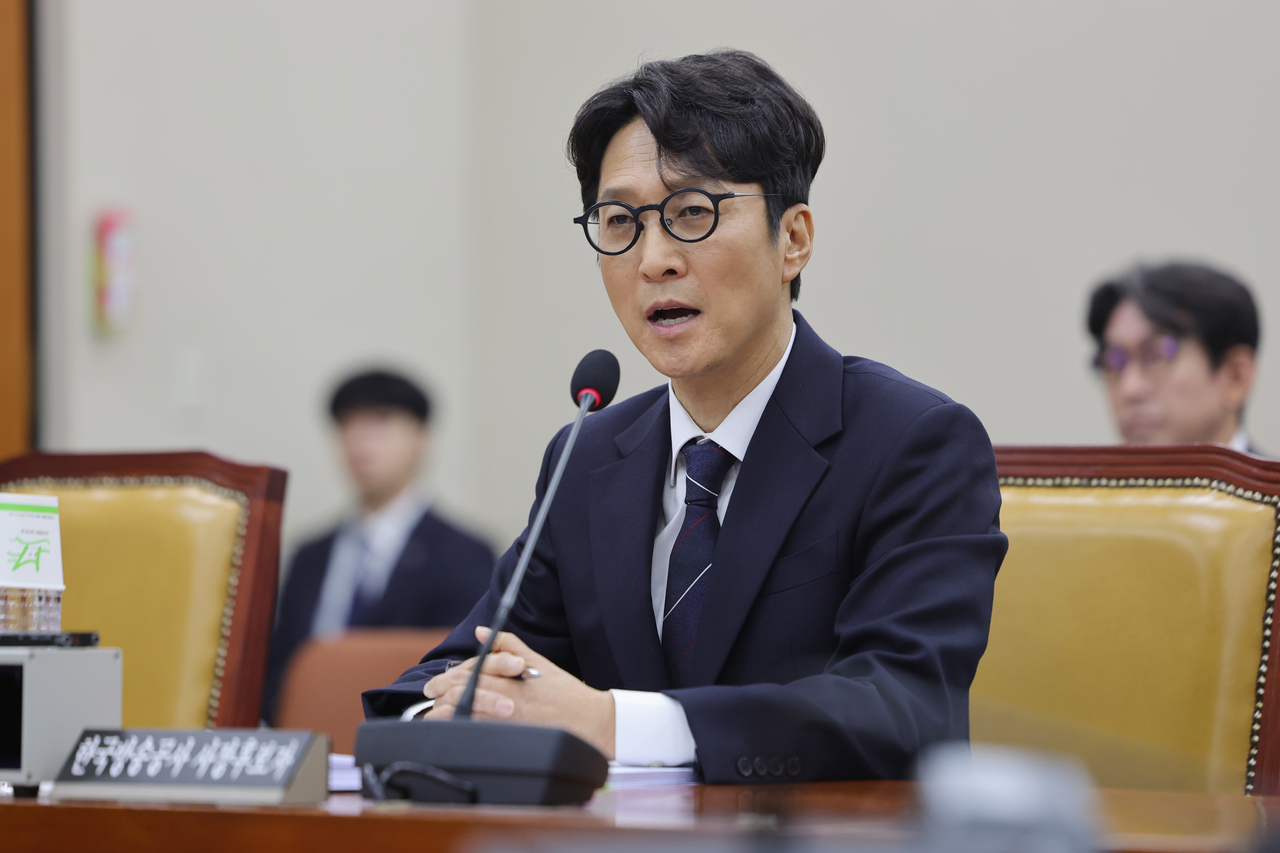
Choi demanded that Lee first identify whose acquaintance the donor was and challenged the nature of the payment. If the money was compensation for contributions to the company's growth, Choi argued, it should be subject to income tax — yet it was reported as a gift, reducing the tax burden. Lee pushed back, saying, "This concerns the economic activities of my son, who supports himself independently, and I understand it to be compensation for legitimate performance" — insisting it was neither illegal nor in violation of any law. He added that he had no personal connection to the donor and that the parties involved had received advice from a tax firm on the tax treatment.
The dispute then shifted to whether the donor should be called as a witness. People Power Party lawmaker Kim Jang-gyeom argued that the gift had been omitted from the hearing materials initially submitted and called for the donor to be designated as a reference witness. The Democratic Party opposed the move, noting that it is common practice at startups to compensate employees with a share of sale proceeds in lieu of adequate early salaries. Democratic Party lawmaker Lee Yeon-hee said the hearing "must not become one that digs into the personal details of the nominee's son and family in order to wound the candidate," while Choi signaled that he intended to pursue the matter through a formal complaint or other means even after the hearing concluded.
'Wavve lost money my entire tenure' — apology for past KBS failures deferred until after taking office
The profitability pledge Lee made in his opening statement came under scrutiny when examined alongside his management record.
Wavve, which Lee led from September 2019 through March last year, invested about 300 billion won in content but never turned a profit during his tenure. When People Power Party lawmaker Jo Gyeong-tae raised the point, Lee acknowledged it directly: "Wavve was in the red throughout my entire tenure. I accept that as my responsibility as a manager." He argued, however, that the losses stemmed from aggressive content investment and that he had reduced the annual deficit from around 110 billion won to around 18 billion won. Choi Hyeong-du pressed further, citing missed revenue targets and a failed stock listing, and demanded that Lee consider stepping aside.
The path that brought Lee to the KBS nomination also drew scrutiny. The People Power Party raised suspicions that Lee had coordinated his candidacy in advance, pointing to his resignation after just six months as head of the Hanam Cultural Foundation — a post he took up in July last year — shortly before the KBS presidential search opened. Lee denied the allegation, saying he had stepped down after deciding to apply for the KBS position. When lawmaker Kim Jang-gyeom questioned his political neutrality by citing a history of donations to the investigative outlet Newstapa, Lee said he had not realized the payments were being made through automatic billing.
While the People Power Party focused on the nominee's personal conduct, the Democratic Party directed its questions at accountability for the tenure of former KBS President Park Jang-bum. Asked by lawmaker Hwang Jeong-a about plans to rebuild trust with staff, Lee said he would "consult with employee representatives on the programming charter first, immediately upon taking office." He also agreed to a request from lawmaker Lee Jeong-heon to restore a consent requirement for appointing directors across five departments, including news and current affairs production. On calls to audit allegations that KBS management had been in contact with the presidential office and had prepared for martial law broadcasts ahead of the Dec. 3 emergency martial law declaration, Lee said he would review the matter after taking office.
Even as Lee readily agreed to institutional reforms, he was guarded when asked to apologize for past KBS coverage. Lawmaker Kim Hyeon cited, among other examples, the February 2024 interview between then-KBS anchor Park Jang-bum and former President Yoon Suk Yeol, in which the luxury handbag received by former first lady Kim Keon Hee was described as a "small pouch," and demanded an apology. Lee deflected, saying, "I will decide on an apology after taking office and reviewing the processes, systems and procedures involved."
The committee must adopt a confirmation hearing report by Thursday, after which President Lee Jae Myung may proceed with the appointment, at which point Lee would immediately begin a three-year term. Asked whether he would need to sell idle assets to cover the deficit, Lee said, "If assets are sold right away, the proceeds will be used to cover losses during my term," adding, "To fulfill the current public mandate, we need a plan spanning at least five to ten years."
shee@heraldcorp.com