
Permits issued for just 3.6% of target; ground-breaking count stands at zero
Two project sites on hold over financing problems
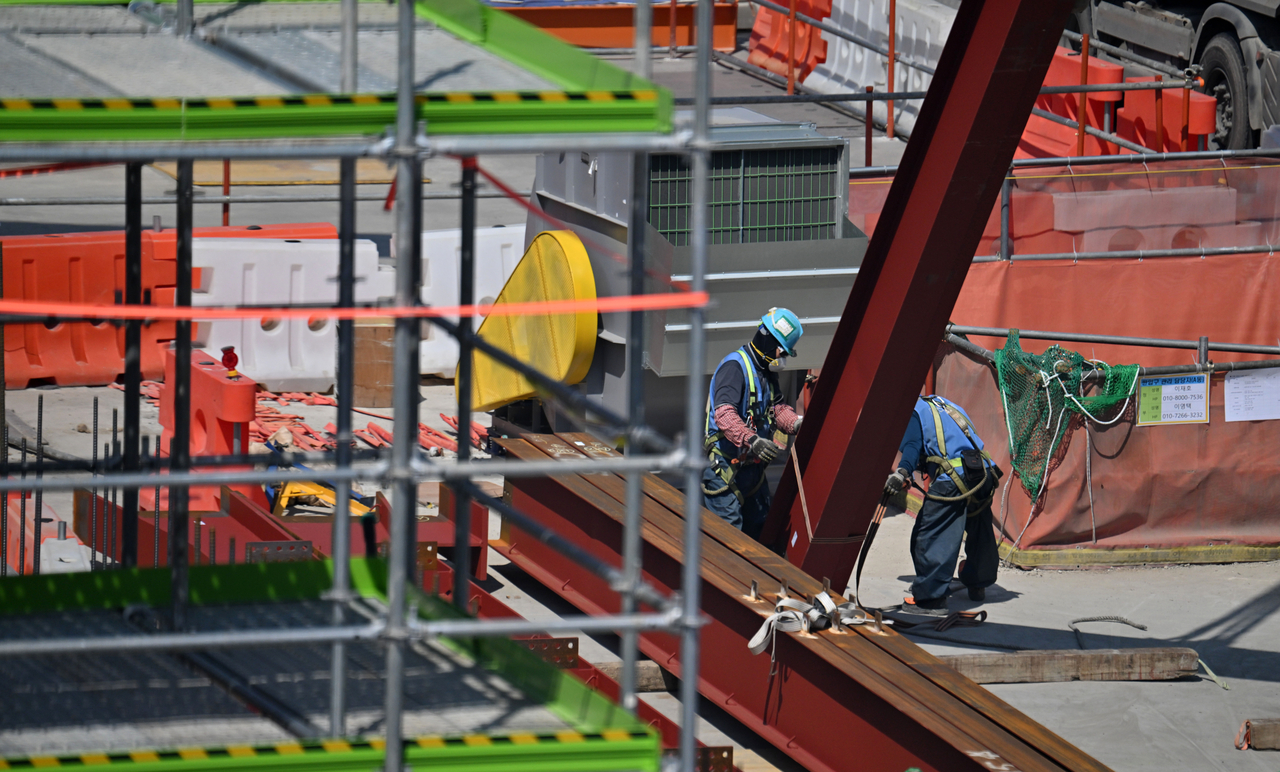
Not a single ground-breaking has taken place under Seoul's newlywed safety housing program, which set a target of 2,000 permitted units this year, as soaring construction costs and higher interest rates have driven up project expenses and made financing increasingly difficult for developers. The supply crunch has raised alarm over the city's ability to deliver housing for newlyweds, one of its most housing-vulnerable groups.
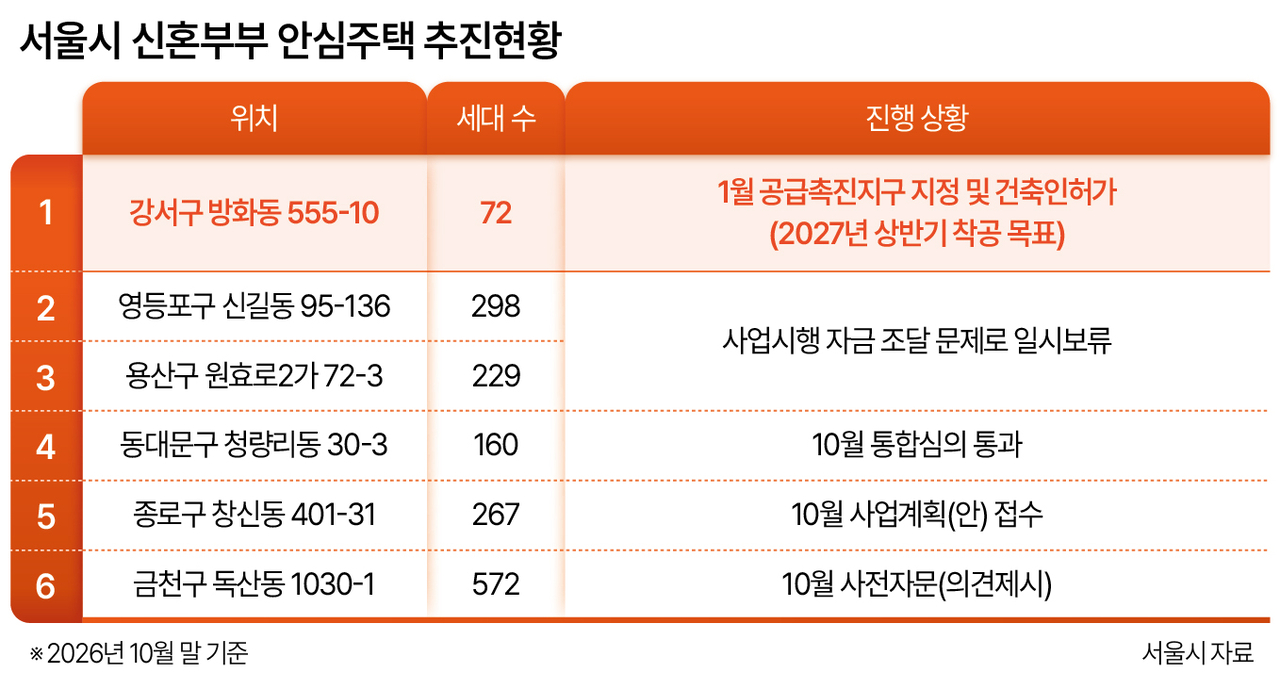
According to the Seoul Metropolitan Government, only one newlywed safety housing site — located at 555-10 Banghwa-dong, Gangseo-gu — has received a permit so far.
The newlywed safety housing program is a rental housing category introduced under the city's "Low Birth Rate Response Plan for Expanding Newlywed Housing," announced in 2024. It targets couples married within seven years and those planning to marry, offering 70 percent of units as rentals — split between private and public operators — and the remaining 30 percent as pre-sale units. Couples who have children are given priority transfer rights and purchase request rights.
When the plan was announced, the city set a goal of 2,000 permitted units by the end of this year, but only the Banghwa-dong site, with 72 units, has cleared the permitting stage — just 3.6 percent of the target. No site has broken ground. The Banghwa-dong project is scheduled to begin construction in the first half of next year, meaning the earliest residents could move in is around 2029.
The city had originally expected the first project to break ground in January of this year, but the overall supply timeline has slipped. Rising construction costs and the lingering effects of high interest rates have been cited as the main obstacles to financing. According to the Korea Institute of Civil Engineering and Building Technology, the construction cost index (base year 2020=100) stood at a preliminary 139.48 as of September, up 5.94 percent from the same month a year earlier. The year-on-year increase in the construction cost index has exceeded the consumer price inflation rate for nine consecutive months since January, adding to the financial strain on developers.
The approval process for newlywed safety housing projects runs through several stages: submission and review of a project proposal, preliminary consultation with the integrated deliberation committee, submission of a project plan, public notice and inter-agency consultation, deliberation by the integrated deliberation committee, and finally district designation, approval and ground-breaking. Preliminary consultations have proceeded at two sites per year — two in 2024, two in 2025 and two in 2026 — but some projects have stalled midway due to financing problems. Two sites — at 95-136 Singil-dong, Yeongdeungpo-gu, and 72-3 Wonhyo-ro 2-ga, Yongsan-gu — have been put on hold after private developers ran into funding difficulties.
Four sites are currently active. The project at 30-3 Cheongnyangni-dong, Dongdaemun-gu (160 units) completed its preliminary consultation in October 2025 and passed an integrated deliberation review last month. The site at 401-31 Changsin-dong, Jongno-gu (267 units) submitted its project plan last month. A project at 1030-1 Doksan-dong, Geumcheon-gu also completed its preliminary consultation last month and is preparing for integrated deliberation.
"Private developers are struggling to move forward with projects due to high interest rates and rising construction costs," a Seoul Metropolitan Government official said. "The Cheongnyangni and Doksan-dong sites have recently applied for land acquisition cost support, and those applications are now under review. The city will continue to provide support to ensure there are no disruptions to housing supply."
Meanwhile, the city's youth safety housing program — another initiative under the broader safety housing umbrella — has also seen zero new permits issued this year. To ease the financial burden on developers, the city expanded the interest subsidy ceiling on construction loans for private operators from a maximum of 2 percent to 4 percent on a temporary three-year basis starting in April, and has been providing land acquisition financing to developers pursuing safety housing projects.
hope@heraldcorp.com





