
Ministry of Statistics releases September 2026 population trends
Births for January–September reach 218,896, up 14.3%
Third-quarter total fertility rate hits 0.90, led by women in their 30s
Marriages fall for second consecutive month, down 11.7% in September
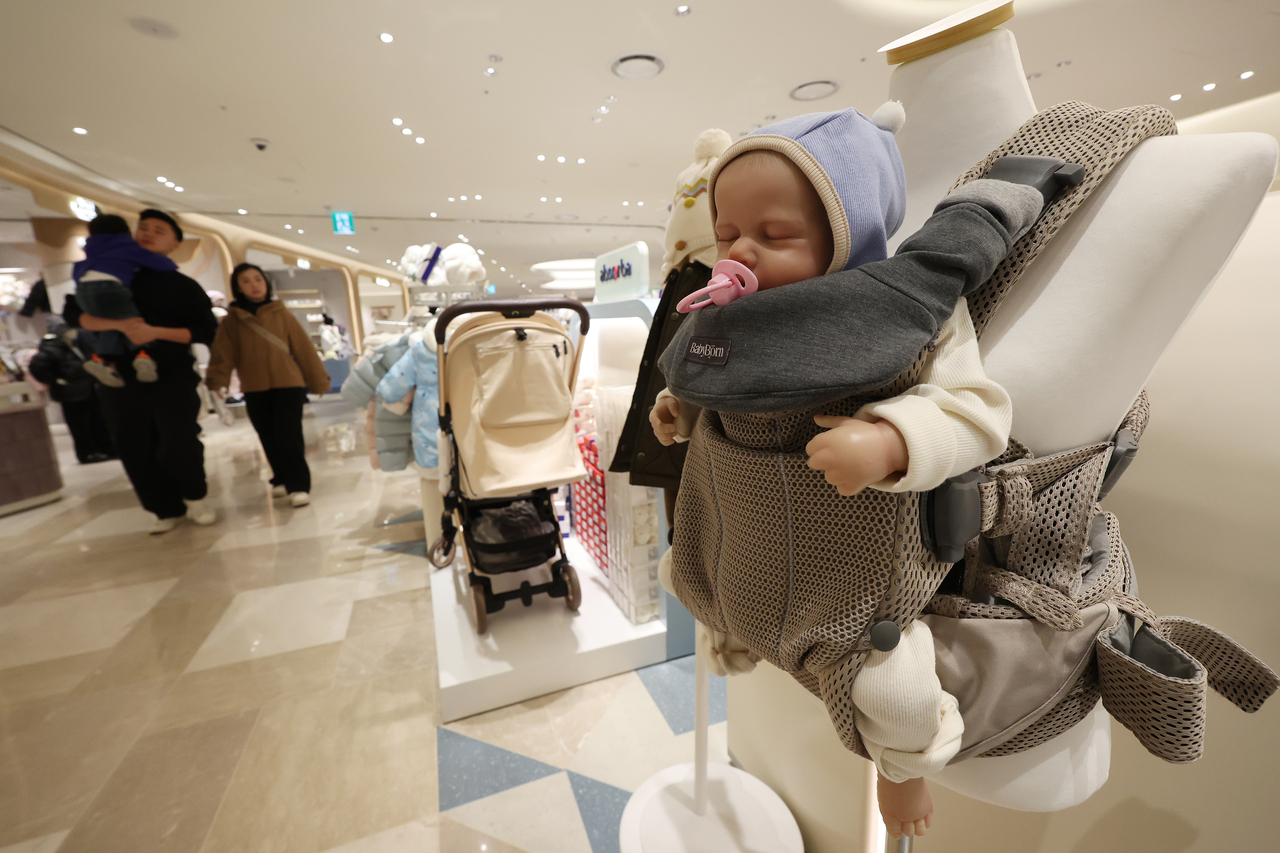
South Korea recorded more than 25,000 births in September, a rise of over 12 percent from a year earlier, while the total fertility rate — the average number of children a woman is expected to have in her lifetime — climbed to 0.95.
The number of babies born in the first nine months of this year exceeded last year's figure for the same period by more than 27,000. However, marriages, a leading indicator of future births, fell for a second consecutive month, and deaths continued to outnumber births, keeping the country's natural population decline intact.
According to the September 2026 population trends report released Wednesday by the Ministry of Statistics, births totaled 25,113 in September, up 2,731, or 12.2 percent, from the same month last year. The figure marked a third consecutive month of double-digit growth, following increases of 11.1 percent in July and 13.0 percent in August.
Cumulative births for January through September reached 218,896, up 27,303, or 14.3 percent, from 191,593 in the same period last year. Given that full-year births totaled 254,341 last year, this year's nine-month tally already accounts for 86.1 percent of that annual figure.
Women in their 30s drive fertility rebound; Q3 rate reaches 0.90
The total fertility rate for September stood at 0.95, up 0.10 from 0.85 in the same month last year. After dipping to 0.89 in July and 0.87 in August, the rate rebounded to approach the 1.0 mark.
Births in the third quarter totaled 73,091, up 7,872, or 12.1 percent, from the same period a year earlier. The third-quarter total fertility rate came in at 0.90, up 0.09 from 0.81 a year ago. Quarterly fertility rates this year — 0.95 in the first quarter, 0.88 in the second and 0.90 in the third — all exceeded last year's annual rate of 0.80.
Women in their 30s led the rise in fertility. The birth rate among women aged 30 to 34 reached 82.9 per 1,000 women in that age group in the third quarter, up 8.2 from a year earlier. The rate for women aged 35 to 39 also rose, climbing from 53.3 to 62.0, a gain of 8.7. By contrast, the birth rate for women aged 24 and under edged down 0.1 to 2.1.
By birth order, first births drove the overall increase. First children accounted for 63.5 percent of all births in the third quarter, up 1.3 percentage points from the same period a year ago. The share of second children fell 0.7 percentage points to 30.7 percent, while third and higher-order births declined 0.6 percentage points to 5.8 percent.
The average length of marriage before the birth of a first child was 2.41 years, down 0.02 years from a year earlier.
By region, Sejong posted the highest third-quarter total fertility rate at 1.17. Ulsan (1.10), South Chungcheong Province (1.08), North Chungcheong Province (1.05), North Gyeongsang Province (1.04), South Gyeongsang Province (1.01), and Gangwon Province and Gwangju (1.00 each) also recorded rates at or above 1.0. Seoul had the lowest rate in the country at 0.72, though that was up 0.08 from the same period last year.
Marriages fall for second straight month; natural population decline continues
Despite the rise in births, marriages — a forward-looking indicator of future birth trends — continued to decline.
Marriages in September totaled 16,299, down 2,156, or 11.7 percent, from the same month last year. After rising 9.3 percent in July, marriages slipped 1.2 percent in August before the decline widened to double digits in September.
Third-quarter marriages also fell, totaling 57,799, down 490, or 0.8 percent, from a year earlier — reversing gains of 6.1 percent in the first quarter and 4.9 percent in the second. Still, cumulative marriages for January through September reached 182,173, up 3.4 percent from the same period last year.
Deaths continued to outnumber births. September deaths totaled 29,818, up 1,678, or 6.0 percent, from the same month a year earlier. As a result, the natural population change — births minus deaths — came to minus 4,705.
The cumulative natural population decline for January through September stood at 48,975, nearly 30,000 less than the 78,666 recorded in the same period last year.
By region, five cities and provinces recorded natural population increases in September: Gyeonggi Province (1,121), Seoul (279), Sejong (139), Ulsan (87) and Incheon (1). Eleven others posted natural declines, including North Gyeongsang Province (minus 1,057), Busan (minus 932) and Gwangju (minus 903).
Divorces in September totaled 7,476, down 481, or 6.0 percent, from the same month last year.
fact0514@heraldcorp.com





