Greer appears to point to 'three mega projects' announcement; says most tariffs will follow existing trade agreement rates, with China as the exception
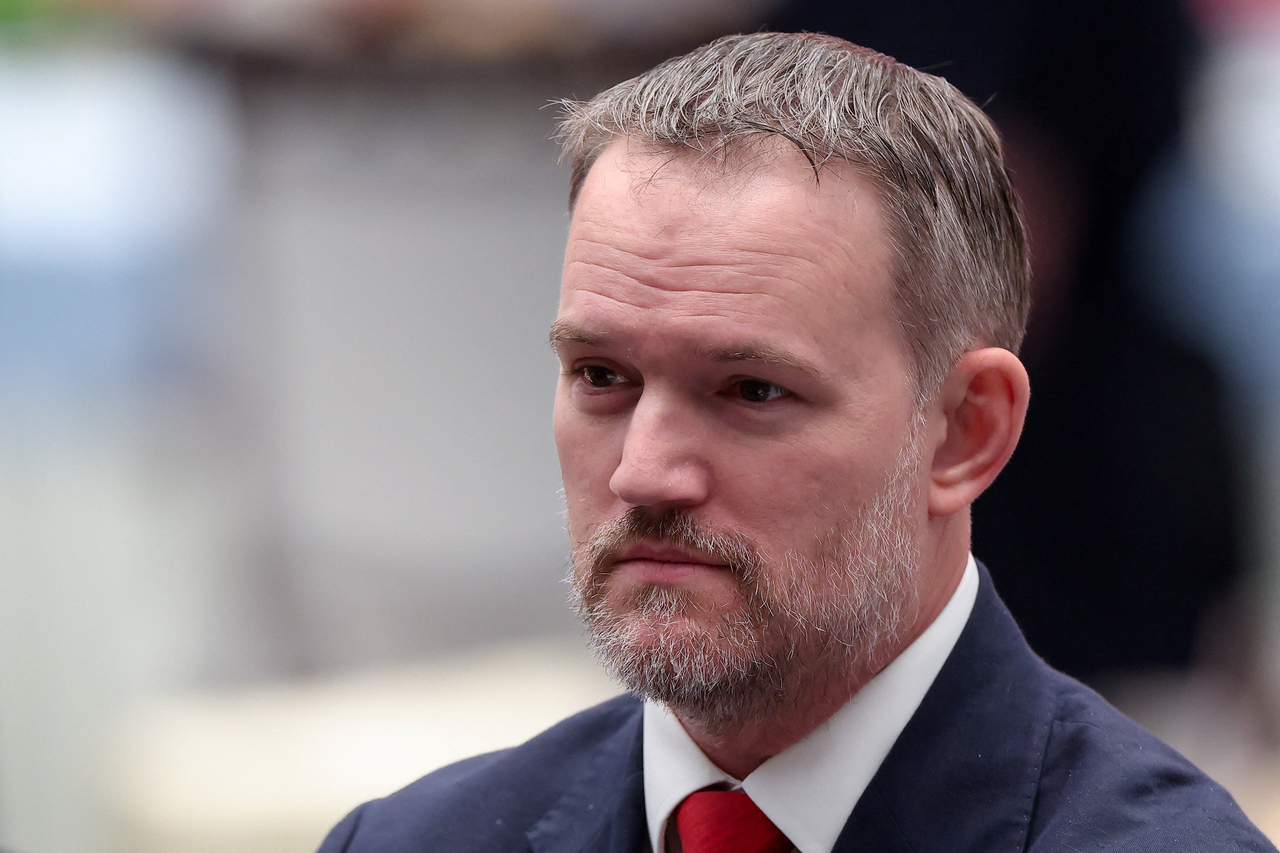
US Trade Representative Jamieson Greer has cited "government support and infrastructure plans" as the basis for the overproduction tariffs that raised South Korea's tariff rate by 2.5 percentage points.
Appearing on CNBC on Wednesday (local time), Greer was asked what justified imposing overproduction tariffs on South Korea under Section 301 of the Trade Act. "In the case of Korea, they announced a number of government support and infrastructure plans this summer," he said.
"These are not responding to actual demand," Greer said. "This is government intervention — increasing foreign supply without actually increasing consumption abroad."
The government support and infrastructure plans Greer referenced appear to point to South Korea's "three mega projects" announcement, which outlined plans to build a triangular hub of advanced industries — semiconductors, physical AI and AI data centers — outside the Greater Seoul area.
"Other countries are producing or building production capacity that is not really justified by the economic conditions of the situation," he said. "What we are proposing is a set of targeted tariffs to address this overproduction capacity problem."
Greer said many of the targeted tariffs would follow what he called "agreement rates" — aligning with the tariff levels set under trade agreements concluded with South Korea and others since last year.
Under the trade agreement, the reciprocal tariff rate applied to South Korea was 15 percent. A Supreme Court ruling in February invalidated that rate, but the USTR has invoked a Section 301 investigation to restore it.
The implication is that the combined targeted tariff rate — reflecting the already-announced 12.5 percent "forced labor tariff" and the newly announced overproduction tariff — would not exceed the 15 percent rate established under the existing trade agreement.
"This is not being added on top of existing tariffs — it is essentially filling in the gap" relative to the trade agreement rate, Greer said, while stressing that China is the sole exception to this approach.
The USTR announced a 20 percent overproduction tariff on China — higher than the previously announced 12.5 percent forced labor tariff. Greer said the higher of the two, the overproduction tariff, would apply.
Greer noted that the 25 percent tariffs imposed on China during the first Donald Trump administration remain in effect. "This 20 percent is being added on top of those tariffs," he said.
However, he said China understands that "we will impose a certain level of tariffs" and that the new measures fall within that understanding, signaling they would not breach the bilateral tariff truce set to expire Jan. 10 next year. "If we were to go above 20 percent or take other such actions, China would consider that a violation of the agreement," he said, adding that the tariff exemption on $30 billion worth of Chinese goods under the truce remains in effect.
Greer said Mexico was left out of the latest announcement because its overproduction tariffs require additional investigation and consultations.
"In many countries, including Mexico, Chinese intermediate goods are flowing in, and those countries are taking no steps to control those intermediate goods," he said. "This is essentially spreading China's overproduction capacity problem across the globe."
yckim6452@heraldcorp.com