First cohort's 9 teams secure investment, government project selections
Second cohort to focus on technology demonstration, business model validation
11 startup teams present social solutions, business results
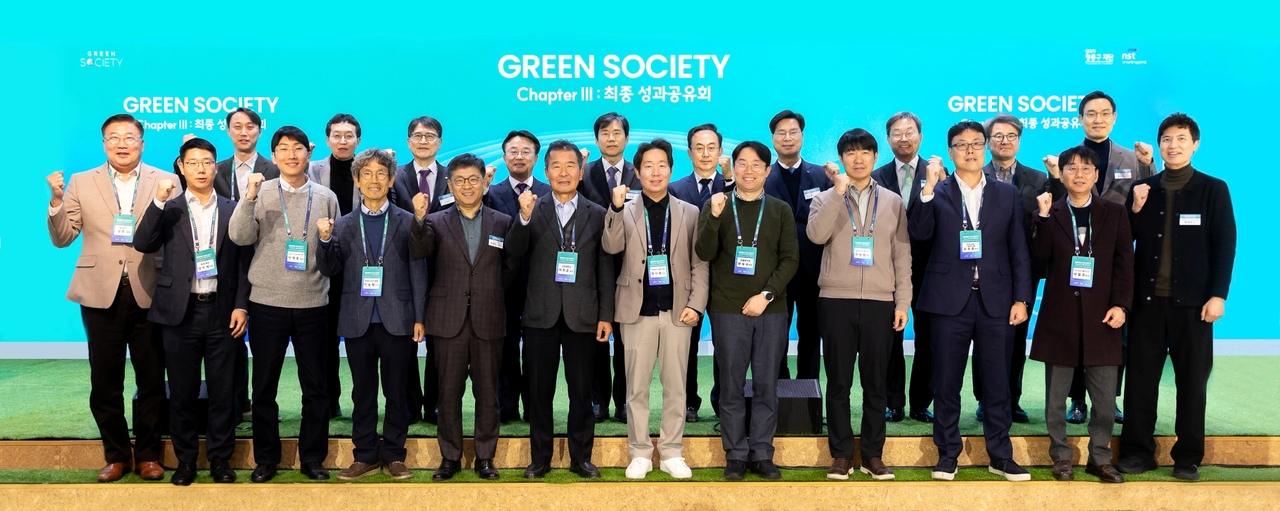
The Hyundai Motor Chung Mong-koo Foundation announced Thursday that it held the "CMK Green Society Chapter III: Final Showcase" and the "2026 Impactpreneur Day" on Tuesday and Wednesday, respectively, sharing the results of its entrepreneurship programs and outlining their future direction.
Both events were held under the integrated brand "Hyundai Motor Chung Mong-koo Entrepreneurship," which the foundation established this year to bring together its "CMK Impactpreneur" and "CMK Green Society" programs. Grounded in the entrepreneurial spirit of founder and Honorary Chairman Chung Mong-koo, the brand connects the two programs into a single talent development framework that supports impact entrepreneurs and entrepreneurially minded researchers at each stage of their growth.
CMK Green Society is a climate tech commercialization program designed to help innovative technologies addressing the climate crisis find practical applications in industry and society. Since 2023, the foundation has supported nine research teams working in the areas of climate, resources and ecology under the slogan "Lab to Society." Beyond research and development, it has backed the full commercialization process — including entrepreneurship education, business model development, technology demonstration and validation, and connections to domestic and international companies and investors.
Over the past three years, three of the nine teams incorporated new companies and three pursued technology transfers. The teams secured a combined 10 investment deals and government project selections, with private matching funds totaling around 20 billion won ($14.9 million). The foundation also received a presidential commendation for carbon neutrality and green growth in December 2025, in recognition of its climate tech development efforts and public-private-academic collaboration.
The Tuesday showcase at OnDream Society in Myeong-dong, Seoul, drew about 80 attendees, including Kim Geol, vice chairman of the Hyundai Motor Chung Mong-koo Foundation; Lee Chang-hoon, civilian chair of the Presidential Commission on Carbon Neutrality and Green Growth; Kim Young-sik, chairman of the National Research Council of Science and Technology; and Jeong Jin-taek, general chair of CMK Green Society, along with representatives from research teams, academia, industry, investment institutions, government agencies and public institutions.
The nine first-cohort research teams presented their development achievements and commercialization progress across six climate tech areas: green hydrogen production, power grid stabilization, sustainable aviation fuel production, lithium concentration, soil restoration and marine carbon capture.
The foundation plans to launch a second cohort of CMK Green Society in 2027. While the first cohort focused on advancing technologies and building a commercialization foundation through prototype development, the second will center on technology demonstration and business model validation, with the aim of improving early-stage companies' prospects for market entry and investment.
To that end, the foundation will strengthen collaboration with private investors from the earliest stages to help translate research outcomes into actual investment. It also plans to expand partnerships that can support customer acquisition and overseas expansion, and to develop its support framework around companies' tangible growth outcomes.
On Wednesday, the "2026 Impactpreneur Day" was held at Plenty Convention in Seoul. CMK Impactpreneur is the foundation's startup support program, which identifies and nurtures entrepreneurs tackling social problems — from university students preparing to launch ventures to early- and growth-stage startups.
The event, themed "An Entrepreneur's Worldview: The Backgrounds and Stories Behind Entrepreneurship," drew about 200 attendees, including Kwon Chang-jun, vice minister of Employment and Labor; Mok Seung-hwan, director general for startup and venture innovation at the Ministry of SMEs and Startups; and Jang Dae-ik, dean of the Startup College at Gachon University. Jang delivered a keynote address on "How Impact Entrepreneurs Create New Possibilities," followed by a panel discussion with entrepreneurs and representatives from investment and support organizations.
Eleven startup teams — three from the university pre-launch track, five from the early-stage track and three from the growth track — presented the social problems they are addressing, their business models and their progress. On-site judging named Reblock the top winner in the university pre-launch track, Exist in the early-stage track and Geogrid in the growth track. Excellence awards went to Bomi, Dasimulgyeol, Stillcut and Eight Studio, while merit awards went to Safeops, Wishbuilder, Newton and Puzzlelab.
The foundation said its focus extends beyond supporting individual companies and research projects to sustaining the long-term growth and ambitions of entrepreneurs themselves. It plans to deepen entrepreneurship education and commercialization support, and to build fellowship networks and communities where innovators from different fields can connect and collaborate. The foundation also intends to strengthen its role as a catalyst drawing private capital and resources into social innovation, working with companies, investors and public institutions, while expanding its global network to support innovative companies' growth and overseas expansion.
"Innovation to solve social problems begins with the entrepreneurial spirit to challenge new possibilities," Kim Geol said. "The foundation will support climate tech researchers and impact entrepreneurs in turning innovative ideas into real change and sustaining their growth, and we will build an ecosystem where their efforts expand into greater social value."
Meanwhile, the foundation recently hosted the "2026 Korea-Southeast Asia Strategic Policy Forum" at the Sheraton Imperial Hotel in Kuala Lumpur, Malaysia.
The forum was organized to extend the foundation's cooperation — built through talent development and international exchange in Southeast Asia — into the policy and industry spheres. Last year, the foundation co-supported the "2025 Korea-ASEAN Policy Exchange Community International Public Policy Symposium" with the Korea Foundation, and this year it co-organized a separate strategic policy forum with the Korea Research Institute at the University of New South Wales in Australia.
eyre@heraldcorp.com