
Achievements include automated air-conditioner maintenance, big data predictive repairs and parts localization
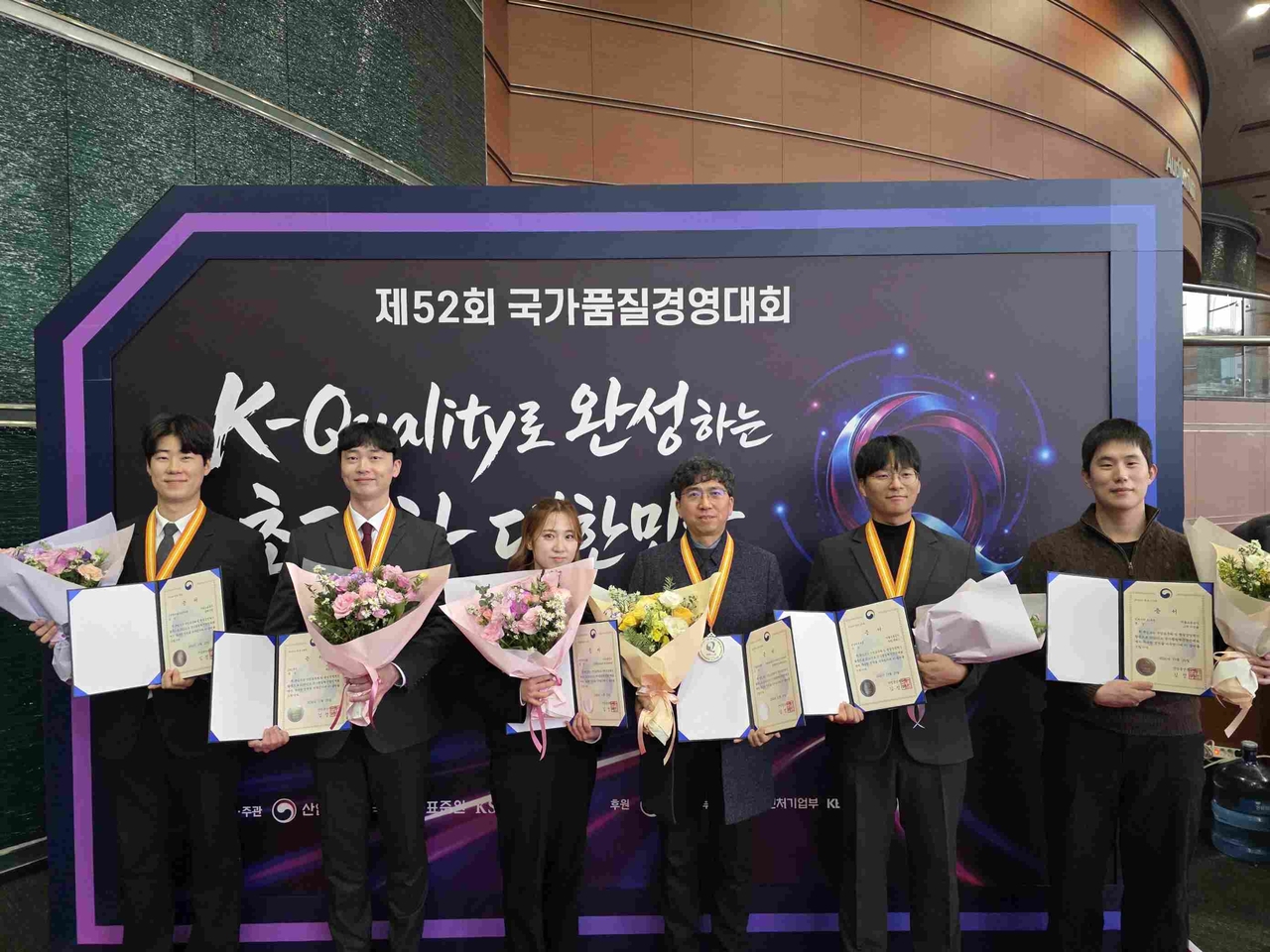
Seoul Metro swept all six categories at the National Quality Management Contest for the third consecutive year, generating annual economic and social benefits worth 1.8 billion won ($1.34 million) through frontline workers' technical improvements — reducing train breakdowns, localizing imported parts and upgrading working conditions.
Seoul Metro announced Thursday that all six of its teams won awards at the 52nd National Quality Management Contest, held Wednesday at COEX in Gangnam-gu, Seoul. The company has now produced winners across all six categories in 2024, 2025 and this year.
The six teams competed in categories covering field improvement, safety and quality, big data and AI, ESG, new product development, and win-win cooperation, taking home two silver and four bronze awards. They earned recognition for their field-driven quality innovation amid competition from 314 quality-circle teams that had advanced through regional qualifying rounds across 17 cities and provinces nationwide.
The Godeok Assembly team from Godeok Vehicle Depot developed an in-house big data analysis program using Excel VBA to address a surge in door malfunctions on new Line 5 trains, shifting from reactive repairs to a predictive maintenance system. The effort cut average annual door failures 61 percent — from 102.6 cases to 40 — and saved 74 million won a year.
The Jangam Futures team from Dobong Vehicle Depot improved the power conversion process on Line 7 trains, cutting average summer daytime breakdowns 28.4 percent from 16.2 cases to 11.6. By applying a hexagonal stencil heat-dissipation coating method, optimizing wiring and introducing high-frequency filters, the team reduced annual maintenance costs by 175 million won.
The Chalddak Gunghap team from Signal Depot No. 1 tackled a structural problem on Line 2 track switches that made it difficult to install conventional indicator lights, developing a mechanical switch that directly detects locking-bar movement and deploying it at 49 locations on the main line. Manual signal operations fell 87 percent from 23 cases a year to three, train delays were cut by 50 minutes, and the changes generated annual economic benefits of 308.1 million won.
Parts localization was another standout result. The Cheonchun Jakupso team from Electric Depot No. 2 co-developed domestic replacements for aging and discontinued imported DC protective relays with a small-business partner, applying a compatible connector method that allows installation even during brief power outages. Monthly DC circuit-breaker panel faults dropped from 2,833 cases to 1,667, delivering annual economic benefits of 652.8 million won.
Safety and environmental improvements also advanced. The DNA team from Godeok Vehicle Depot installed chain-conveyor automation equipment and safety nets to reduce the risks of handling heavy objects and falling during major air-conditioner overhauls. The changes lowered the maintenance risk index by 42.9 percent and improved ergonomic burden scores by 90 percent, generating annual risk-reduction benefits of 587 million won.
The Technic Manager team from the Technology Planning Division built a dedicated ventilation system with smart timers and developed a radon concentration map to prevent radon buildup in below-ground pump rooms and tunnels. Radon levels in pump rooms fell 82.93 percent, and no tunnels exceeded the permitted concentration, producing annual benefits of about 40 million won.
Seoul Metro plans to roll out the six award-winning improvement cases as standard models across its vehicle and technical worksites, and to continue supporting frontline-led quality-circle activities to close safety gaps and reduce costs.
Seoul Metro President Kim Tae-gyun said the company's quality-improvement capabilities, built up through participation in the contest since 2011, were now translating into tangible safety innovations such as parts localization and big data predictive maintenance. "We will use the living ideas from the field as the driving force for advancing our technology, establish a seamless safety management system, and deliver changes that citizens can feel," Kim said.
seouldream01@heraldcorp.com





