
474 cheating cases detected on CSAT, including 112 involving smart devices
No serious violations confirmed yet among 306 post-exam reports
Ministry to probe AI cheating on teacher certification, LEET exams over past 5 years
'We will never compromise on exam integrity'
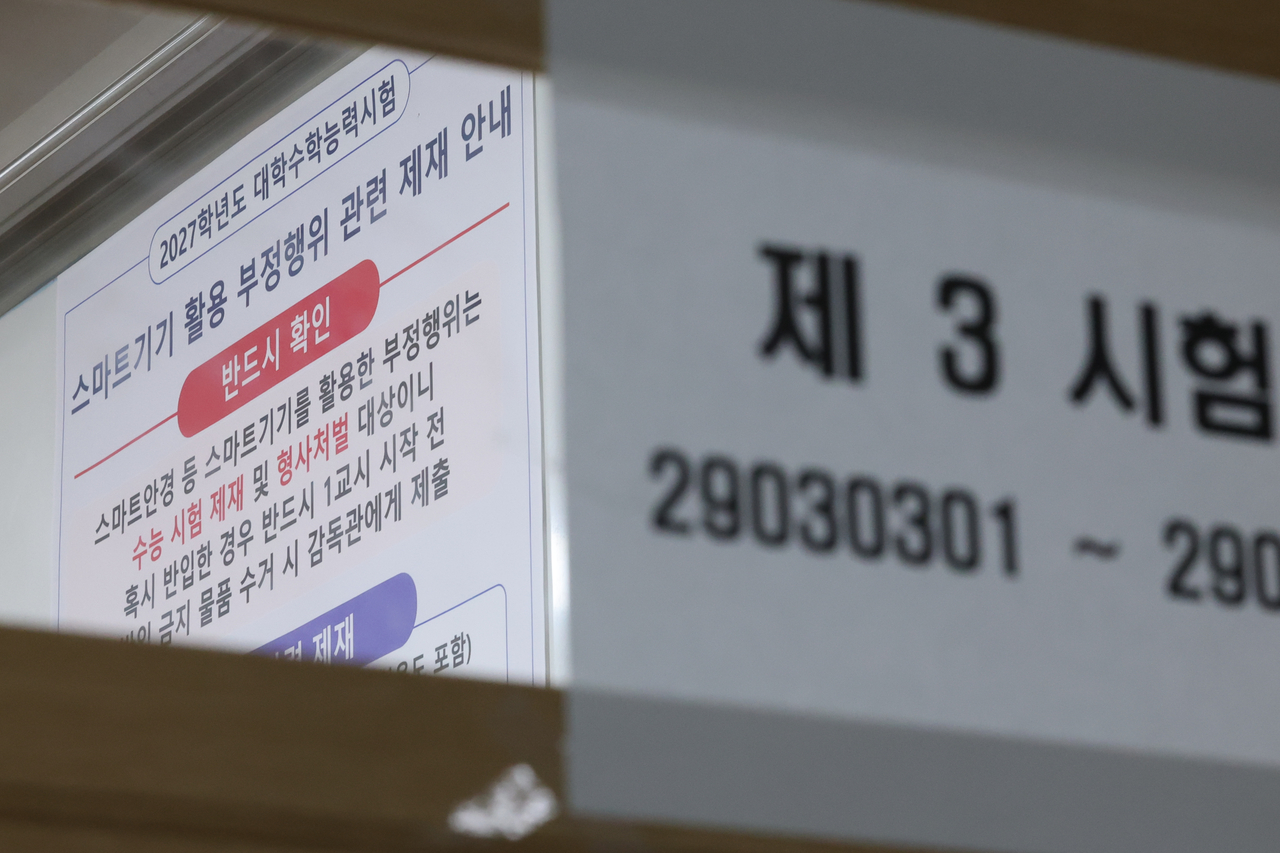
The number of cheating cases detected on this year's College Scholastic Ability Test surged nearly 70 percent from last year, while reports filed after the exam topped 300 within a week. The Ministry of Education said it is reviewing the reports and will expand its cheating investigation to other national exams, including the teacher certification test and the Legal Education Eligibility Test.
According to a briefing document the ministry submitted to the National Assembly's Education Committee on Friday, 474 cheating cases had been detected on the 2027 academic year CSAT as of Wednesday. That is up 195 cases, or 69.9 percent, from 279 cases last year.
Violations involving smart devices rose from 31 last year to 112 this year, a 3.6-fold increase. Cases of students continuing to write answers after time was called, and violations related to the fourth-period answer sheet, each numbered 127. Simple electronic device infractions accounted for 51 cases, while other violations — including failure to follow proctor instructions — totaled 57.
Smart device cheating on CSAT up 3.6-fold; 6 students referred to prosecutors
The ministry referred six students classified as serious offenders to prosecutors on Monday. Three had used their smartphones to photograph exam questions in restrooms. One student used a smartphone inside the exam room, another photographed questions with a miniature camera, and a third case involved smart glasses.
Reports of cheating have continued to come in since the exam. According to the office of lawmaker Kim Hui-jeong on the National Assembly's Education Committee, 306 reports had been filed with the ministry as of Thursday morning — within a week of the Nov. 19 exam.
The ministry is reviewing the reports but said none of the additional tips have so far confirmed a serious cheating incident. Some reports are said to contain malicious allegations targeting specific individuals or unverified rumors.
The government has pledged to pursue cheating cases that went undetected on exam day. Reports will be centralized through the Anti-Corruption and Civil Rights Commission, with the ministry conducting factual investigations. Confirmed cheating cases reported by tipsters will be eligible for a reward.
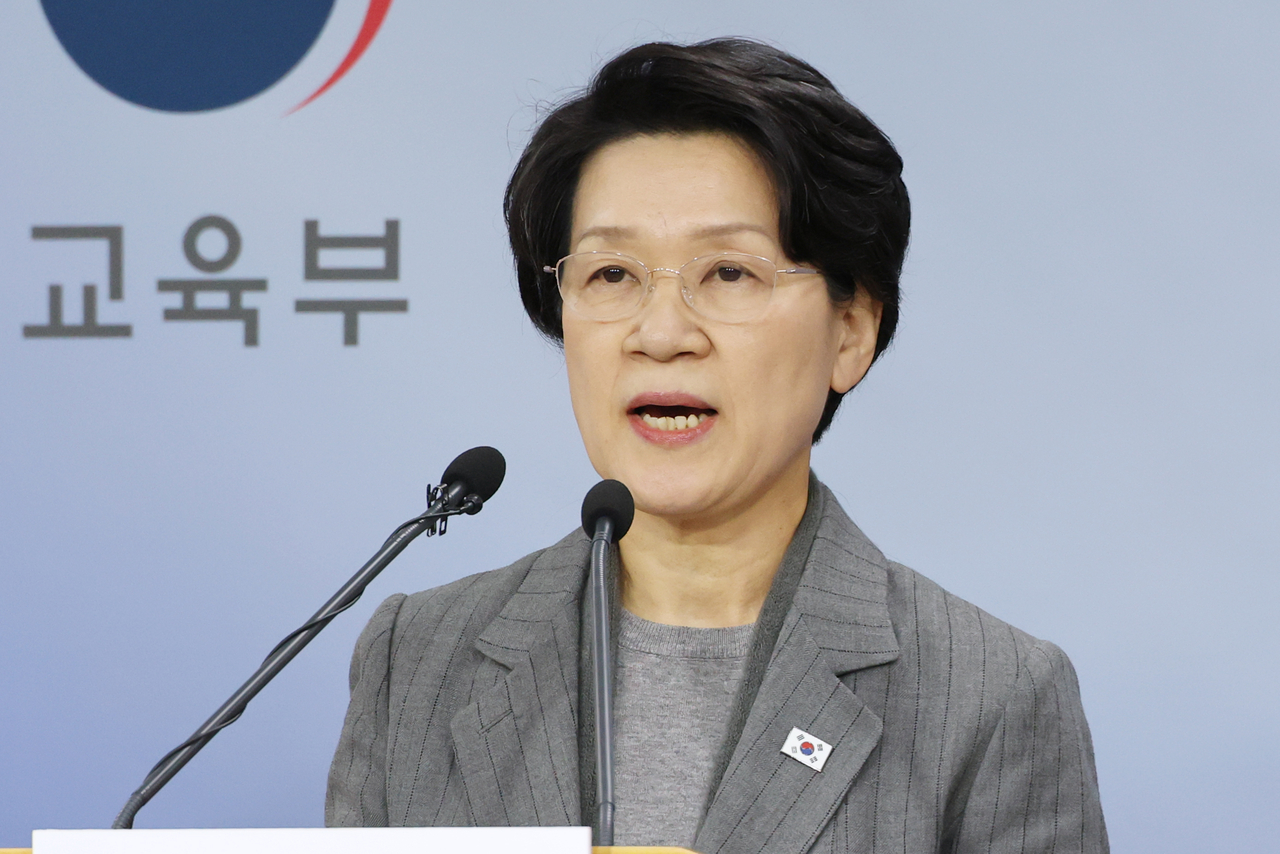
Acting Minister of Education Choi Eun-ok told the committee that the ministry would "thoroughly manage suspected cheating cases received through the cheating report center and, when cheating is confirmed, pay the tipster a reward of at least 100 million won" — equivalent to about $74,500.
AI cheating detected on teacher certification, LEET exams over 5-year period
The ministry will also review cheating on national exams beyond the CSAT. For the teacher certification test and the Legal Education Eligibility Test, it will investigate AI-assisted cheating cases detected over the past five years, from 2022 through this year. A preliminary review of the high school equivalency exam was completed last month, with a detailed investigation set for next month.
For school-based internal assessments, the ministry will conduct a comprehensive survey of electronic device and AI cheating cases in January next year. Enhanced proctoring guidelines will apply starting with this year's second-semester final exams at high schools, with detected violations to be tallied once the exams conclude.
The ministry also plans to extend the exam-ban period for cheaters. It will seek legislation to bar serious offenders on the CSAT and university-administered admissions tests from sitting the exams for up to 10 years. The ban for the teacher certification test would increase from the current five years to 10, and for the LEET from four years to 10.
For TOPIK, the ban would be extended from two years to 10, while the Korean History Ability Test would move from a three-consecutive-sitting ban to a five-year ban. The high school equivalency exam and the independent degree acquisition test would carry bans of up to five years.
For next year's CSAT, the ministry plans to deploy metal detectors and other equipment at exam venue entrances to block prohibited items. It is also pursuing the development of radio-frequency detectors for use at exam sites. The ministry told the National Assembly it expects to need about 40 billion won ($29.8 million) in additional budget to equip education offices and district education support offices, and has asked for the Assembly's cooperation.
The ministry will also seek to improve conditions for exam proctors, including raising their allowances. It pledged that teachers who carry out their supervisory duties properly will receive government backing if they face unjust complaints or lawsuits.
"The Ministry of Education is resolved never to compromise on exam integrity," acting minister Choi said. "We will apply the enhanced management standards used for the CSAT to all exams and strengthen cheating sanctions and investigations in ways suited to each type of exam."
brunch@heraldcorp.com





