France's real wages fell 1.3% over six years
'Nothing like this since World War II'
Real post-tax household income down 0.7%
US, UK and Germany all posted gains
The purchasing power of French consumers — long the engine of the EU's second-largest economy — has fallen to historically low levels in recent years. A global surge in energy prices, compounded by an unusual convergence of domestic setbacks, has deepened the pain felt by ordinary French households.
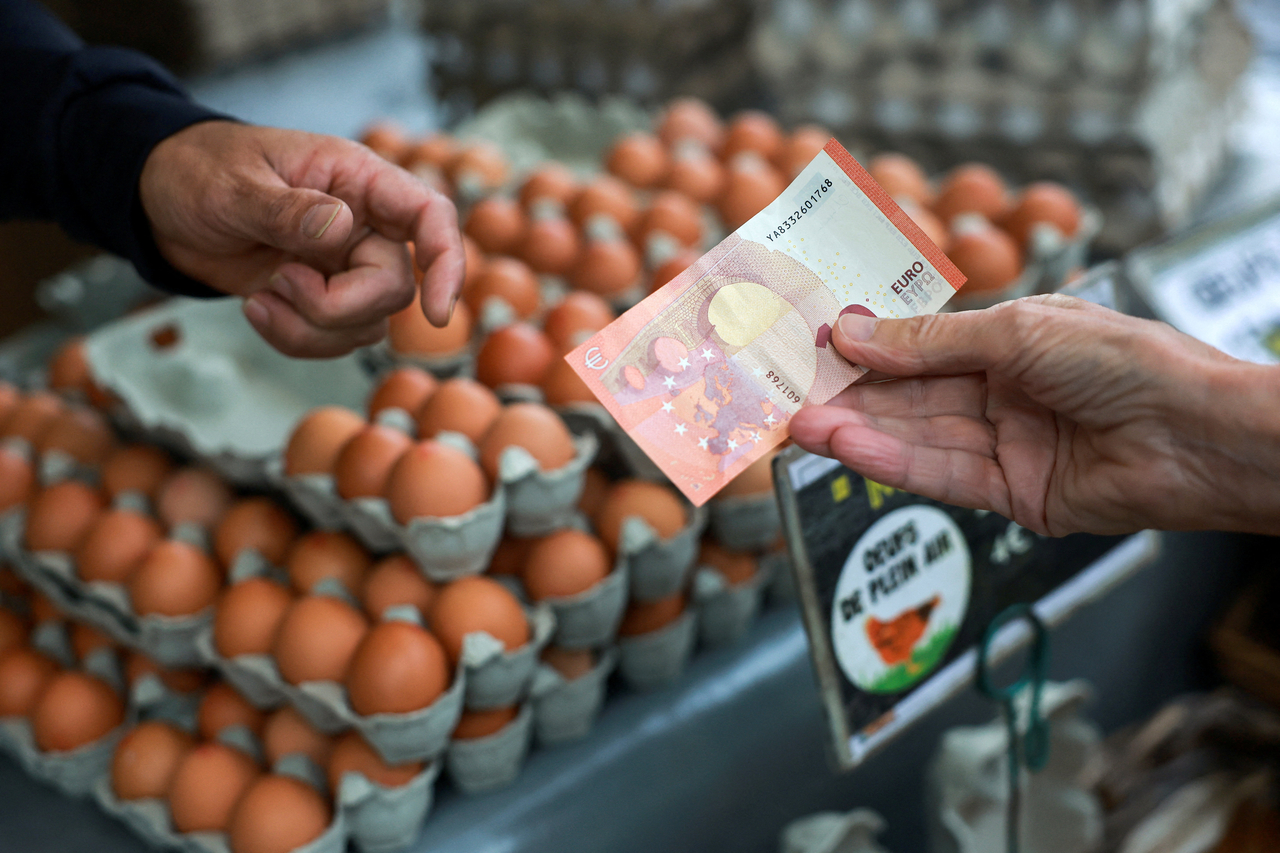
Record summer heat waves drove food prices sharply higher across France, the Wall Street Journal reported Thursday (local time). On top of that, average annual real wages, adjusted for inflation, fell 1.3% over the past six years — an unusually prolonged decline.
Real post-tax household income, a key gauge of purchasing power, continued to grow last year in major economies including the United States, the United Kingdom and Germany, but shrank 0.7% in France. It is expected to fall further this year. Two consecutive years of declining purchasing power would be the first such stretch since 2013, when France was still feeling the aftershocks of the European debt crisis.
"Nothing like this has happened in France since World War II," said Mathieu Plan, an economist at the Institut Français de l'Économie. A French household with two children saw its annual income fall by an average of about 1,200 euros ($1,320) over the past two years, Plan said.
Rémi Kasprzyk, 40, launched a home nursing service business a decade ago and once earned enough to visit movie theaters regularly and vacation in the Seychelles in the Indian Ocean. Now he cannot even remember the last time he bought a movie ticket.
Driving roughly 129 kilometers a day to visit patients at home, Kasprzyk said soaring fuel and insurance costs have cut his monthly income by about 25%, leaving him with around 3,000 euros. Patients are not in short supply, but government regulation caps what he can charge for nursing services, making it nearly impossible to pass rising costs on to clients. After paying 1,200 euros on his mortgage, 540 euros on car installments, 300 euros on electricity and 700 euros on groceries, almost nothing is left at the end of the month. "We are not asking for money for free," he said. "We are asking to be paid a fair wage."
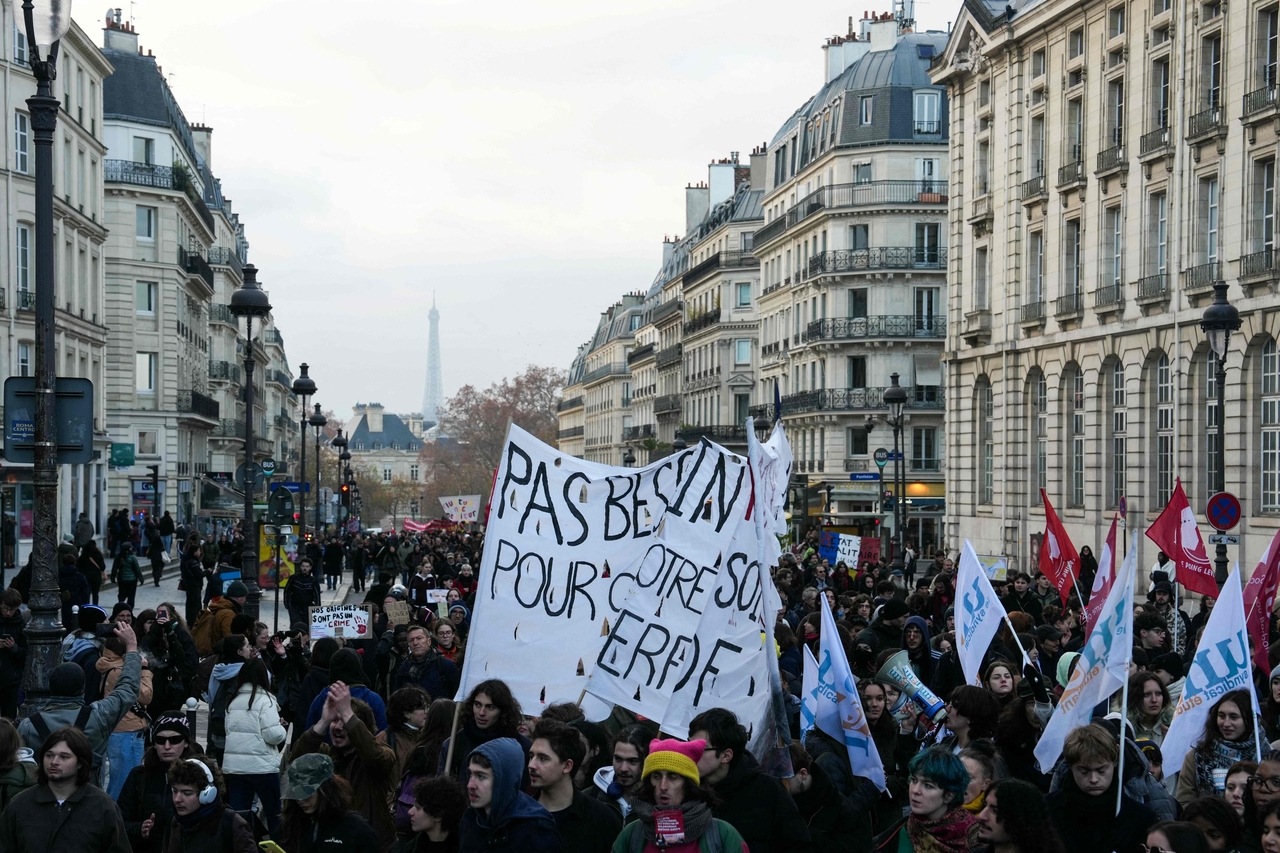
On weekends, Kasprzyk drives about 48 kilometers to Lille in northern France to join large-scale protests against the rising cost of living.
Unlike export-driven economies such as Germany's, France relies on household consumption for more than half of its GDP. When spending stalls, so does the economy. In its economic outlook published this month, the European Commission forecast France's growth rate at just 0.4% this year — well below the projections for the United States (2.2%) and the eurozone as a whole (1.2%).
Anger over the cost of living has spilled from student demonstrations over poor school conditions into mass protests that have at times turned violent, with government buildings set on fire and thousands of shops looted. A survey conducted last week by French polling firm Elabe found that "purchasing power" had overtaken healthcare and crime as voters' top concern, casting a shadow over next spring's presidential election.
The trouble is that solutions are hard to come by. Economists note that France's chronically high unemployment rate limits workers' bargaining power on wages.
With one in five workers employed in the public sector, raising wages means higher government spending — a difficult proposition given that France has run a fiscal deficit exceeding 5% of GDP for years. To rein in that deficit, the government announced it would freeze public school teachers' salaries for four consecutive years, prompting teachers to join the protests.
"Every time I spend money now, I have to think twice," said Sarah Chaudseg, a high school English teacher who took part in a recent protest in Lille. Chaudseg, who earns 3,200 euros a month before taxes, said many teachers have taken up private tutoring on the side to supplement their income.
From 2015 to 2024, salaries for teachers in France with experience comparable to Chaudseg's rose just 1% — far below the OECD average of 5% over the same period.
mokiya@heraldcorp.com