Workplaces such as logistics centers, hospitals and factories advised to log and monitor night-shift hours; support for reducing night work to begin next year under labor-management agreements; no penalties for non-compliance; caps on night-work hours and protections for caregiving and delivery workers left for further talks

The government has recommended that workplaces provide additional rest breaks or leave to employees who repeatedly work between midnight and 4 a.m.
Workplaces where night shifts are common — including logistics centers, hospitals and around-the-clock factories — are advised to log each worker's night-shift hours and monitor health risks. There are no penalties for failing to follow the recommendations. Questions over a cap on night-work hours and separate protections for caregiving and delivery workers have been left for follow-up discussions.
The Ministry of Employment and Labor announced the recommendations Sunday under the title "Guidelines for Building a Voluntary Night-Work Management System." The move follows an agreement reached in December last year among labor, management and the government to develop health-protection measures for night-shift workers by this year. The guidelines are the first night-work management framework produced through that tripartite consultation process.
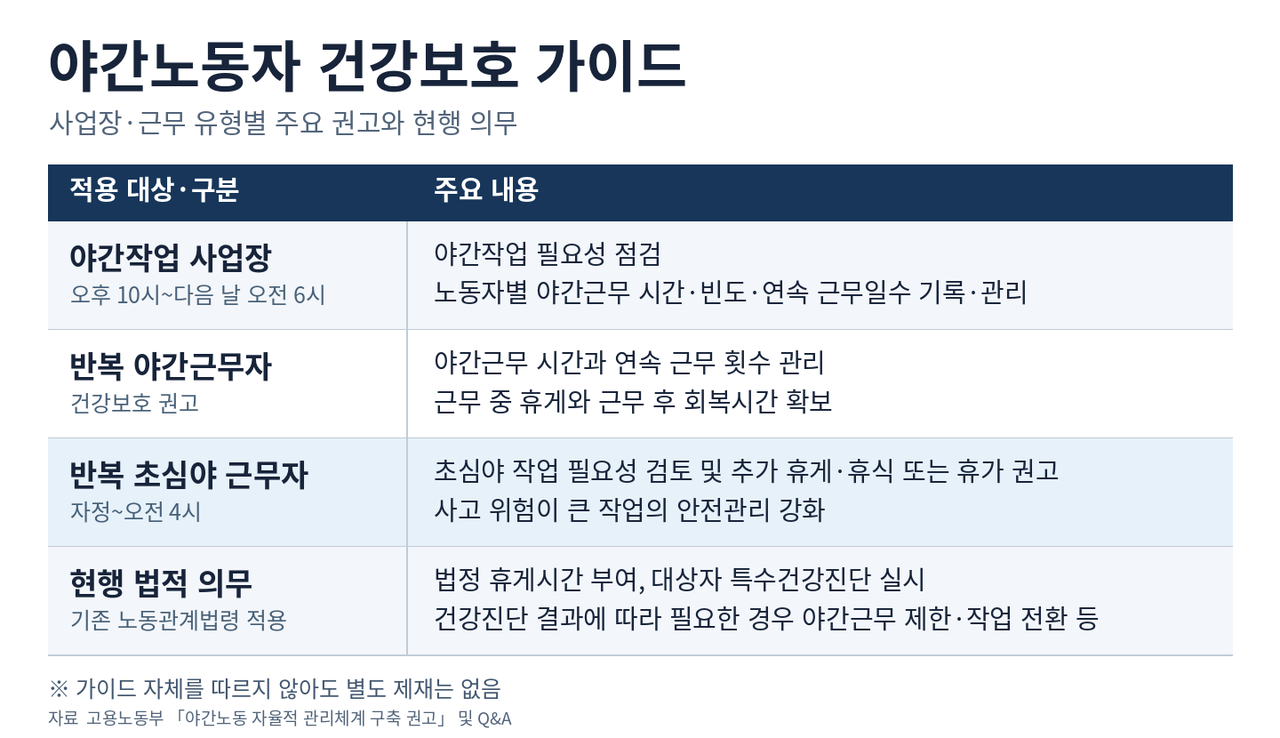
The guidelines define night work as any work performed between 10 p.m. and 6 a.m. All workplaces operating during those hours are advised to have labor and management jointly review the necessity of night shifts and to record and track each worker's shift hours, frequency and consecutive working days. For workers on repeated night shifts, the guidelines call for securing adequate rest time and space during shifts and for scheduling rotations that allow sufficient recovery after work ends.
The midnight-to-4 a.m. window is classified as "deep night," a period when alertness drops and the risks of accidents and health strain are heightened. During those hours, workplaces are advised to identify only essential tasks and, through labor-management consultation, grant additional rest breaks to workers on repeated shifts. For workplaces that use compensatory leave, the guidelines also suggest adding extra leave on top of what already corresponds to night-work pay. Workplaces with high accident risks are advised to strengthen safety management during those hours.
The guidelines' references to "no more than three consecutive night shifts" and "at least 48 hours of rest after two or more consecutive night shifts" are examples and benchmarks for workplaces to consider, not binding rules. Providing legally mandated rest breaks and conducting special health screenings for eligible workers remain statutory obligations. Where screening results indicate a need, employers are also required to take follow-up measures such as restricting night-shift assignments or transferring workers to different duties.
The government's decision to leave compliance to individual workplaces reflects the widely varying conditions across industries.
At the Hanjin Mega Hub logistics center, workers reported that cumulative fatigue over a week is greater on night shifts even when the daily workload is similar to daytime levels. At Severance Hospital, staff raised the need for government support in operating replacement personnel. The Ministry of Employment and Labor said that when manufacturing facilities running continuous production are also factored in, the staffing needs and shift arrangements required to reduce night work or increase rest time differ from one workplace to the next.
Starting next year, the ministry will add night-work reduction support to its "Work-Life Balance Plus 4.5 Project." The support will be available to workplaces where labor and management agree to cut night-work hours or guarantee additional rest without reducing wages. Workplaces that reduce deep-night shifts will receive preferential treatment, and some categories — including those involving life and safety, shift-system restructuring and long working hours — will be eligible even at workplaces with 300 or more employees. The ministry also plans to expand consulting services for reducing night work and to strengthen referrals to worker health centers for employees whose health screenings flag abnormalities.
Broader questions — including the definition of a night-shift worker, a cap on night-work hours and guaranteed rest after shifts — will continue to be discussed through social dialogue involving labor, management and experts. Separate protection measures tailored to the working conditions and characteristics of the caregiving and delivery sectors, where long hours and high intensity make protections especially urgent, will also be developed through that process.
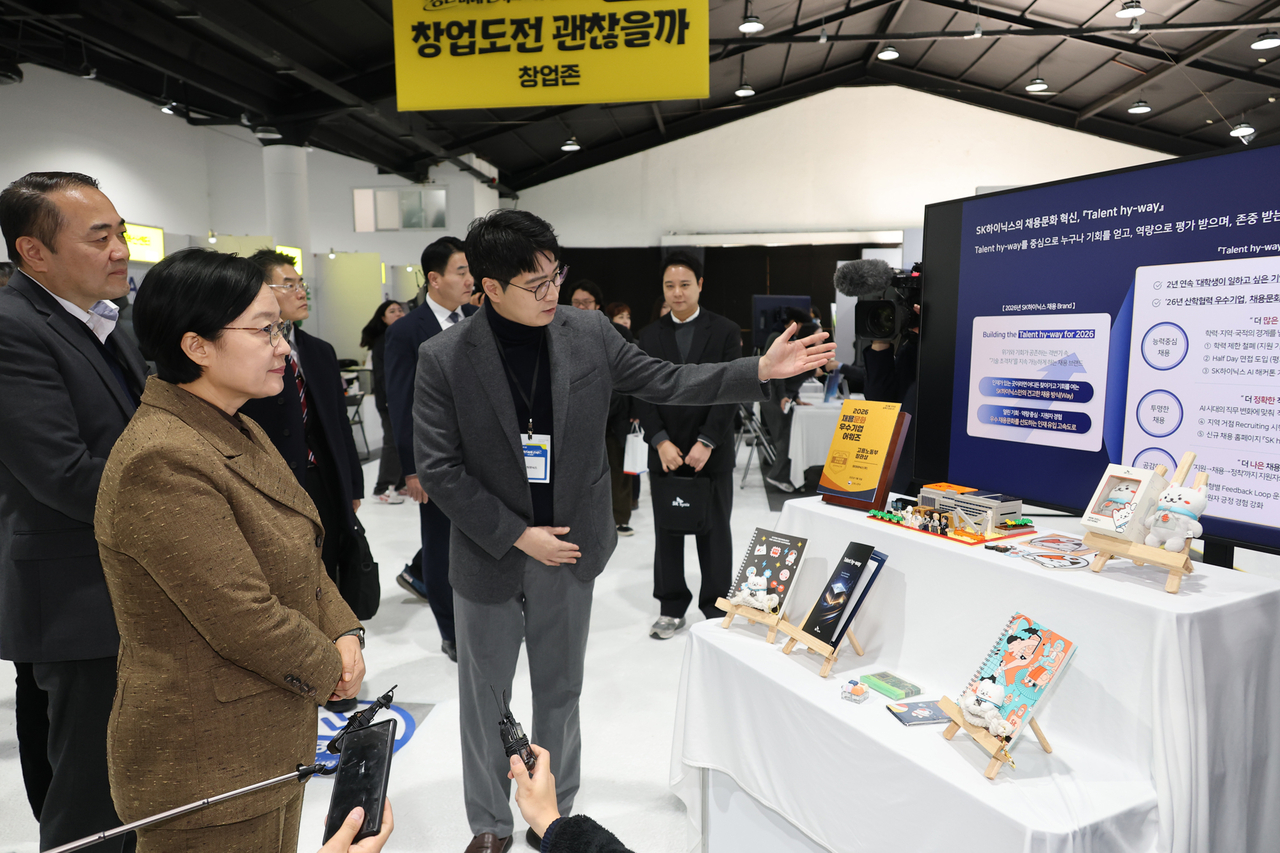
"Social dialogue begins with agreement and is completed through implementation," Employment and Labor Minister Kim Young-hoon said. "I hope these recommendations will serve as a starting point for translating last year's commitment by labor, management and government into voluntary action at individual workplaces."
fact0514@heraldcorp.com