Unpaid amount for second-half sanctions reaches 283.3 billion won; combined total for the year hits 670.1 billion won
Employers owing 20 million won or more for over a year face loan and interest rate penalties
Recovery of wage advance funds up 26.2 percent through October compared with a year earlier
The government will impose credit sanctions on an additional 2,574 employers who have long failed to repay wage advances the state paid on their behalf to workers. The outstanding amount owed by these employers totals 283.3 billion won ($211 million). Combined with the first round of sanctions in May, the total number of employers subject to credit sanctions this year reaches 4,631, with unpaid amounts totaling 670.1 billion won.
The Ministry of Employment and Labor and the Korea Workers' Compensation and Welfare Service said Sunday they will provide the personal details and outstanding balances of the 2,574 employers to Korea Credit Information Services on Monday. The wage advance system allows the state to pay workers a portion of unpaid wages or severance from the Wage Claim Guarantee Fund when an employer defaults, then seek reimbursement from the employer.
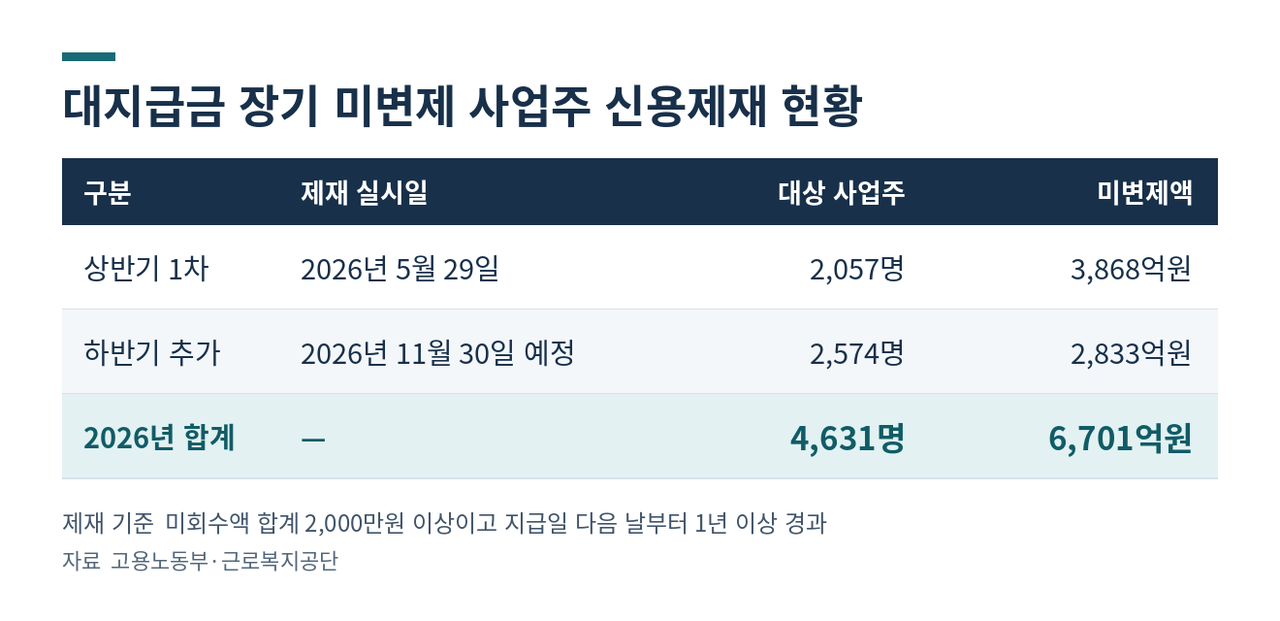
The credit sanction regime was introduced through an August 2024 amendment to the Wage Claim Guarantee Act. It targets employers with outstanding wage advance balances of 20 million won or more that remain unpaid for at least one year from the day after the advance was disbursed. Once an employer's information is registered with the credit agency, the employer may face penalties in financial transactions such as loan approvals and interest rates. The sanctions are lifted upon full repayment and remain in effect for seven years if the debt goes unpaid.
Among those sanctioned this round is a Seoul advertising agency that received about 350 million won in wage advances on behalf of its workers. The agency made installment payments totaling 30 million won between November 2024 and March last year but has since stopped repaying. A wholesale office equipment distributor in the greater Seoul area repaid only 1.7 million won of approximately 200 million won in advances. Despite promising to resume installment payments after a payment order was issued in 2024, it did not follow through.
The Ministry of Employment and Labor first imposed credit sanctions on 2,057 employers on May 29, with their unpaid balances totaling 386.8 billion won. Following those initial sanctions, monthly recovery of wage advances rose from an average of 870 million won to 2.8 billion won.
The ministry has also introduced tax delinquency collection procedures alongside the credit sanctions to strengthen recovery efforts. The total amount recovered through the end of October this year reached 176.6 billion won, up 36.7 billion won, or 26.2 percent, from 139.9 billion won during the same period last year. The full-year recovery figure for last year stood at 179.3 billion won. The government plans to submit the credit information of long-delinquent employers to the credit agency twice a year, once each in the first and second halves.
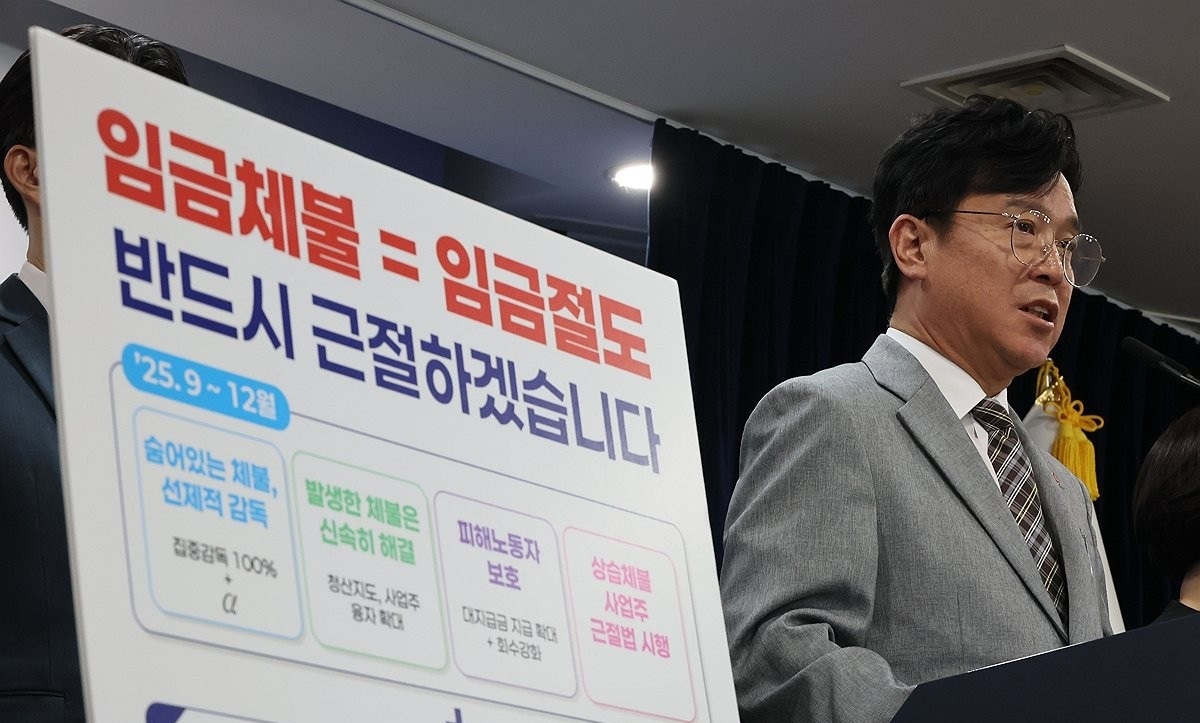
"Wage theft threatens the livelihoods of workers and their families and is a serious criminal act," Ministry of Employment and Labor Minister Kim Young-hoon said. "Wage advances paid by the state must be recovered swiftly through compulsory collection."
fact0514@heraldcorp.com