Warmth (Warmth: A Record of Kindness)
Interview with Moon Seung-ho, CEO of Raon, a media content production company
A teacher who fed him as a child, a mother who taught him to share
Annual 4 million won in regular donations, plus pro bono photography and video work
Wife, mother and colleagues have all joined his giving
"I was hungry, but I was too embarrassed to take it. It was only as an adult that I understood what a profound act of love that was."
Moon Seung-ho was in the eighth grade when his homeroom teacher quietly packed leftover cafeteria food into a bag and slipped it to him, making sure no other students could see. He was too ashamed to take it home.
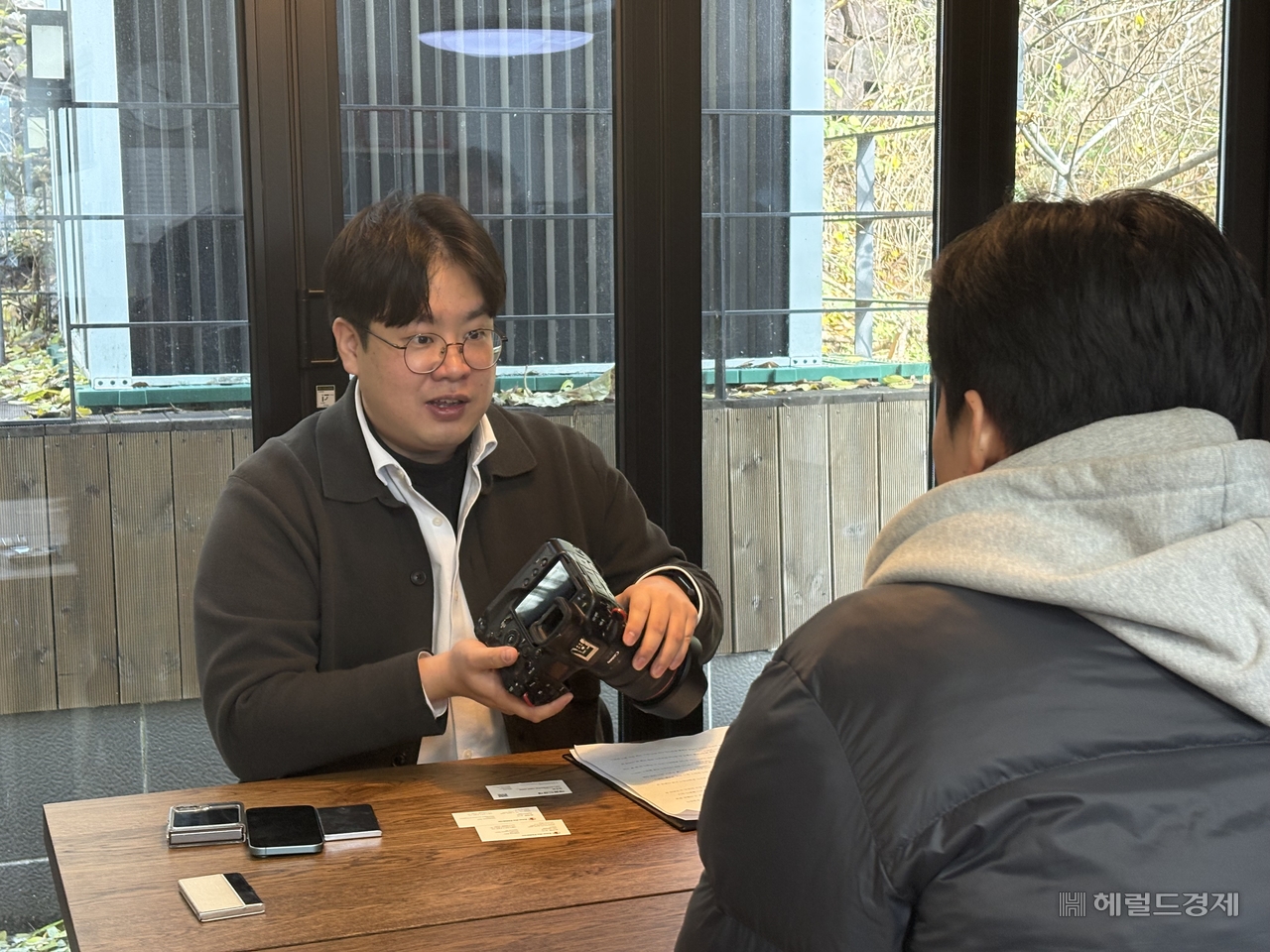
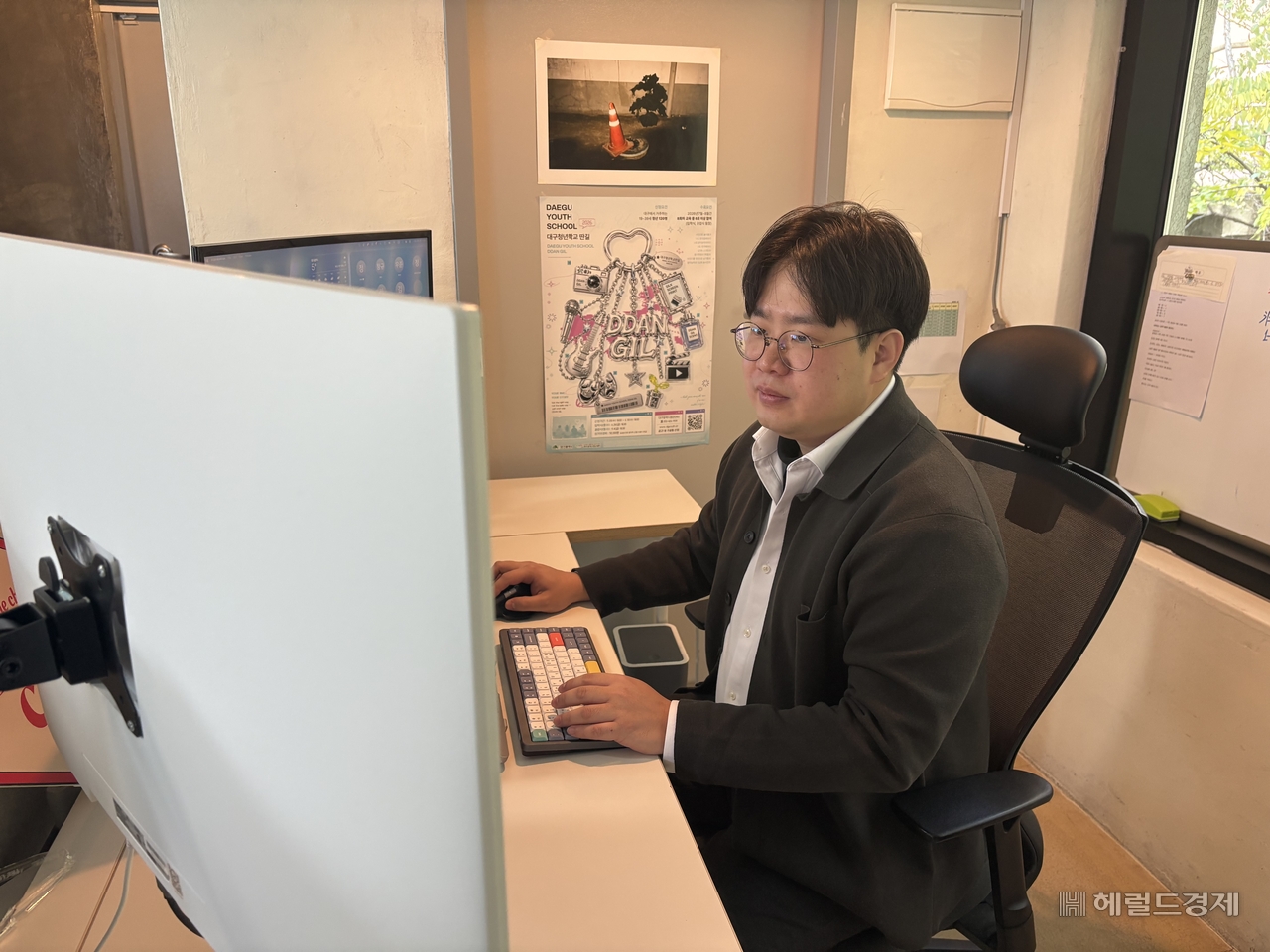
Moon, 36, CEO of Raon, a media content production company, still carries that memory. Met Tuesday in Daegu, he spoke about growing up in a household that relied on basic livelihood benefits — and about how he now runs a company while helping children in circumstances similar to his own. He accompanies them on field trips, photographs them, and gives framed family portraits to those who have never had one. His wife, his mother and his colleagues have all joined him in the effort.
A child whose only dream was to move away
Moon's family fell into severe hardship during the Asian financial crisis. When he was about seven, his parents moved the family — Moon, his younger brother four years his junior, and themselves — to Busan, a city where they had no connections. The four of them first squeezed into a single room converted from a garage, then later moved to a rental apartment in Dadaepo, Busan, measuring roughly 23 square meters.
While his classmates headed to hagwon after school, Moon walked the white sand beach at Dadaepo. His family could not afford tutoring, and the apartment was too cramped for four people. The wide sea and the reddening sky were his comfort.
Asked what he had most wanted to do as a child but could not, he gave an unexpected answer. "There was nothing I wanted. I grew up too fast. I knew our situation, so I couldn't ask my parents for anything."
He did have one wish: to move. In summer the hot water was cut off, so even when the weather turned cold he had to wash with cold water. He still remembers his parents telling him that if he studied hard, they would move.
A T-shirt he wore in the fourth grade stayed on his back through the sixth. By then it was tight across his growing frame. A teacher noticed and bought him a new one. Moon still remembers that teacher's name.
Poverty left wounds in the young boy's heart that went beyond material want. Moon loved to raise his hand in class and practiced hard before open-lesson days when parents were invited to observe. But because his parents could never attend, his teacher would tell him in advance, "You won't be presenting today" — and pass him over every time.
He also cannot forget the day, in his upper elementary school years, when he learned he would receive a donated computer. The day he was handed a form asking him to choose a model, he was giddy with excitement. The next morning, at an assembly of roughly 1,000 students, about 10 children set to receive computers were lined up on the stage. As the principal addressed the entire school, explaining that the computers were being donated for students in financial need, the girls standing beside Moon bowed their heads low. At the time, the young Moon could not understand why.
"Looking back as an adult, I realized those kids had been hurt — they felt ashamed," Moon said. "It was the moment I understood that even when you do something with good intentions, you can leave someone with a wound that never fully heals." The computer received before the whole school, and the cafeteria food slipped to him in secret — both memories would later shape how Moon thought about giving.
A mother who shared what little she had — and the fullness that came from giving
The person who first taught Moon the value of sharing was his mother, Hong Hyeon-ja. She had her first son at 23, and when her husband lost the ability to work, she became the family's breadwinner. While working to feed her two sons in Busan, she still looked after neighbors in the rental apartment complex who had difficulty getting around, sometimes providing direct care to those who had no one else.
"My mother is a small woman, barely 155 centimeters tall, but she is bigger than anyone I know," Moon said. "She always emphasized that the world is not fair, but that we must live fairly and rightly."
As a child, Moon dreamed of becoming an art teacher — he wanted to be the kind of teacher who would not inflict on other children the wounds he had suffered. He attended a vocational arts high school, went on to study fine arts at university, and was teaching as a university lecturer by the age of 25. But with a severely disabled father to support, he decided to start a business.
When Moon founded his company in 2017, his first office was also a garage. He pinned his mother's words on the wall and started out by taking ID photos for neighborhood residents. Raon has since grown into a media content production company that handles photography, video and design projects for businesses and public institutions.
In the early days of the business, he ran a free ID photo service for residents who could not afford one. He knew that even the small fee for a photo needed to make an ID card could be a burden for some.
He went on to donate soccer balls and neck warmers to young players with dreams of going pro, and school supplies to local children's facilities. Through that work he connected with Save the Children, an international children's rights NGO. He now donates 4 million won ($2,980) a year on a regular basis and continues to contribute his skills in photography and video production.
Two winters ago, he joined children from low-income families on a field trip. The children, who had barely smiled when he first raised his camera, gradually opened up. During a strawberry-picking activity, they popped freshly picked berries — unwashed — straight into his mouth and those of his colleagues. The photos taken that day were assembled into albums and given to the children as gifts.
He also photographed about 20 families — grandparent-headed households, single-parent families, multicultural families and foster families — giving each a family portrait, often their first. He met one or two families a day, listened to their stories and cried alongside them. He had planned to make one framed print per family, but ended up making five for each.
Moon said a sense of emptiness that had lingered inside him even after he became financially comfortable began to fill, little by little, once he started giving.
"When I was young and had no money, I thought I was lacking as a person. Even after I could do things I never could as a child, I still felt hollow inside. But when I donated for the children, I felt something fill up. Giving is what fills me as a human being."
A reunion with someone who once offered a helping hand — and the true meaning of giving
Jung Yeo-rim, Moon's wife and co-leader of Raon, joined the cause in 2022. The couple share a meeting they will never forget. At a dinner gathering of Save the Children donors, Jung unexpectedly came face to face with the head of the free meal volunteer organization that had fed her as a child.
A little girl who had once eaten from a meal truck had grown into an adult and found herself at the same donor gathering as the person who had helped her. When the three of them pieced together each other's stories, they held one another and wept. The volunteer organization's head told Jung, "Thank you for growing up so well."
"That person felt their work had not been in vain, and my wife and I were deeply moved," Moon said. "Since then, my wife and I have never once disagreed about giving. We both feel that stories like ours need to keep coming out into the world."
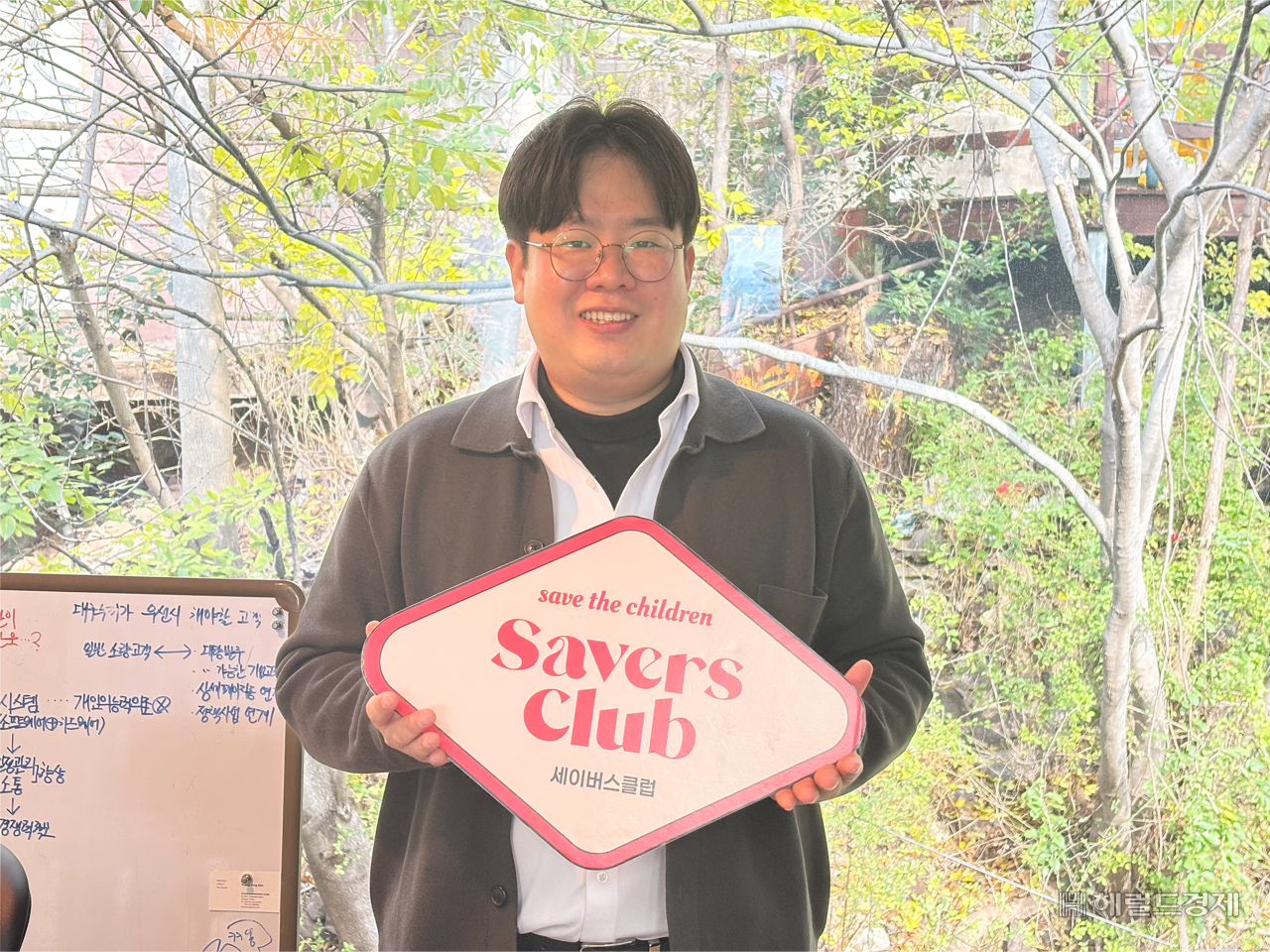
Earlier this year, his mother Hong also joined the Savers Club, Save the Children's donor membership program, paying three years' worth of contributions — 3 million won — in a single lump sum. It was money she had set aside over many years as a wedding fund, having never been able to hold a wedding ceremony because of financial hardship. Hong still works at a restaurant in Dadaepo, Busan, and readily gives food to anyone who comes in struggling. She also donates the small change she saves up bit by bit.
The spirit of giving has spread to Moon's colleagues as well. He has set up a program under which, when a colleague who receives a bonus above a certain level wishes to donate, the company covers the 1 million won membership contribution required to join the Savers Club on their behalf. Of the six Raon employees based in Daegu, five are now active Savers Club members.
Moon and his wife often return to the same question: if they could go back to their childhoods, what would they say to their younger selves? Moon said anxiety was always with him — when he stepped out of that cramped apartment to look at the sea at Dadaepo, when he was hurt at school, when he entered university and when he started his business. He said he would tell the child he once was: "It's OK. Things will work out."
Moon has a dream more important to him than growing his business: that when the moment comes to close his eyes for the last time, many of the people he loves will be by his side. The size of a donation does not matter, he added — all it takes is the courage to empty out a little of what you have for someone else.
Asked finally what warmth means to him, he said:
"I think it shines not when you are filled, but when you empty yourself. On a sweltering summer day, holding someone's hand, you can barely feel any warmth. But on a cold day, when you clasp someone's hand, you know just how desperately precious that warmth is. I believe that the harder and colder our society becomes, the more the value of warmth can shine — when we empty out what we have."
Moon, who still carries the memory of the warm hands extended to him as a child, has become the adult who now reaches out to other children. And so he faces another winter.
jookapooka@heraldcorp.com