Seoul Facilities Corp. develops AI diagnostic tool; results matched existing inspection data at 106 of 107 test points
Device allows ground-level diagnosis, cutting traffic disruption and fall hazards
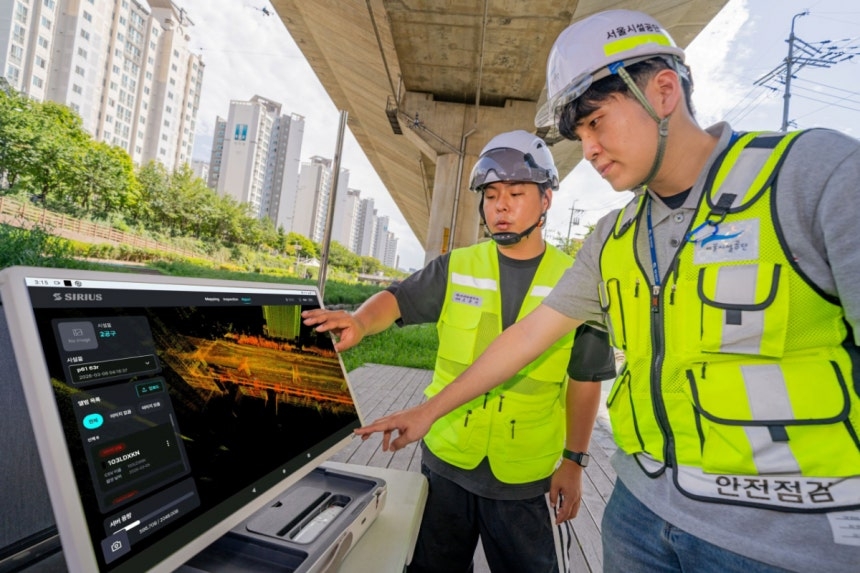
Seoul Facilities Corp. said Sunday it has jointly developed with a private company a technology to diagnose the risk of concrete spalling — the breaking away of concrete fragments — on bridge deck slabs, aimed at preventing falling-debris accidents.
Spalling refers to the phenomenon in which chunks of concrete detach from a structure. The Seosomun Overpass, which collapsed during demolition work this year, had already shown signs of the problem: concrete spalling was detected on one of its piers in March 2019 — 53 years after the structure was completed — prompting emergency repairs and raising safety concerns.
The technology was selected as a best-practice case in a collection of AI and advanced-technology implementation examples in the public sector recently published by the Ministry of Interior and Safety.
Bridge deck inspections have traditionally relied on inspectors riding elevated access vehicles and tapping the surface with a hammer, judging the condition by ear. The method has long carried significant drawbacks: road closures, traffic congestion, inconsistent results depending on the inspector's skill level, and the risk of falls from height.
Seoul Facilities Corp. selected a "high-reach impact diagnostic device" through a private innovation technology competition in 2024 and has since been co-developing it with a private firm.
The device strikes the underside of a bridge deck slab from the ground and feeds the resulting sound into a proprietary AI algorithm, which analyzes it and produces an objective numerical assessment of spalling risk, reducing variability in judgments. The approach also eliminates the need for workers to operate at height and minimizes traffic disruption.
In a pilot test covering two bridges, the device's analysis matched damage zones identified in existing precision safety inspections at 106 of 107 measurement points.
Han Kuk-young, president of Seoul Facilities Corp., said the organization plans to gradually introduce a lighter version of the device across the bridges it manages, concentrating inspection resources on sections flagged as potentially hazardous to prevent concrete-fall accidents.
ken@heraldcorp.com