Jang Min-ju, online sales director at a South Jeolla Province agricultural cooperative, went from zero sales at her first department store event to topping the sales chart at her second. By building an online channel and SNS marketing strategy, she grew the company's annual sales from around 2 billion won to 6.7 billion won. Cumulative sales through October this year reached about 7 billion won. Now she is targeting 10 billion won and overseas markets.
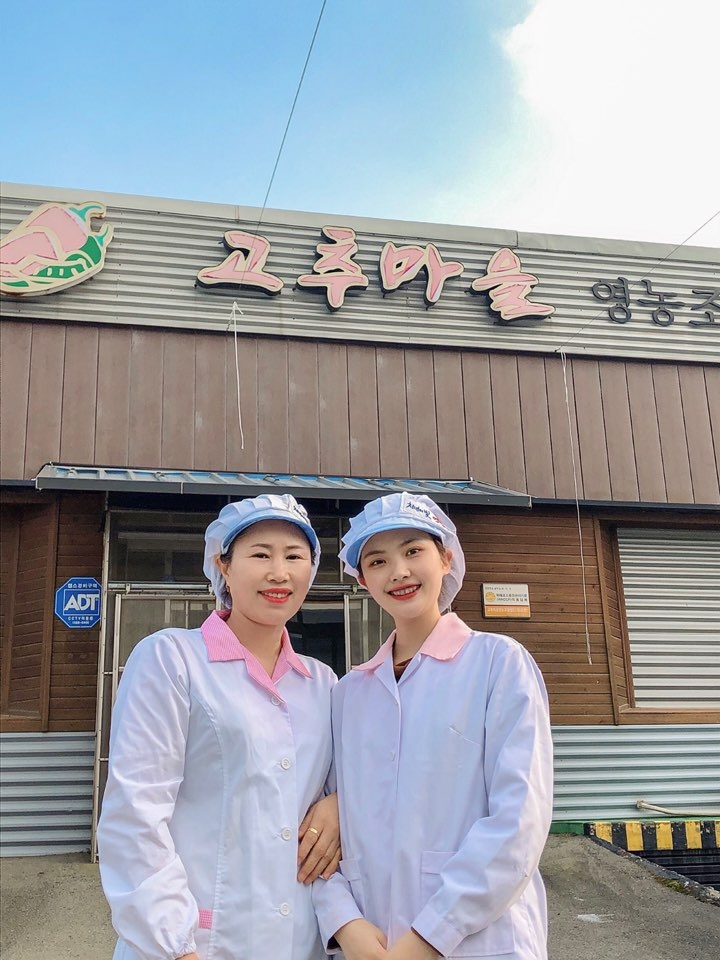
She did not sell a single bag of red pepper powder at her first department store event. It was a confident debut — just one month after joining the family business — but she had no idea what to say to customers. The second event was different. She rehearsed alone, over and over, exactly what to say and how to explain the product's strengths. The result: the top sales spot at the venue, with daily sales reaching 10 million won ($7,450). That is the story of Jang Min-ju, 31, known online as "Pepper Sister," who sells red pepper powder and traditional fermented condiments from Yeonggwang, South Jeolla Province.
Jang serves as online sales director at Gochujang Maeul, an agricultural food processing cooperative led by her mother, Park Young-in. While her parents, who founded the company in 2002, focus on sourcing raw materials, production and quality control, Jang handles online distribution and marketing.
When Jang joined in 2018, the company's annual sales were just over 2 billion won. Last year they reached 6.7 billion won — roughly three times the earlier figure. Layering online retail and content marketing onto what had been an offline-centered sales structure became the main engine of that growth.
This year the company is pushing to break the 10 billion won mark in annual sales. Cumulative sales through October already reached about 7 billion won, surpassing last year's full-year total. The strategy for the remaining two months is to drive roughly 3 billion won in additional sales by targeting kimjang — the peak kimchi-making season, when demand for red pepper powder is at its highest.
Left a 25 million won salary to join the family business — first attempt ends with zero sales
Jang studied service management at university and worked as a service manager and in-house trainer. Her annual salary at the time was around 25 million won. She left that job to join her parents' business because she saw new possibilities not in the product itself, but in how it was being sold.
Gochujang Maeul makes red pepper powder from domestically grown peppers sourced through contract farming arrangements with more than 100 farms in the Yeonggwang area, and produces traditional fermented condiments including gochujang, doenjang and soy sauce. Her parents were confident in their raw materials and quality control, but sales remained largely offline.
"My parents spent their lives making a great product," Jang said. "I wanted to be the one who showed its value to more people."
The Lotte Department Store event she entered a month after joining was her first real test. Her mother worried about how much she could actually sell but ultimately gave her the go-ahead. The first event ended without a single bag sold.

"I was confident about the product, but I had no idea how to actually explain it to customers or make a sale," Jang recalled.
After that failure, she overhauled her approach. She compiled the questions customers were likely to ask and practiced explaining the product repeatedly. At the second event, she took the initiative — approaching customers first and walking them through the pepper's origins and how the powder was made. The result was the top sales ranking at the venue.
The nickname "Pepper Sister" also came from the department store floor. At an event in Busan, customers began calling out to her affectionately as "Pepper Sister," and the name stuck. Jang went on to use it across her online sales channels and SNS activity.
Red pepper powder customers once had to see in person — now they buy it on their phones
When Jang first moved into online sales, her parents had serious reservations. Red pepper powder was widely seen as a product customers needed to inspect in person — checking the color and grind before buying. Jang turned that limitation into the starting point for a new approach.
During the harvest season she visited contract farms and filmed the crop conditions. During processing she documented the powder-making process on camera. Through live broadcasts and short-form video reels, she shared not only the sourcing and production process but also the everyday rhythms of rural life.
"Because customers can't see the product in person, I thought I had to show it in even more detail," Jang said. "And because they can't meet the producer face to face, I had to be that much more honest in how I talked about it."
In the second year of online operations, the channel hit 100 million won in sales. The online foundation she had been building since 2018 became a springboard for growth after COVID-19 spread and contactless consumption surged, prompting her to pour more investment into online sales and marketing.
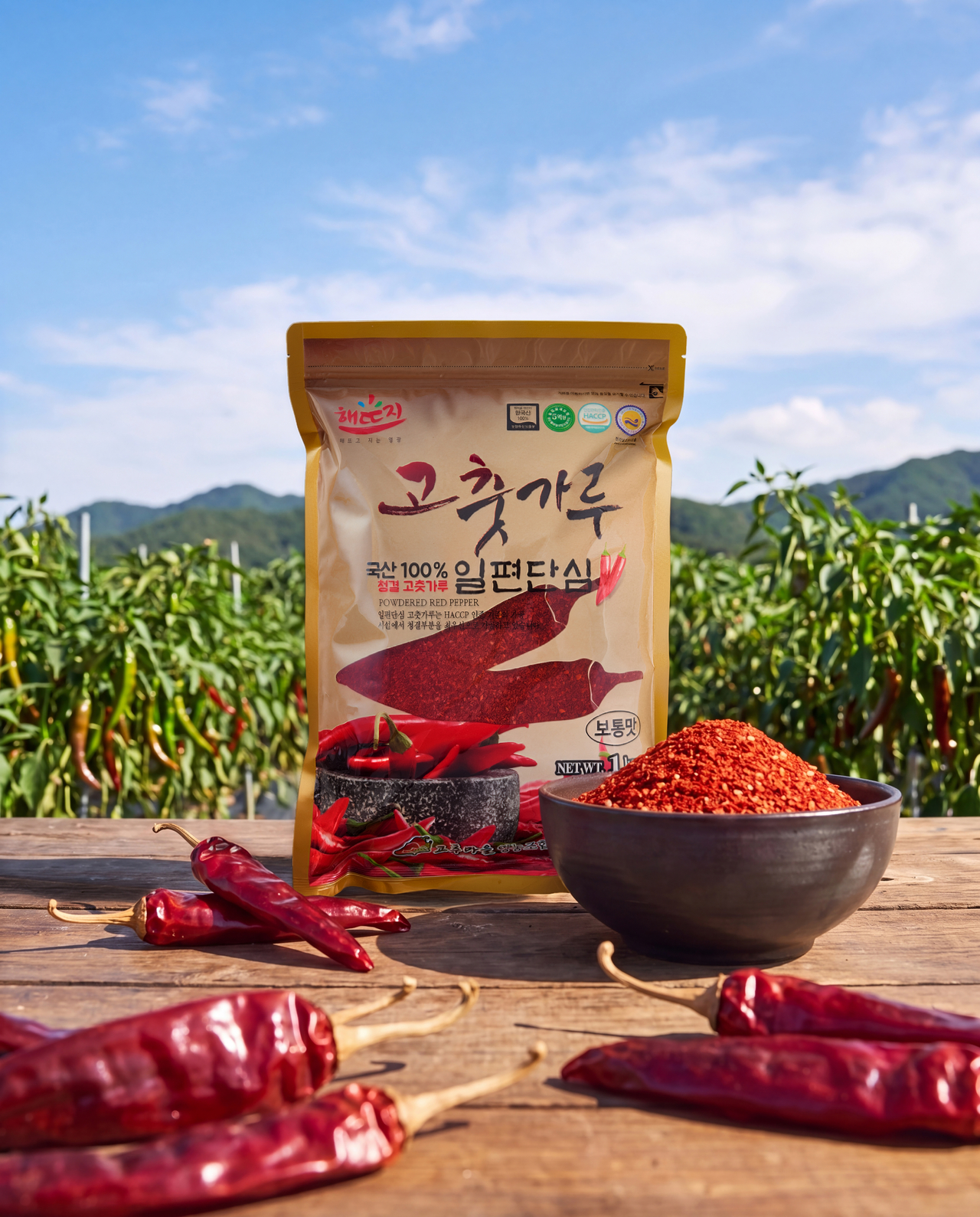
The company's current flagship product is "Ilpyeondansim Taeyangcho" red pepper powder, which accounts for about 60 percent of total sales. It is made from domestically grown peppers produced in the Yeonggwang area and processed at a facility certified under the Hazard Analysis and Critical Control Points food safety standard.
Building on red pepper powder, the company has broadened its product lineup. Beyond gochujang, doenjang and soy sauce, it introduced gochujang-marinated gulbi — a specialty of Yeonggwang made with dried yellow corvina. More recently, a chogochujang (vinegar-chili sauce) drew a stronger response than expected, prompting plans to expand the sauce category.
"In terms of profitability, the fermented condiment line generates relatively higher added value than red pepper powder," Jang said.
Payment fraud, flood damage and more — 'Not knowing you're failing is the real danger'
The path has not always been smooth. There were times when distributors failed to pay in full, and instances of fraud during raw material transactions. Flood damage once disrupted the pepper supply, forcing the company to worry about both production and sales.
The lesson Jang drew from those experiences was not to fear failure, but to find its cause quickly.
"What's more dangerous than failing is not realizing you're failing and repeating the same approach," Jang said. "If there's a problem, you have to find the cause and fix it fast."
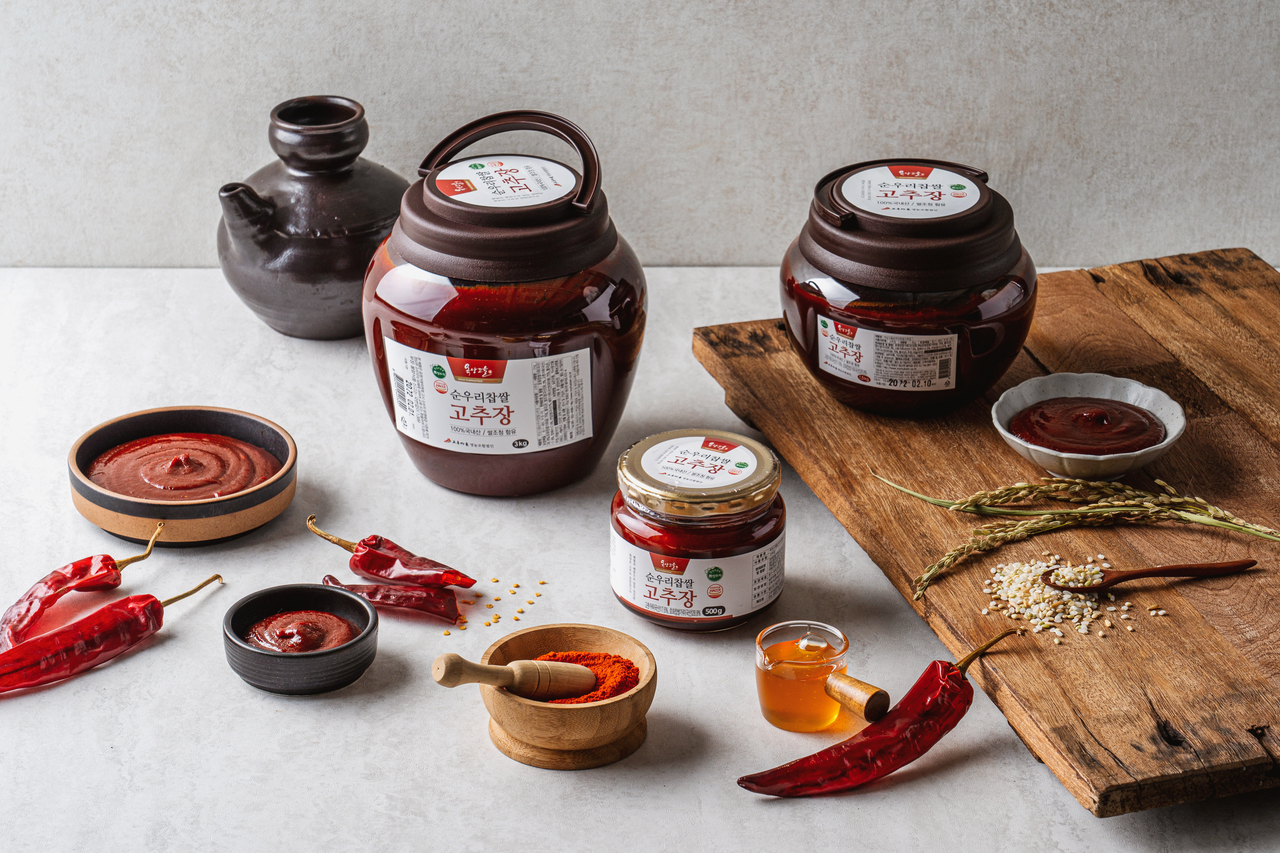
Targeting 10 billion won — kimjang season push and expanded fermented condiment production
To hit 10 billion won in annual sales this year, Gochujang Maeul is concentrating on the kimjang season, broadening its customer base and diversifying revenue across its product lines. Timed to the peak demand period for red pepper powder, the company is expanding promotional events across both online and offline channels while tightening production and inventory management. It is also working to bring back existing customers while investing in online advertising and brand promotion to attract new ones.
Scaling up gochujang production capacity to grow the fermented condiment business is another core strategy. The aim is to reduce the company's heavy reliance on red pepper powder sales, lift revenue during the off-season and smooth out the seasonal swings in its top line.
Jang considers improving profitability just as important as growing sales volume. The plan is to manage per-product costs and margins to strengthen the company's fundamentals, while also exploring entry into overseas markets.
"High sales don't automatically make a great company," Jang said. "I want to build a company whose value exceeds 10 billion won."
'Rural areas aren't lacking — there's just a lot that hasn't been tried yet'
Jang's advice to young people looking to start a business in rural areas: farming yourself is not a requirement. Combining what you are already good at with rural resources is enough to find new business opportunities.
Jang herself did exactly that — adding her own expertise in service, marketing and content creation to the production and processing capabilities her parents had built over a generation, and opening up new sales channels in the process.
"Rural areas aren't places where things are lacking — they're places where a lot of things simply haven't been tried yet."
"You don't have to farm to work in agriculture," Jang said. "If you bring your own expertise — in marketing, design, content creation — and apply it to rural resources, you can build something new."
The young entrepreneur who once couldn't sell a single bag of red pepper powder now has her sights set beyond South Korea, on the global market.
"Pepper Sister's ultimate goal is still 'world domination through peppers,'" Jang said. "I hope the day comes when people anywhere in the world think of Gochujang Maeul the moment they think of Korean peppers."
adastra@heraldcorp.com