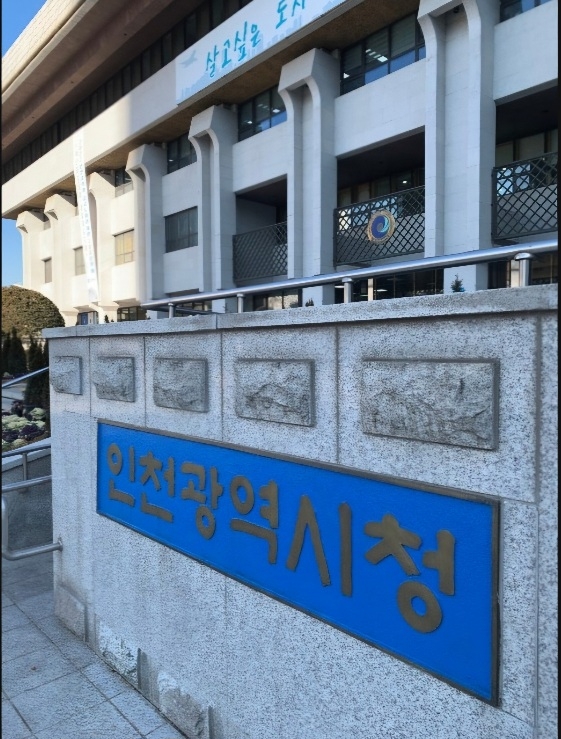
Incheon Metropolitan City has launched a sweeping overhaul of its fiscal management system, led by a newly established fiscal and budget reform task force, as the city enters its ninth directly elected administration.
The initiative aims to build a sustainable fiscal structure not through simple budget cuts, but through long-term fiscal strategy, performance-based budgeting and stronger financial expertise.
The task force unveiled its reform progress and future direction on Wednesday.
'Lack of fiscal strategy is the problem': six reform tasks identified
The task force identified three core problems with Incheon's current fiscal structure: the absence of a medium- to long-term fiscal strategy, a budget compilation process focused on micro-level project adjustments, and a sharp jump in cash-based welfare programs.
To address these issues, it proposed three guiding reform principles — balance and efficiency, accountability and performance, and expertise and information disclosure.
Among the practical measures, the city plans to introduce a fiscal strategy council chaired directly by Mayor Park Chan-dae, build an Incheon-specific revenue and economic outlook model, and establish a project pre-planning and project-code system to reflect annual implementation feasibility in budget compilation.
The city also plans to introduce a policy-tagging system and an Incheon-specific fiscal management framework, and to create dedicated fiscal specialist positions along with a professional development pipeline.
Balanced budget from 2027
In the city's second supplementary budget for this year, Incheon plans to largely maintain the cash-based programs introduced under the previous administration to minimize disruption to residents, while making limited adjustments to some programs based on fiscal conditions.
However, the city said it intends to pursue a balanced budget reflecting structural fiscal adjustments starting with the 2027 main budget.
The city also outlined a reform direction for Incheon e-eum, the local currency that has been at the center of ongoing debate over fiscal strain.
The city plans to keep the same basic system through the second half of this year and through 2027, while expanding monthly spending limits during the Lunar New Year and Chuseok holiday seasons.
It also plans to better balance support for vulnerable groups with the overall welfare budget, conduct empirical analysis of policy effectiveness, and redesign — through commissioned research — sectors that do not align with the program's policy intent or that are susceptible to abuse, such as advance payments.
The city also disclosed plans to cooperate with the Incheon branches of the five major financial holding companies.
Framing the fiscal crisis not merely as the failure of the previous administration but as an opportunity to restructure Incheon's economic fundamentals, the city plans to ask the financial sector to expand productive lending — including refinancing loans and interest-rate subsidy expansion for households in financial distress, financial support for small business owners, expanded technology-backed lending, and fund creation to foster AI and biotech industries.
Welfare budget up 256% in a decade: 'Structural change unavoidable'
The task force also presented figures to illustrate the urgency of restructuring Incheon's fiscal makeup.
From 2014 to 2024, Incheon's gross regional domestic product grew 65 percent and its total budget rose 92 percent, but welfare spending jumped 256 percent — from 1.6 trillion won ($1.09 billion) to 5.6 trillion won.
The average annual growth rate for welfare spending was 13.5 percent, more than double the 5.1 percent for GRDP and 6.7 percent for the overall budget.
Cash-based programs in 2026 amount to about 4.7 trillion won, of which 4.2 trillion won, or 88.9 percent, are nationally subsidized projects.
City-funded programs account for about 200 billion won, most of which were newly introduced under the previous administration.
Among discretionary city-funded programs, spending is concentrated in children, youth and veterans' affairs, while support for young adults remains comparatively limited.
Through this fiscal reform, Incheon aims to restore fiscal soundness while securing future growth engines and stabilizing livelihoods, building a sustainable fiscal management system that achieves both goals.
gilbert@heraldcorp.com