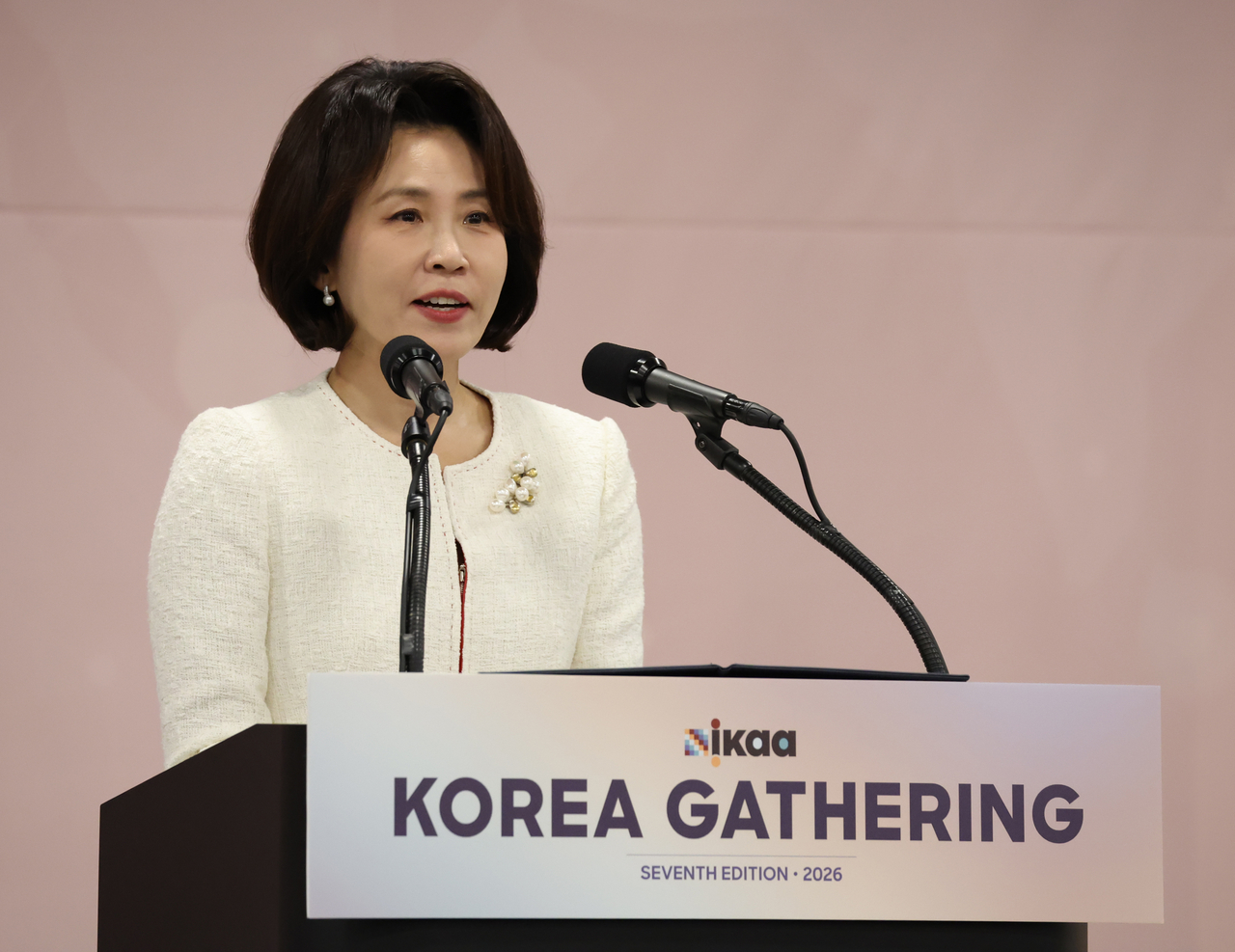
![Presidential Policy Chief Kim Yong-beom speaks at a ministry briefing chaired by President Lee Jae Myung at Cheong Wa Dae on Sunday. [Yonhap]](https://wimg.heraldcorp.com/news/cms/2026/08/23/news-p.v1.20260719.6a95954ce6884b7b9247654c7d5f9ee1_P1.jpg)
Presidential Policy Chief Kim Yong-beom is set to visit the Gwangju military airport site earmarked for the Honam semiconductor cluster, raising questions about whether the government's plans to expand the semiconductor national industrial complex will take concrete shape.
Kim will visit the military airport site — a candidate location for the semiconductor national industrial complex — on a private itinerary in the coming days to assess the military facilities and the current state of the site.
He had originally been expected to visit Monday, but the trip was postponed due to scheduling conflicts.
Kim also plans to visit areas near the military airport, including Nam-gu in Gwangju and Naju in South Jeolla Province, to examine whether additional semiconductor sites can be secured.
The visit is understood to go beyond a simple review of the military airport's status as a candidate site for the semiconductor national industrial complex. Kim is also expected to assess how much additional capacity the area could accommodate — including additional semiconductor fabs and companies in the materials, parts and equipment sector — as part of a broader semiconductor cluster.
At a public-private mega-project review meeting chaired by President Lee Jae Myung on Aug. 10, Cheong Wa Dae and the government announced they would move quickly to designate additional candidate sites near the military airport site — spanning 8.25 million square meters — already identified as a candidate location for the semiconductor national industrial complex.
The Honam semiconductor project originally envisioned Samsung Electronics and SK hynix each building two fabs — four in total — on the 8.25-million-square-meter military airport site. The project's scope may now expand, with the number of fabs potentially growing to as many as nine over the long term.
The plan calls for production facilities, including semiconductor fabs, to be built on the 8.25-million-square-meter military airport site. The remaining land on and around the site would be developed into a broad semiconductor industry belt encompassing materials, parts and equipment companies, as well as maintenance, logistics, research and development, and power and wastewater treatment facilities.
The government and the semiconductor companies involved are also understood to be examining surrounding industrial land beyond the military airport national industrial complex candidate site.
Areas under consideration as linked sites include the Nam-gu district of Gwangju and the Daechon industrial complex, as well as industrial complexes in Naju and Muan.
During his visit, Kim is also expected to look beyond the 8.25 million square meters of usable land at the military airport to assess additional national industrial complex candidate sites and the need to expand infrastructure such as power supply and water resources.
sij@heraldcorp.com