![[Korea Federation of SMEs]](https://wimg.heraldcorp.com/news/cms/2026/08/24/news-p.v1.20260824.a3d0997f5dfb46019fce2a3e0de41783_P1.jpg)
Small Business Policy Association holds inaugural future policy forum
Japan's prolonged recession cited as case study — 'strategic, targeted support needed'
Govt should play infrastructure role; small businesses must sharpen tech and management skills
Small businesses in Japan managed to reposition themselves from economically vulnerable actors to central pillars of their local communities during the country's prolonged recession, analysts said Monday — and South Korea's small-business policy should follow a similar path, shifting away from compensating struggling operators toward strengthening local economies and competitiveness.
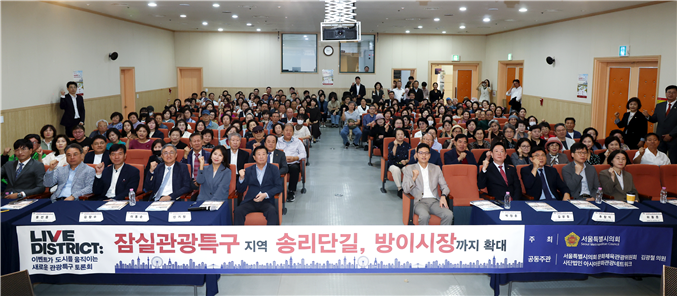
The Small Business Policy Association held its inaugural Future Policy Forum on Monday at the Korea Federation of SMEs headquarters in Seoul, under the theme "How small businesses can overcome the recession."
The forum examined changes in Japan's retail market during its extended economic downturn alongside the debt burdens, business closures and commercial district stagnation facing domestic small businesses, and discussed medium- to long-term responses. Discussion centered on the need to reform both government support policies and small businesses' own management strategies in line with shifting consumer behavior and the evolving retail environment.
The first presenter, Choi Sang-cheol, a professor at Kansai University's School of Commerce in Japan, introduced localization strategies adopted by Japanese retailers, speaking on the topic "Characteristics of Japan's retail market during prolonged recession and strategic challenges for small businesses."
Choi compared Japanese consumers' attachment to their local communities — and the hyperlocal strategies retailers have built around that attachment — with South Korea's trend of concentration in Seoul and the homogenization of regional areas to resemble the capital.
"Japan's small businesses are assessed to have successfully repositioned themselves from economically vulnerable entities to central presences in their local communities," he said, while noting that existing Japanese government policy tools have their limits.
Rather than providing blanket support to all businesses in financial difficulty, he said what is needed is "strategic support" — selectively backing operators capable of solving local problems and sustaining the functions of the regional economy.
Choi said Korea also needs an approach that revives the unique consumer culture and commercial character of each region. "There is a need to explore virtuous, sustainable policies and strategies that rediscover and reinvent local identity by reviving regional affinity and distinctiveness," he said.
The second presenter, Jeong Su-jeong, head of the small business policy division at the Korea Institute for SMEs and Startups, proposed broadening the focus of small-business policy from crisis management to building a foundation that allows businesses to adapt to a changing environment.
Jeong said small businesses currently face a complex set of challenges — debt, closures, employment instability, stagnating commercial districts, a broken growth ladder and friction between large and small enterprises. Looking ahead, she said the capacity to supply products and services that meet consumer demand will become increasingly critical, and businesses must also prepare for the likely contraction of offline commercial districts as online consumption grows.
"Government policy should focus on 'building infrastructure' that helps small businesses adapt to a changed environment and grow sustainably, with the government playing a supporting role," Jeong said.
She also said government support alone is insufficient to secure lasting competitiveness, and that small businesses themselves must simultaneously work to strengthen their entrepreneurial spirit, technology utilization and management capabilities.
A panel discussion followed, moderated by Lim Chae-woon, an emeritus professor at Sogang University, with participation from Ko Jang-su, chairman of the National Cafe Owners Cooperative; Jeong Ji-hyeon, a researcher at the Small Enterprise and Market Service's small business research institute; Yoo Byeong-guk, a professor at Incheon National University; Yoon Se-myeong, director of the small business policy division at the Ministry of SMEs and Startups; Cha Nam-su, a senior official at the Korea Federation of Micro Enterprises; and Hwang Yeong-man, head of the small business policy division at the Korea Federation of SMEs. The panel discussed current issues facing small businesses and the direction of medium- to long-term policy.
hong@heraldcorp.com