Shinhan Bank, which has run Incheon's primary treasury for 20 years, touts its long track record in electronic local tax payment systems; Hana Bank faces scrutiny over whether it can independently operate the city's tax and revenue IT infrastructure
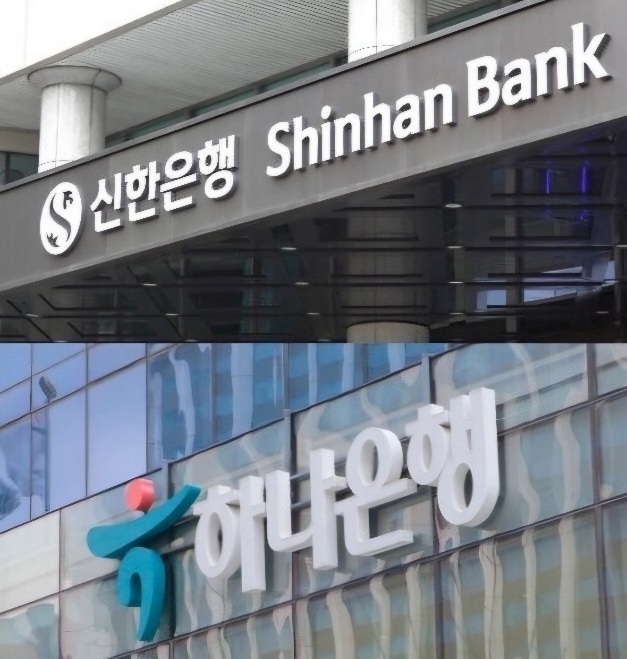
Competition to manage Incheon's city treasury — covering both the primary and secondary accounts and handling roughly 17 trillion won ($12.5 billion) annually — is heating up, with Shinhan Bank and Hana Bank locked in a fierce contest for the primary treasury contract.
The decisive factor in this contest is the stability and proven track record of the electronic systems that directly process local taxes and various revenue streams for Incheon residents. The role goes far beyond simply holding the city's funds: the winning bank must reliably operate a vast public IT network through which residents' local tax payments, non-tax revenue and various levies flow via electronic billing, virtual accounts and financial settlement networks into the city's revenue accounting system.
It is no exaggeration to say that the primary treasury contest — covering roughly 15 trillion won — hinges on which bank can most stably operate Incheon's local tax and revenue IT network.
Shinhan Bank's biggest advantage, after running the city treasury for two decades, is the hands-on experience it has accumulated in electronic local tax payment and revenue collection systems through actual day-to-day operations.
Incheon's E-TAX system and its broader electronic local tax billing and payment framework are built on an organic connection among residents, the city and financial institutions' collection systems. In that structure, the bank is not merely a custodian of funds — it serves as core financial infrastructure for revenue administration, handling virtual account management, transmission of collection results and electronic payment processing.
Shinhan Bank highlights its continuous performance of these system-linked duties throughout its long tenure managing the city treasury. Each time the local tax regime or electronic payment methods changed, it upgraded its systems accordingly, and it adapted to new administrative bodies and shifts in the revenue framework during Incheon's recent administrative restructuring.
Twenty years of tenure is not, by itself, the whole of a competitive edge. But the experience of handling real operations over that span — responding to system errors, regulatory changes, data migrations and administrative reorganizations — represents a verified track record that a mere system proposal cannot replicate.
Hana Bank, which is relocating its headquarters to Incheon's Cheongna International City in September, is also pressing its own financial IT infrastructure and system capabilities as selling points.
The question, however, is whether Hana Bank's general financial IT competence translates into the ability to actually link and operate Incheon's local tax and revenue collection systems. Stably running internet banking, mobile banking or corporate finance systems is a different domain from integrating a local government's tax billing, collection and revenue accounting systems.
Particularly if the primary treasury changes hands, the existing collection framework, virtual accounts, collection data transmission and revenue accounting linkages would all need to be migrated to a new bank's infrastructure.
Should even a single disruption occur in residents' local tax payments during that transition, the consequences would extend beyond a bank's IT problem to a breakdown in public administrative services — a prospect that Incheon city officials themselves view with considerable concern.
It is already well known through media coverage that Hana Bank has been using Shinhan Bank's local tax and revenue IT systems for its treasury operations in Incheon. Hana Bank is currently understood to be paying usage fees to Shinhan Bank for those systems in its treasury work for Incheon's Seohaegu and Geomdan-gu districts.
That raises unavoidable questions that merit objective assessment: whether Hana Bank could handle local tax and revenue operations on its own independent systems if it took over the entire primary treasury; what costs and time a transition or integration with the existing systems would require; and what its recovery framework would look like in the event of an actual outage.
A bank's competitiveness cannot be judged simply by the claim that it has good systems. What matters is a real-world assessment of where, for how long and in what manner it has actually operated public revenue collection systems.
What Incheon's selection committee needs to verify in this process is clear. For Hana Bank, the committee should carefully examine how it plans to integrate with Incheon's E-TAX and local tax and revenue collection systems; whether it has a dual or parallel operation plan to prevent any interruption to local tax payment services during the transition from the existing system to a new one; whether recovery timelines and lines of responsibility in the event of a system failure are clearly defined; and, above all, whether the system Hana Bank is proposing has already been deployed and verified in actual operation at another local government.
Shinhan Bank, for its part, should not be evaluated on the strength of its 20-year tenure alone. It must objectively demonstrate the stability and security of its existing systems, its record of outages and its system upgrade achievements to prove the value of its long-term stewardship.
Community contributions, interest rates and cooperative project funding all matter, but none of them can take precedence over the stability of the IT network that processes Incheon residents' taxes.
For the primary treasury selection covering the four years from 2027 to 2030, the outcome will ultimately turn on how rigorously the selection committee scrutinizes banks' actual operating records and the verifiability of their systems, rather than the polish of their proposals.
Some observers argue that the IT system evaluation in this primary treasury selection is not a secondary criterion at all — it is in effect the most critical battleground in the entire contest.
gilbert@heraldcorp.com