LH, AMC agreements push potential pipeline to 2-3 trillion won
Mortgage guarantee ceiling hike, bond securitization under review
HUG chief: 'We will invest in PF projects we have guaranteed'
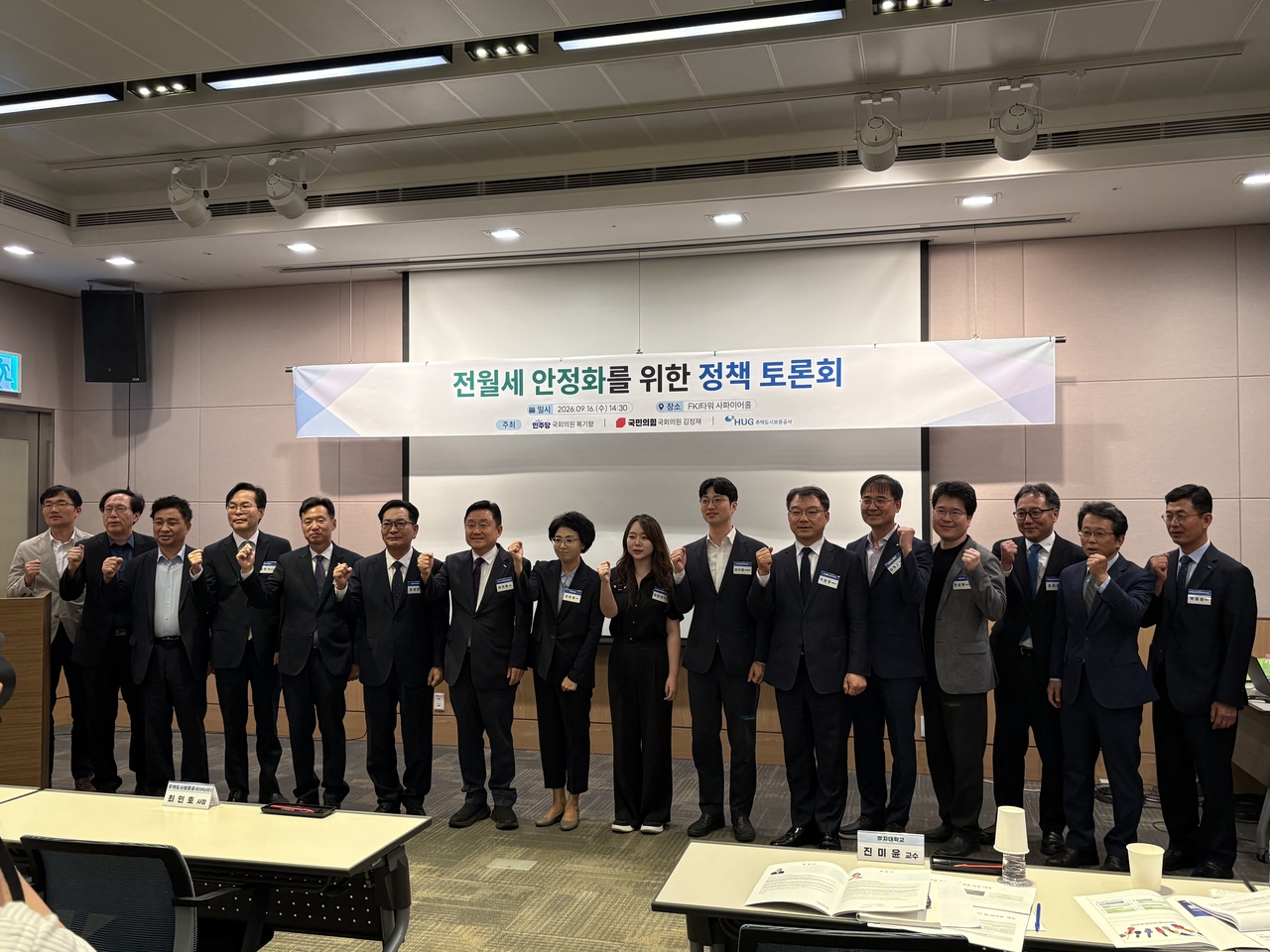
The government's new jeonse-and-monthly-rent trust program has surpassed 1 trillion won ($731 million) in commitments, officials said.
Korea Housing and Urban Guarantee Corporation President Choi In-ho made the announcement Wednesday afternoon at a policy forum on jeonse and monthly rent stabilization held at FKI Tower in Yeongdeungpo-gu, Seoul. "Commitments to the trust program — including from Korea Land and Housing Corporation rental housing and asset management companies — have now exceeded 1 trillion won, with a potential pipeline of 2 to 3 trillion won already secured," Choi said.
Choi outlined the structure and benefits of the program at the forum. Under the scheme, HUG enters into a three-way agreement with landlords and tenants to convert market-rate monthly-rent units into jeonse supply. HUG collects tenants' jeonse deposits, manages them through a fund, and pays landlords a fixed monthly amount from the returns. The fund's capital will be invested in project financing loans to help expand housing supply.
"The current jeonse guarantee system provides relief after the fact, but the trust program is a preventive measure that protects deposits from the outset — making a zero-incident rate achievable," Choi said. "Tenants, landlords and the broader public and market all stand to benefit."
Because participation is voluntary, securing sign-ups from both landlords and tenants is the program's top priority. Landlords in particular face a significant reduction in liquidity by entrusting their jeonse deposits to HUG, making tangible incentives essential.
Choi said a return of around 4.35 percent per year is the likely rate, and that participants would be exempt from the mandatory rental deposit guarantee, reducing fee burdens. As an example, a landlord who entrusts a 300 million won jeonse deposit to HUG would receive roughly 1.09 million won per month. HUG also said properties with existing collateral mortgages would be eligible for the program, which it expects to ease recruitment of participants.
HUG is also pursuing a reduction in the current 14 percent rental income tax. "We have reached an agreement with the Ministry of Economy and Finance and others on the cut," Choi said. "A specific figure has not been finalized, but a single-digit rate is the likely outcome." Landlords who relocate from regulated areas such as Seoul to other regions would also be able to continue receiving a housing pension of 1 to 3 percent per year on top of trust returns.
To ease the liquidity strain on corporate rental housing operators joining the program, HUG plans to offer mortgage guarantee support — raising the ceiling from the current 60 percent of appraised value to 70 to 75 percent to facilitate smoother financing. The corporation is also considering securitizing four years' worth of monthly payments into bonds for sale on the securities market.
Tenants, meanwhile, would benefit from protection against jeonse fraud and lower housing costs, as well as access to low-interest loans. "We plan to work with commercial banks to launch a low-interest jeonse loan product exclusively for tenants enrolled in the trust program," Choi said.
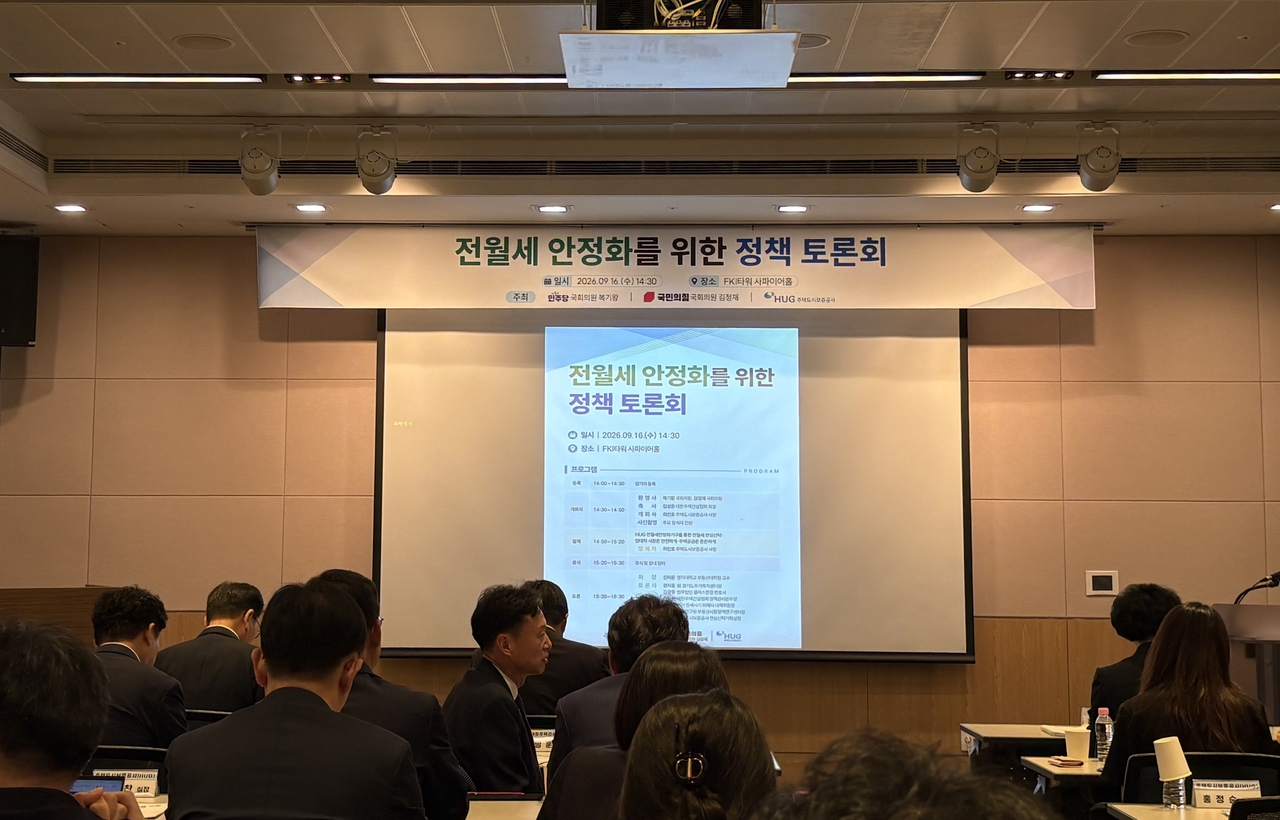
Following the presentation, a panel discussion moderated by Jin Mi-yun, a professor at Myongji University's Graduate School of Real Estate, drew both optimism and concern about the trust program ahead of its planned landlord and tenant recruitment drive later this month.
Kim Jong-eon, head of the policy management division at the Korea Housing Builders Association, said member companies have consistently raised concerns that the program could eventually become mandatory. "The principle of voluntary participation must be maintained so that operators can freely choose between stable returns and securing their own capital," Kim said.
Kim also called for easing conflicts with existing regulations on multi-home owners. He proposed that when a landlord purchases a non-apartment property as a condition of joining the trust program, that property should be excluded from the home count for acquisition and capital gains tax purposes and from the comprehensive real estate tax base.
Lee Dan-bi, chairperson of the Jeonse Fraud Victims' Committee, said tenant demand would be high but warned that the program would be meaningless — no matter how safe — if the actual supply of trust-backed jeonse units on the market remains extremely limited. "Offering additional benefits to long-term participating landlords could help establish a sustainable long-term jeonse supply structure," she added.
Concerns were also raised about potential losses in managing the deposits. Choi said HUG would lend only to project financing sites it has already guaranteed. "We have provided more than 50 trillion won in guarantees since 2013, and the incident rate has been no more than 0.8 percent," he said. "Even in the event of a total loss of principal, the state would ultimately bear responsibility," he added.
HUG will hold an inauguration ceremony Tuesday to formally launch the jeonse and monthly rent stabilization body. Landlord and tenant recruitment is set to begin later this month, with contracts and move-ins scheduled from January. The housing supply activation fund will select a managing financial institution by December, with investor recruitment and full operations to begin next year.
shy@heraldcorp.com
hwshin@heraldcorp.com