Polls open Tuesday from East Coast, results expected by Wednesday
Senate outcome draws most attention; Korean American candidates also in spotlight
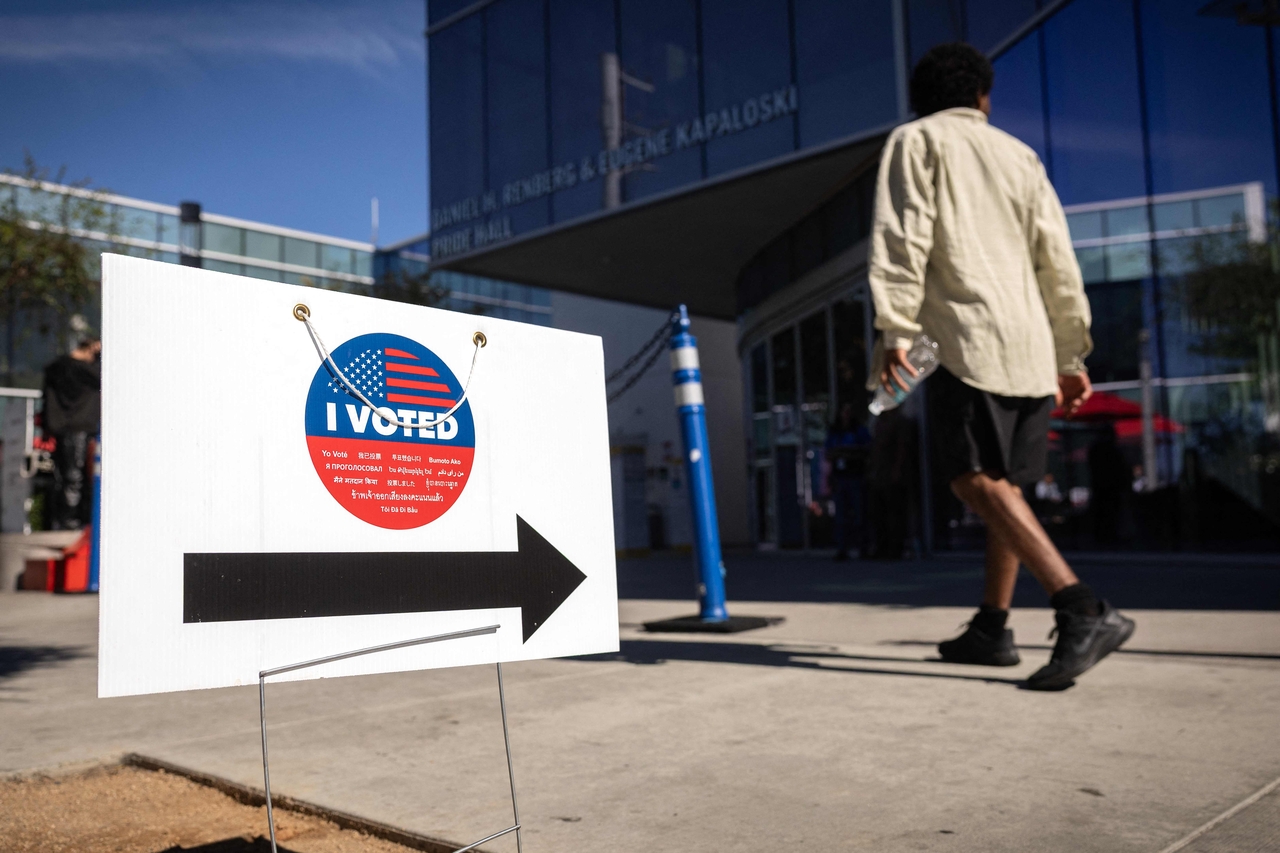
The US midterm elections — widely seen as a referendum on the first half of Donald Trump's second term — are being held Tuesday (local time).
Voting begins at 6 a.m. Eastern time Tuesday (8 p.m. Korean Standard Time) in New York, New Jersey, Virginia and other East Coast states, with polling hours varying by state. Counting begins as each jurisdiction closes its polls. Indiana and Kentucky are the first to close, at 6 p.m. local time, while Alaska, outside the continental United States, receives its last ballots at 1 a.m. Wednesday.
On the ballot are 35 of the 100 Senate seats — whose holders serve six-year terms — all 435 House seats, and governorships and state legislative seats in 36 states. Held at the midpoint of a four-year presidential cycle, the elections serve as a broad assessment of the sitting administration. The results will reshape the congressional landscape for the remainder of Trump's second term, and it is no exaggeration to say his political fortunes hang in the balance. Many presidents have entered rapid lame-duck periods after losing midterm elections.
In the House, Democrats are widely expected to win. Forecasters project the party will capture between 230 and 240 seats, enough to reclaim the majority. Even a House majority alone would give Democrats significantly stronger tools to check the Trump administration — including the power to subpoena witnesses and compel testimony through congressional investigations, in addition to their legislative leverage.
Recent polling also raises the possibility that Democrats could retake the Senate majority. Republicans currently hold 53 seats to Democrats' 47, with two independents, giving the GOP a narrow edge. Of the 35 Senate seats up for election, Democrats need to win at least 17 to reach a majority. The seats in play currently break 22 Republican and 13 Democratic, meaning Democrats must hold all their existing seats while flipping at least four from Republicans.
Seven states are considered Senate battlegrounds: Maine, Michigan, Ohio, Iowa, Kansas, Texas and Alaska. Of those, Democrats hold only Michigan as the incumbent party. Forecasters differ somewhat in their assessments, but a New York Times/Siena College poll released Sunday (local time) showed Democrats leading in six of the seven competitive races, with Iowa the only toss-up. Across most outlets and forecasting models, Democratic candidates hold narrow leads — often within or near the margin of error — in a majority of the contested states.
A complicating factor is that most of the key battlegrounds are traditionally Republican-leaning territory. There is also a recurring argument that polls tend to undersample Republican-leaning voters.
Republicans can retain their Senate majority with as few as 50 seats, since the vice president — who also serves as Senate president — holds a tiebreaking vote. That outcome would allow Trump to avoid his worst-case scenario, using the Senate as a shield to continue his administration's unilateral policy course. Under the bicameral structure, even if Democrats win the House, failure to capture the Senate would leave major legislation gridlocked.
The Senate holds authority over confirming senior administration appointments and passing budgets. If Democrats gain control of the upper chamber, the Trump administration could face repeated deadlocks over nominees and spending bills for the remaining two years of the term. Some analysts have warned that budget impasses could trigger a government shutdown every year.
Most significantly, a Democratic sweep of both chambers could push Trump into an early lame-duck period. He effectively led candidate recruitment and campaigning, and it will be difficult for him to escape blame for the high inflation tied to the Iran war — the dominant issue of the election. In media interviews, Trump said that if Democrats take control of Congress, "I'll be Mr. Veto," signaling his intent to use his veto power aggressively to block Democratic legislation. On Monday, he also said he would pursue preemptive pardons for administration officials and close allies in anticipation of Democratic-led investigations.
After the midterms, American politics is expected to gradually shift its focus toward the 2028 presidential election, with rising figures who build their profiles in this cycle likely to begin positioning themselves for the race.
Meanwhile, mail-ballot counting and potential recount requests mean a clear picture of the Senate majority may not emerge until Wednesday at the earliest. Alaska and Maine — both battleground states — use ranked-choice voting, a system in which voters rank candidates by preference rather than selecting just one, with the lowest-ranked candidate eliminated in each round and votes redistributed until one candidate clears a majority. That process could delay final results in those states by several days.
Korean American candidates are also drawing attention. On the Democratic side, Dave Min of California, Marilyn Strickland of Washington and Dan Koh of Massachusetts are running for House seats, while Young Kim of California is seeking reelection as a Republican. Among Korean Americans, Democratic candidate Cyndi Munson is running for governor of Oklahoma, vying to become the first Korean American governor in US history.
kate01@heraldcorp.com