Ministry of Employment and Labor, Human Resources Development Service of Korea and World Bank co-host HRD forum in Seoul on Tuesday and Wednesday; more than 50 experts from Korea, China, Japan and ASEAN to design country-specific training policies
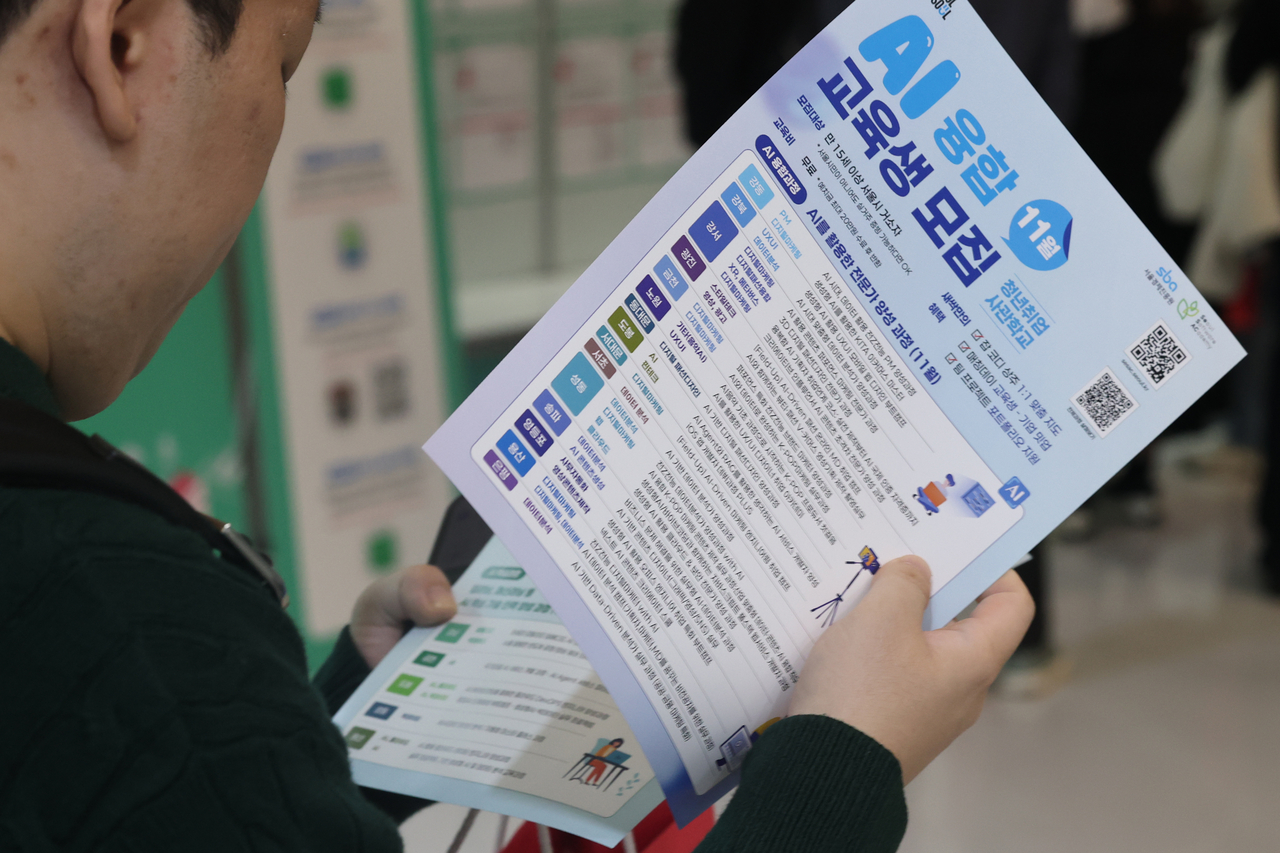
South Korea, ASEAN member states, China and Japan are gathering to discuss vocational training policies and talent development strategies in response to the rapid spread of AI. Korea will share its plan to provide AI training to more than 1 million people over the next five years, while participating countries will design training policies tailored to their own national circumstances.
South Korea's Ministry of Employment and Labor announced Tuesday that it is co-hosting the 14th ASEAN+3 Human Resources Development Forum with the Human Resources Development Service of Korea and the World Bank, running Tuesday and Wednesday at the Grand Mercure Ambassador Seoul Gangnam hotel.
Held under the theme "From Job Competencies to Employment: AI-Tailored Talent Development in the ASEAN+3 Region," the forum is expected to draw about 50 participants, including HRD officials from ASEAN nations and Korea, China and Japan, representatives from international organizations such as the World Bank and the ASEAN Secretariat, and domestic experts.
Korea will present its "AI+ Competency UP Project," which supports step-by-step AI training covering labor market entry, on-the-job development and career transitions. Launched this year, the project aims to provide AI training to more than 1 million people over the next five years. It pairs customized training with expanded training infrastructure and inter-agency collaboration to build a foundation for developing AI talent.
Pyeon Do-in, director general of the ministry's Vocational Competency Development Bureau, will also present the flagship "K-Digital Training AI Campus Program," which aims to train 10,000 working engineers across job categories including AI systems development and AI application software development, covering full training costs and providing training allowances.
Choi Yong-il, head of the job competency planning division at the Human Resources Development Service of Korea, will present reforms to common vocational competencies for digital and AI skill enhancement, along with case studies in developing National Competency Standards. Choi will also share plans to build a job competency bank system that allows individuals to certify the digital skills they have acquired.
Beyond policy case presentations, the forum will include hands-on sessions in which officials from each country design their own training policies. Participants will work to define country-specific policy challenges and examine institutional and technical foundations, the roles of employers and training institutions, and approaches to financing and operations.
One example on the agenda is Indonesia's public AI training program, which currently covers only two occupational categories with no level distinctions. Participants will work with World Bank and Korean experts to explore ways to expand those categories and introduce tiered training from beginner to advanced levels.
Tara Beteille, a senior economist at the World Bank, will deliver the keynote address, drawing on empirical data from the ASEAN region to assess how prepared each country's HRD policies are for the AI era and to outline directions for response. On the second day of the forum, participants will present their policy design results, discuss avenues for cooperation and then visit Korea Polytechnics' Seongnam campus.
Son Pil-hun, head of the ministry's planning and coordination office, said the international community is increasingly focused on AI vocational training policies aimed at building a human-centered AI era. "Korea will continue to work with ASEAN to activate various platforms for developing the policies needed in the AI age, including support for vulnerable groups and human resources development," Son said.
Lee Byung-hoon, president of the Human Resources Development Service of Korea, said the disruption caused by AI and digital transformation may hit low-wage workers in developing countries harder than Korean workers, and pledged to contribute to building a vocational competency development service framework to upskill and retrain workers across the ASEAN region.
The ASEAN+3 HRD Forum was first launched in 2013 to share HRD policy experiences within the region and build cooperative networks.
fact0514@heraldcorp.com