Some 31,212 fare evasion cases were detected through September this year, with surcharges totaling about 1.65 billion won
Seoul Metro is running a joint prevention campaign with transit operators at major transfer stations to promote proper fare use
Fare evasion on Seoul's subway system surpassed 31,000 cases through September this year, Seoul Metro said.
The operator said it is running a joint "2026 Second-Half Fare Evasion Prevention Campaign" with metropolitan area urban rail operators to raise awareness of the problem and promote a culture of proper fare payment.
A total of 31,212 fare evasion cases were detected through September, with surcharges collected amounting to about 1.65 billion won ($1.23 million). By type, fraudulent use of discounted senior passes accounted for the largest share at 76.7 percent of total surcharge amounts, followed by boarding without a ticket and without reporting at 15 percent, and improper use of discount passes at 8.3 percent.
Over the past three years (2023–2025), fare evasion totaled 159,918 cases, averaging about 53,000 cases per year. Surcharges collected over the same period came to approximately 7.7 billion won.
Under the Railway Business Act and Seoul Metro's passenger transport terms and conditions, anyone caught evading fares must pay the applicable fare plus a surcharge equal to 30 times that fare. If a passenger refuses to pay, Seoul Metro applies a zero-tolerance policy and pursues legal action under Article 347-2 of the Criminal Act (computer fraud) and Article 348-2 (improper use of convenience facilities).
In one case, Seoul Metro filed a lawsuit against a passenger who had not paid surcharges accumulated over 21 years. A court last year ordered the passenger to pay 5.1 million won ($3,800) to Seoul Metro. When payment was still not made, Seoul Metro initiated enforcement proceedings in June this year, and installment payments began in July.
In another case, a man in his 50s was caught by a station employee using his mother's senior citizen transit card but boarded a train and fled. After the employee immediately filed a complaint with police and an investigation began, the passenger visited the station office and paid a surcharge of 650,000 won.
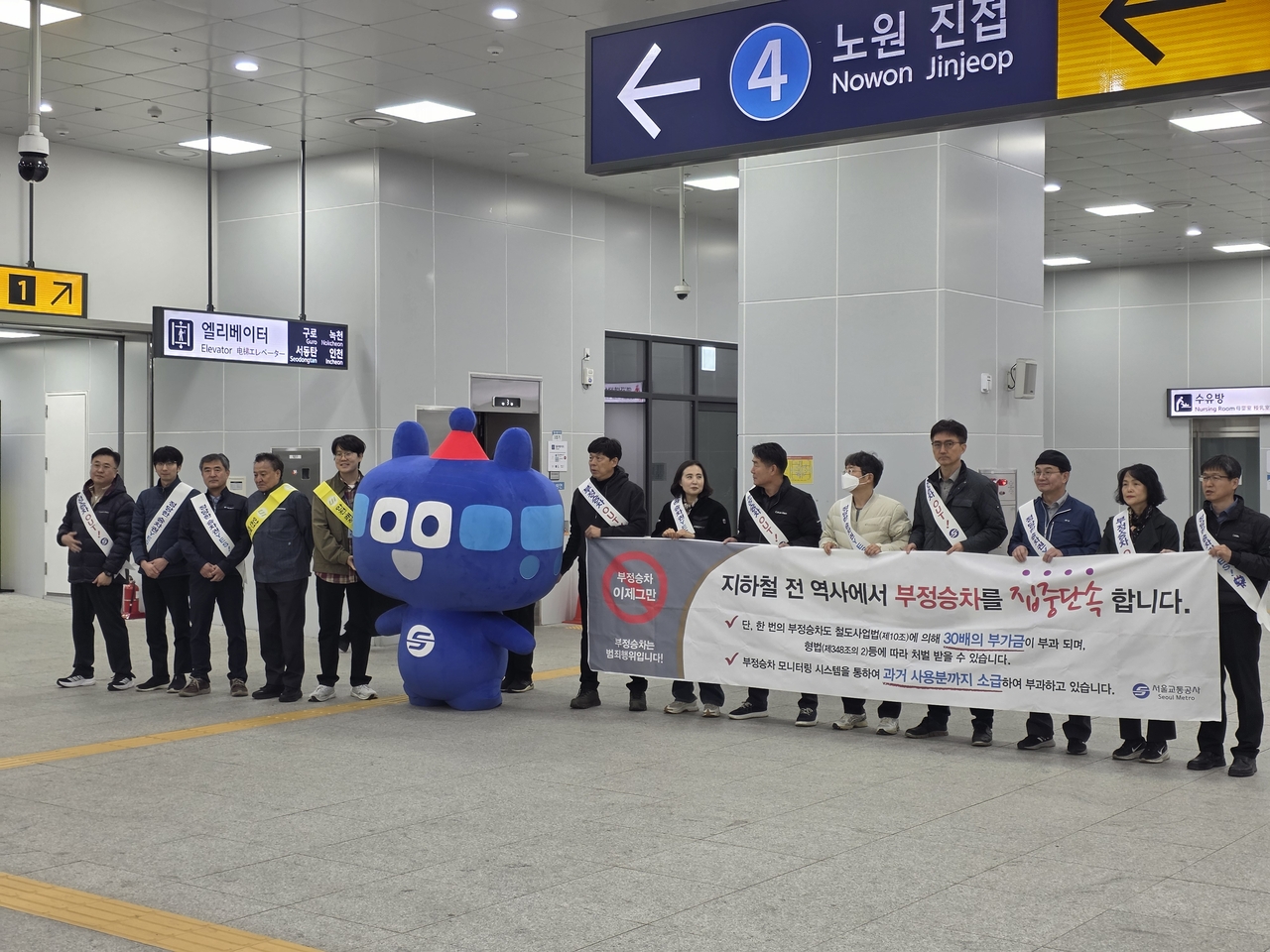
To prevent such evasion, Seoul Metro has been running the "2026 Second-Half Fare Evasion Prevention Campaign" for three weeks from Oct. 19 to Nov. 6.
The campaign involves metropolitan area urban rail operators — including Korail, Airport Railroad, Gimpo Goldline, Ui-Sinseol Light Rail, Sinbundang Line and Seoul Metro Line 9 — which conducted joint prevention activities at six major transfer stations.
The joint campaign kicked off at DMC Station on Oct. 21 and Gongdeok Station on Oct. 22, followed by Cheongnyangni Station and Changdong Station on Thursday, and Seolleung Station and Yangjae Station on Friday. Participating organizations used banners, sashes and a Ttota mascot costume at major transfer corridors and fare gates to spread the message about proper fare use. Each of Seoul Metro's 17 business offices is also running its own parallel campaign.
Going forward, Seoul Metro plans to hold regular joint campaigns with partner agencies and pursue a range of additional measures — including special enforcement crackdowns, in-station announcements, and letters to schools in transit-oriented areas — to establish a culture of proper fare payment.
"Fare evasion goes beyond simply not paying a fare — it undermines fairness toward citizens who pay their fares honestly," said Ma Hae-geun, head of Seoul Metro's business division. "We will continue to work through sustained enforcement and prevention efforts to build a proper fare-use culture."
seouldream01@heraldcorp.com