KISTI hosts Future Research Information Forum to discuss building and using high-quality research data
South Korea's science and technology community is working to develop a strategy for combining high-quality research data with AI to strengthen the country's R&D competitiveness.
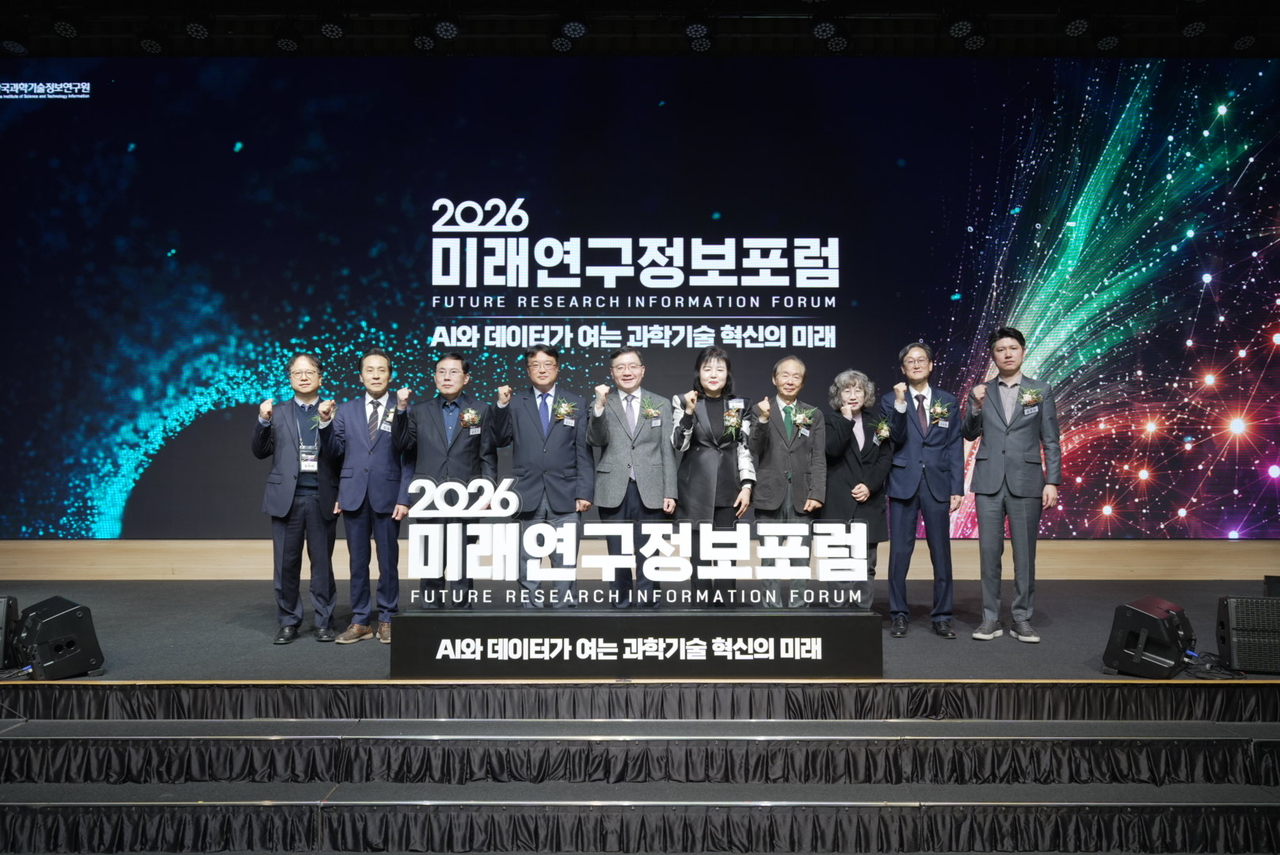
The Korea Institute of Science and Technology Information held the 2026 Future Research Information Forum on Wednesday at the Korea Science and Technology Hall in Seoul, under the theme "The Future of Science and Technology Innovation Opened by AI and Data."
Now in its 15th year, the forum is an annual event where participants share the latest technology and policy trends in scientific information and data and discuss directions for advancing national R&D.
The central concept at this year's forum was "AI-ready data" — research data prepared to a standard of quality and reliability that allows AI to learn from and use it directly, without additional complex processing.
AI is increasingly being applied across science and technology, from identifying new drug candidates and designing new materials to developing semiconductors. But no matter how capable an AI system is, poor-quality training data makes it difficult to ensure accurate and reliable research outcomes.
As a result, simply accumulating large volumes of data is no longer enough. Standardizing research data into forms that AI can understand and use, and managing it systematically, has emerged as a critical challenge.
The forum focused on building high-quality research data, making data-driven research environments more intelligent, and exploring applications in advanced fields such as semiconductors and AI foundation models.
KISTI Director General Lee Sik said competitiveness in the new era would come from data and computing. "I hope this forum becomes an opportunity to gather wisdom for accelerating South Korea's science and technology innovation and leaping forward to become one of the world's top three AI powers, through the convergence of trustworthy data and AI," Lee said.
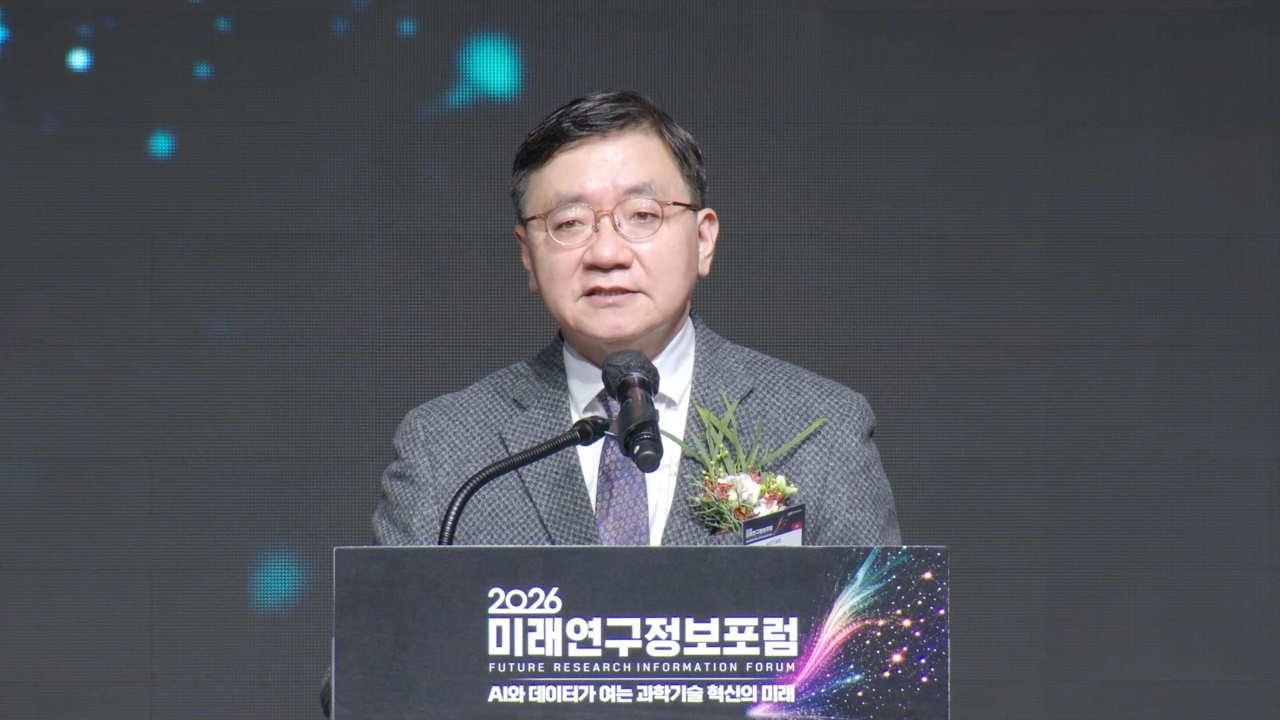
Kwon Oh-nam, chairman of the Korean Federation of Science and Technology Societies, said that for AI to qualify as science, it requires trustworthy data, verifiable processes and researchers who ask "why," underscoring the importance of data reliability and the role of researchers.
The government is also moving to build a national-level system for managing and using research data.
Kim Sung-su, director general of the R&D policy bureau at South Korea's Ministry of Science and ICT, said high-quality research data is becoming the foundation of R&D innovation. "We will actively support the data-driven AI research ecosystem through the implementation of the National Research Data Act and the operation of the national data integration platform," Kim said.
Lee Seok-rae, secretary general of the National Research Foundation of Korea, said the foundation is also transitioning to AI-based institutional operations and a data-centered decision-making framework.
Keynote addresses by Kim Jeong-min, executive vice president of Kakao Mobility, and Hwang Hyung-ju, a professor at Pohang University of Science and Technology, were followed by presentations from industry, academic and research experts who shared perspectives on the shifting research paradigm driven by advances in AI technology and the potential of scientific and technological data.
KISTI is pursuing AI-driven innovation in scientific research by combining national science and technology data with supercomputing infrastructure.
The institute is particularly focused on developing a large-scale AI model specialized for R&D — trained on vast stores of science and technology data — as well as "AI scientist" technology designed to support researchers throughout the research process.
The sixth national supercomputer, Han River, is also expected to serve as a key piece of infrastructure, combining large-scale research data with high-performance computing resources to support AI model development and the resolution of complex scientific problems. Through this, KISTI plans to build a data-driven research innovation ecosystem spanning data acquisition, AI training, and scientific discovery and verification.
nbgkoo@heraldcorp.com