Each service built in two weeks using AI tools; 'execution matters more than perfection'
After 17 years in the Korea-Japan game industry, Han founded AIMOLAB in Japan in June
"I am a non-developer who cannot write a single line of code myself," said Han Seung-hee, CEO of AIMOLAB. "But with AI, even one person can turn an idea into a real, working service."
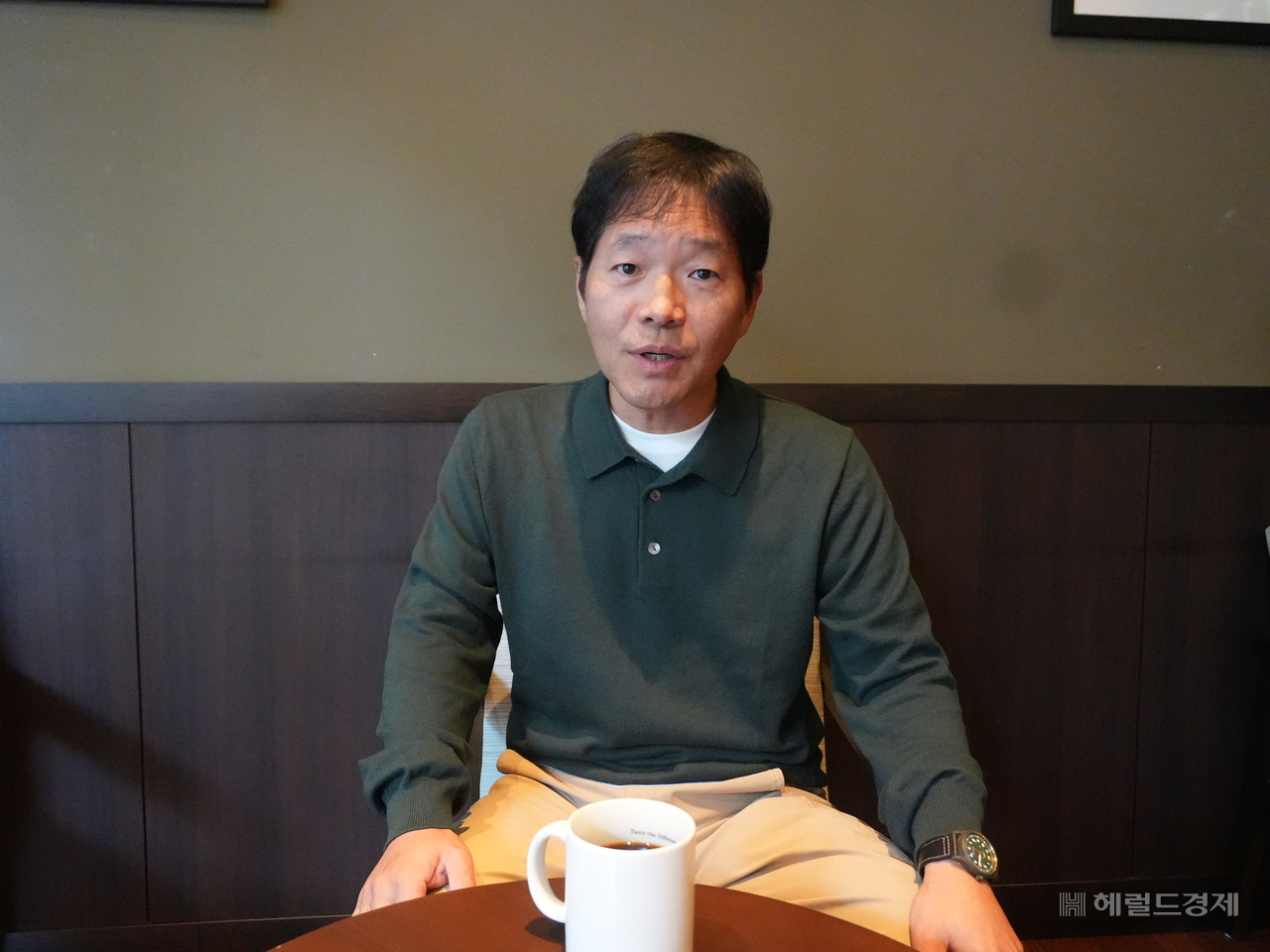
Han Seung-hee, who spent 17 years in the Korean and Japanese game industries, is now building a one-person company powered by AI. Having previously led Japanese market entry and business operations for major game companies, Han left the corporate world this year and reinvented as an entrepreneur developing digital services independently.
In a recent interview with Herald Japan, Han explained the decision to go independent. "Working in a large organization and delivering results was deeply rewarding, but as the years passed and I moved into decision-making roles, I grew increasingly hungry to build something myself and test it directly in the market," Han said.
Han's career began at Onnet in 2001 and continued through SK Comms, Onnet Japan, Game Monster, GameOn and Pearl Abyss Japan, accumulating about 17 years in the game industry. In Japan, Han built hands-on experience in game publishing, business development and corporate operations.
AIMOLAB, established June 16, is a one-person company run solely by Han. Its core businesses are developing digital services using AI and providing business consulting between Korean and Japanese companies.
Since founding the company, Han has personally conceived and built 10 services. They include "3-Minute View," which delivers information on the Japanese game industry; "Juyuso," a recommendation platform for nihonshu (sake); and "Tokyologi," a travel guide to Tokyo — alongside services covering character merchandise, fitness, workspaces, travel convenience and everyday journaling.
What stands out is that Han built all of these without a dedicated development team.
"In the past, launching a single web or app service required at least five people — a planner, a designer, developers — and took around six months," Han said. "Now, using AI, it takes an average of two weeks to turn an idea into a working service."
Han uses Lovable, an AI-based development tool, to build service interfaces and implement features, and relies on Supabase for database and membership management. Code is managed through GitHub, and data collection and processing are automated via Google Workspace. ChatGPT plays a central role in service planning and research.
According to Han, all 10 services are being developed and operated without hiring any outside developers, at a monthly cost of a few hundred thousand won covering AI tool subscriptions and cloud maintenance fees.
"With the cost and time that would have made it hard to even start a single project in the past, I can now step up to the plate 10 times," Han said.
Launching 10 services simultaneously was not simply about expanding into more business areas. The strategy is to put multiple ideas in front of the market, analyze user responses and then concentrate resources on the services with the strongest commercial potential.
"Rather than trying to build one perfect product from the outset, the idea was to quickly throw 10 different hypotheses at the market and grow whichever services survive," Han said. "I'm tracking actual user inflow, time on site and return visit rates."
The service Han is currently most focused on is "3-Minute View," which delivers Japanese game business news in card-news format. The content is designed to help readers grasp key trends in the Japanese game market quickly, and Han plans to launch a newsletter as well.
"It's the service where I can best apply the experience and analytical skills I built over 17 years in the game industry," Han said. "I want to grow it beyond simple media content into a business foundation that connects Korean and Japanese game companies through B2B networking and consulting."
Another area of focus is "Juyuso," a nihonshu recommendation platform. Drawing on firsthand experience with sake culture during years of living in Japan, the platform is designed to help users find and record products that match their tastes. Han plans to expand it into a specialized commerce business introducing products from local Japanese breweries and related goods to Korean consumers.
Nearly two decades of living in Tokyo also served as a starting point for business ideas. Han focused on converting Japan's local culture and lifestyle information into digital services that Korean users can easily access.
"Japan has a wealth of appealing analog content — stamp collecting, capsule toys, regional breweries — but information access can be inconvenient," Han said. "I found the possibility of new services in that gap."
Han is also drawing on operational experience from the game industry. Just as game companies analyze player behavior and design features to encourage continued engagement, Han applies the same thinking to web services — mapping user journeys and building in elements that drive return visits.
Han cited fast decision-making and low fixed costs as the key competitive advantages of a one-person AI-powered company.
"In the time a traditional company spends in meetings and waiting for approvals, a solo operator can already have a prototype out, collect customer feedback and iterate multiple times," Han said. "There's a real possibility of turning a profit even in niche markets."
Han acknowledged the limits of running a one-person operation, however. Planning, development, marketing, customer support and administrative work all fall on a single person, and if user numbers grow significantly or the business expands into logistics or manufacturing, additional staff and capital will be needed.
Han plans to overcome those constraints by flexibly bringing in specialized partners and outside talent as the scale of the business demands.
Another pillar of AIMOLAB's business is supporting Korean companies entering the Japanese market. Drawing on a local network built over years in the Japanese game industry, Han is pursuing work on market-entry strategy, local partner identification, and corporate establishment and operational consulting for Korean game and IT companies.
Han is particularly developing a business model — using the company's own digital services and "3-Minute View" — that would allow Korean companies to gauge local market response before committing large amounts of capital to Japan.
"The Japanese market is attractive, but local business practices and cultural differences make it difficult for Korean companies to enter on their own," Han said. "I want to serve as a practical bridge — helping Korean companies validate their business potential in Japan and connect with local partners."
Han's near-term goal is to identify the three most commercially viable services among the current 10 and build them into core businesses with a stable revenue structure. The long-term goal is to create a growth model for a one-person digital services company that combines AI technology with Korea-Japan business expertise.
Han said the key to entrepreneurship in the AI era lies not in the technology itself but in the experience an individual has accumulated and the ability to identify problems worth solving.
"As AI lowers the technical barriers to coding, design and translation, an environment is taking shape where anyone can bring an idea to life," Han said. "What matters is not how well you handle the tools, but what problems you can solve with your own experience and perspective."
"Execution over perfection, your own perspective over technical skill — those are the weapons," Han added. "Rather than spending time crafting a perfect business plan in your head, I hope people will put even a small product out into the market, check how users respond and build from there."
sjkim@heraldcorp.com