Changwon District Court holds first collective statement by a frontline court
Korean Bar Association, Seoul Bar Association join chorus of opposition
Judiciary holds its breath ahead of Monday's National Judges' Representatives Conference
Free debate at Dec. 4 national court presidents' meeting also draws close attention
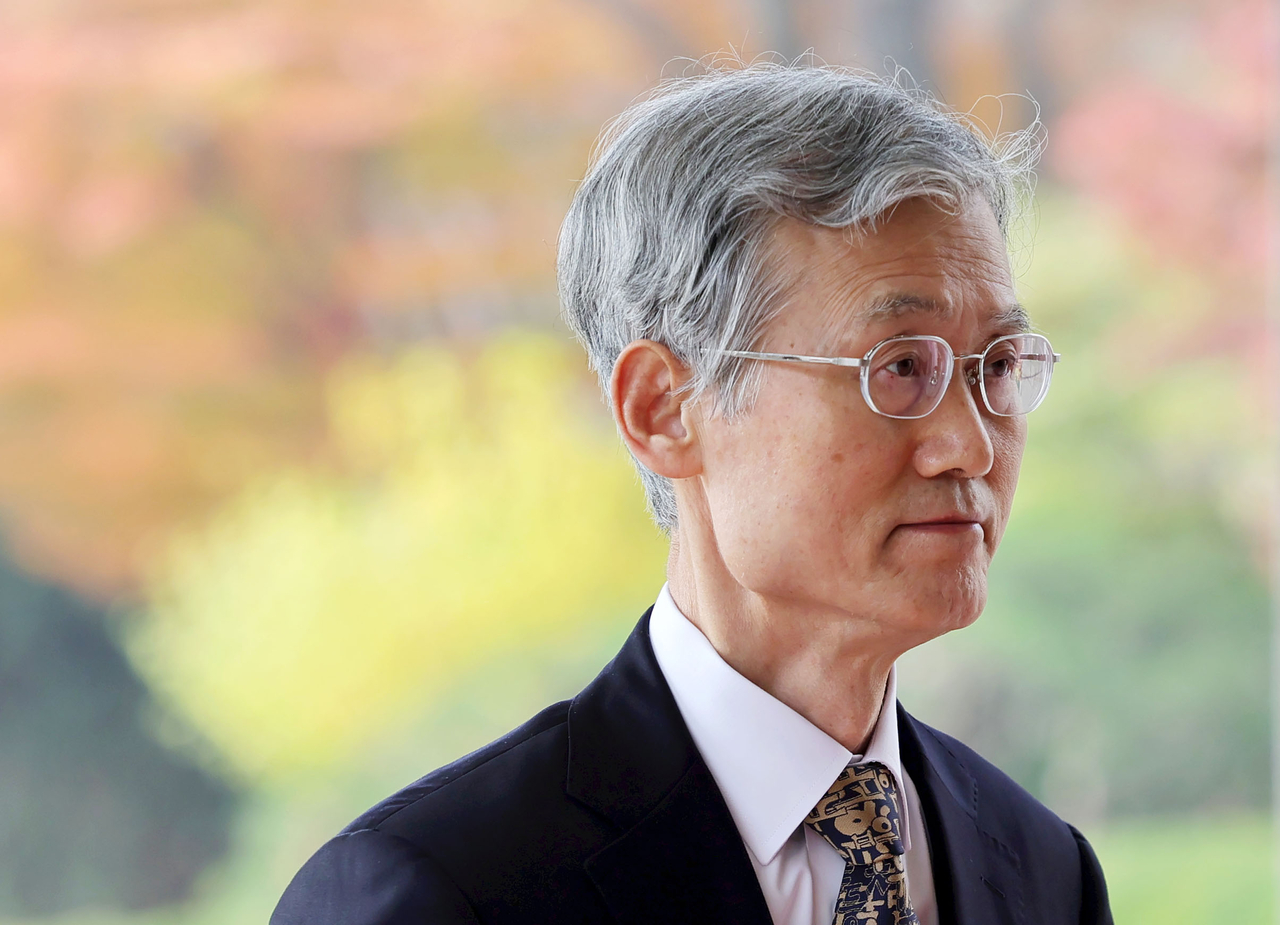
A wave of opposition is sweeping through the legal community — from within the courts to private bar associations — after the Democratic Party of Korea formally adopted the impeachment of Chief Justice Jo Hee-dae as official party policy and began pushing it in earnest.
A frontline court has passed the first collective statement opposing the impeachment, and the Korean Bar Association and the Seoul Bar Association have issued successive statements of concern. Two judicial gatherings — the National Judges' Representatives Conference, moved up to Monday, and the national court presidents' regular meeting — are now set to serve as critical turning points in determining how forcefully the judiciary will respond.
The courts themselves fired the opening shot. The Changwon District Court held a closed-door plenary session of judges Wednesday afternoon to discuss matters related to judicial independence.
About 60 of the court's 69 judges — a clear majority — attended and voted on an official position. It was the first time frontline judges had convened a formal meeting and issued a collective statement since the ruling party began pushing to impeach Chief Justice Jo.
In their official statement, the Changwon judges criticized the move, saying that "pursuing the impeachment of a judge on the basis of rulings rendered independently in accordance with the Constitution and the law undermines the constitutional values of judicial independence and separation of powers, shakes the foundations of the judicial system as a means of resolving legal disputes in an orderly manner, and ultimately endangers the people's right to a fair trial."
They added that while "legitimate criticism of judicial decisions must be respected, it must not translate into political sanctions against the status of judges," and expressed deep concern over any attempt to jeopardize the separation of powers and the constitutional order.
Earlier, Changwon District Court President Lee Young-hoon had written on the judiciary's internal network, Courtnet, on Nov. 3, saying he believed "the time has come to think deeply about why judicial independence matters and how to protect it — something we have long taken for granted, like the air we breathe."
Private bar associations have also been issuing statements in rapid succession, adding their voices to concerns over threats to judicial independence. The Seoul Bar Association released a statement Wednesday saying that "impeachment must not be used as a tool to demand political accountability or to resolve differences of opinion between state institutions."
The association warned that "if a precedent is set in which the outcome of a court ruling becomes grounds for an impeachment motion, the independent judgment of judges — who must decide solely on the basis of the Constitution, the law and their conscience — will be chilled, and public trust in the judicial system as a whole may be undermined."
The association also urged the judiciary itself to "clarify the facts through lawful procedures if any of the allegations raised require investigation," while stressing that "checks on the judiciary must remain within the framework of separation of powers as defined by the Constitution."
The Korean Bar Association had issued a statement Tuesday calling for "careful reconsideration" and expressing concern "from the perspective of the constitutional separation of powers and judicial independence." The Conference of Former Regional Bar Association Presidents on Sunday and the lawyers' group Chakan Beop Mandeuneun Saramdeul on Saturday had also come out against the push to impeach the chief justice.
As voices inside and outside the legal community grow louder, the judiciary itself is largely holding back from public individual statements, keeping a close watch on the National Judges' Representatives Conference set for Monday.
After the Democratic Party adopted the impeachment motion as party policy on Friday, a stream of critical posts and comments appeared on Courtnet through Monday. From Tuesday onward, however, the volume of posts dropped noticeably, as the judiciary appeared to be catching its breath in what feels like the calm before a storm.
On Wednesday morning, Seoul Central District Court Senior Judge Jeong Yong-sin shared an excerpt from the Constitutional Court's ruling removing former President Yoon Suk Yeol from office — the passage noting that "the suspension of the exercise of authority and the resulting administrative vacuum following an impeachment motion against a senior public official can cause significant harm to the state and the people" — but no further posts appeared.
The National Judges' Representatives Conference's regular meeting, originally scheduled for Dec. 7, was moved up to Monday after judges repeatedly called for the judiciary not to remain silent in the face of pressure from the ruling party. The gathering of representative judges from courts across the country is expected to focus on defending judicial independence and formulating a response to the impeachment push.
Views differ within the judiciary, however, over whether the conference will produce a unified, hard-line position.
Kang Dong-won, a Seoul Family Court senior judge who chairs the National Judges' Representatives Conference, wrote on Courtnet on Sunday that "if they ultimately vote to pass the impeachment motion, shouldn't we take action as well?" — signaling a willingness to respond forcefully. A judge at the Seoul High Court also expressed hope that "if opinions converge at the judges' conference and a specific position is adopted, it could give the political world pause to reconsider the situation."
On the other hand, there is considerable pushback against making a collective declaration. A senior appellate judge at a Greater Seoul court argued that "the moment we formalize a position, it looks like we are picking a direct fight with the political world, and it could only hand the ruling party the pretext and justification to argue that judges need to be reined in as well," and expressed opposition to adopting a formal resolution.
The National Judges' Representatives Conference has precedent for inconclusive deliberations: last year, it discussed judicial credibility and trial independence amid controversy over the Supreme Court's decision to remand President Lee Jae Myung's Public Official Election Act violation case for retrial, but reached no conclusion. Kang's hard-line remarks are also being interpreted by some as an attempt to rally judges, given an internal atmosphere in which building consensus is far from easy.
Following the judges' conference, the national court presidents' regular meeting — bringing together the judiciary's most senior figures — is scheduled for 2 p.m. on Dec. 4 at the Supreme Court. Chaired by the head of the National Court Administration and attended by court presidents from across the country as well as the heads of the Judicial Research and Training Institute and the Judicial Policy Research Institute, the meeting's advance agenda covers only routine judicial administration matters, including improvements to the remote-work system for judges and personal data protection in litigation procedures.
Dec. 3 — the day before the meeting — has been cited as the date the ruling party may push through the impeachment motion against Chief Justice Jo, making it highly likely that the meeting's final open-discussion session will focus on the impeachment situation and concerns over threats to judicial independence. At last year's regular meeting, the court presidents had already expressed strong concern that Democratic Party-backed judicial reform bills — including the establishment of a dedicated insurrection trial court and the creation of a new offense of perverting the law — were largely unconstitutional.
Meanwhile, Chief Justice Jo departed Tuesday for Singapore to attend a judicial bicentennial ceremony and then travel to Japan, with a return scheduled for Dec. 1. The overseas trip had been arranged before the Democratic Party adopted the impeachment motion as party policy, and the chief justice proceeded as planned in light of the diplomatic discourtesy that an abrupt cancellation would have caused.
silverpaper@heraldcorp.com