Seoul's sole new housing site under Aug. 13 supply plan
Residents: 'Fix the infrastructure and ensure safety first'
Gangseo-gu: 'We'll hold a briefing to clear up misunderstandings'
"Even at three people per household, that's 3,000 people — I'm not sure this neighborhood can handle that. There's no high school nearby and the roads aren't wide. Isn't this pushing it too far?"
— A resident in her 40s, surnamed Eom, Yeomchang-dong, Gangseo-gu
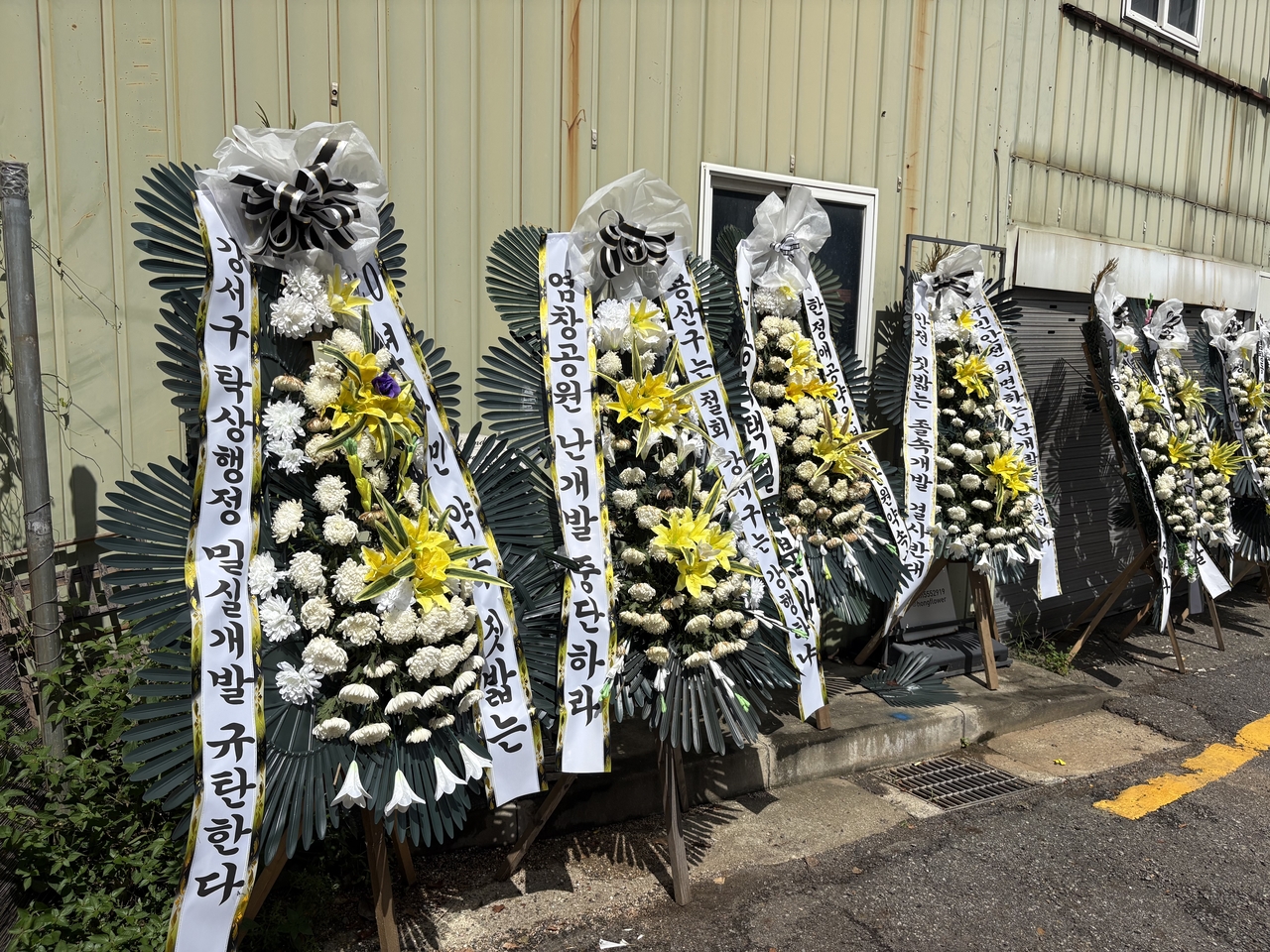
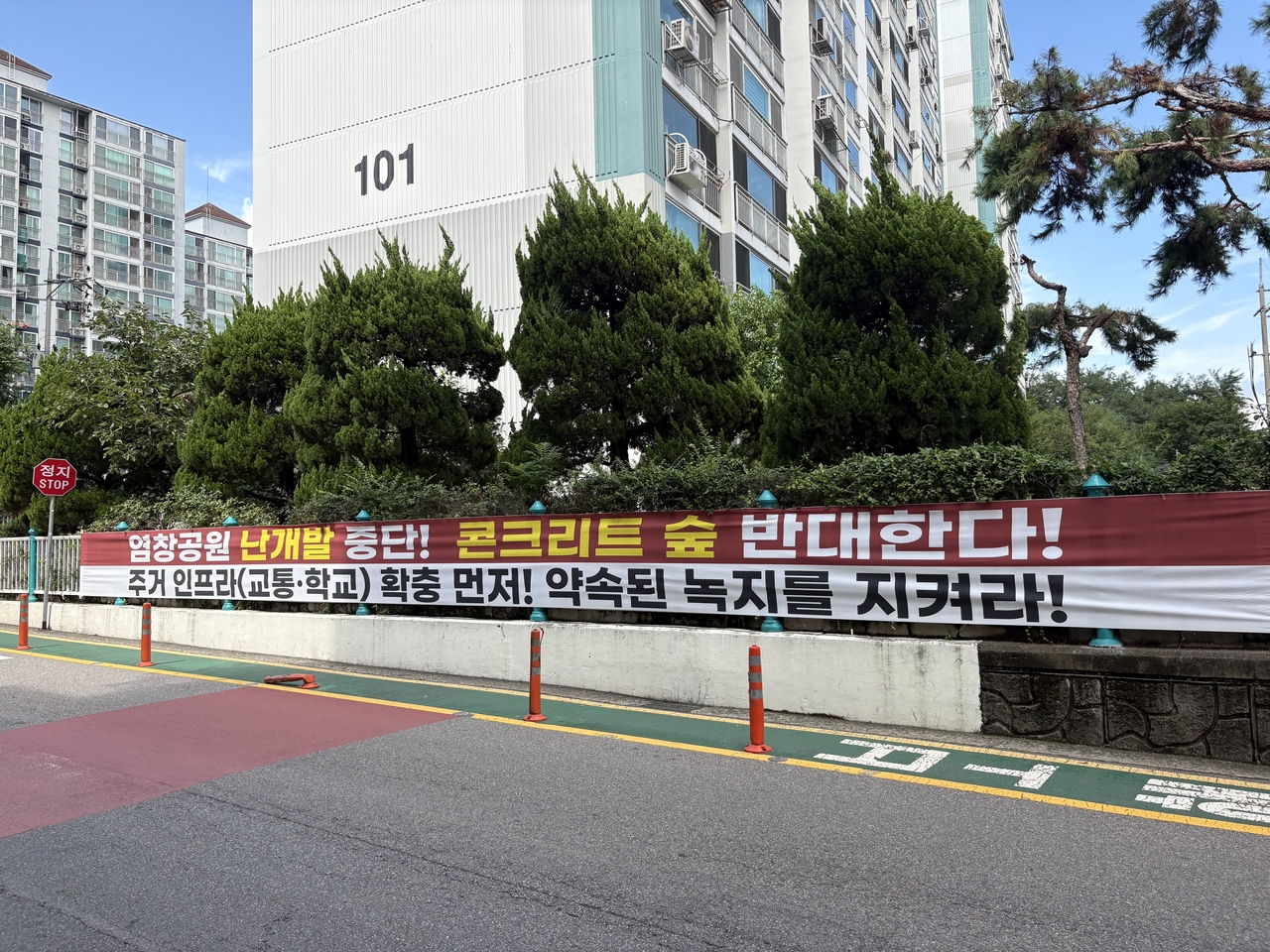
Funeral wreaths lined the entrance to the Yeomchang Park site in Yeomchang-dong, Gangseo-gu, Seoul, on Wednesday afternoon, bearing messages such as "Secret development trampling on 20 years of promises to residents" and "Reckless development that ignores residents' safety." Banners demanding a halt to the project, posted in the name of "Yeomchang-dong residents," had gone up across nearby apartment complexes.
Yeomchang Park is the only new Seoul site among the candidate locations put forward under the government's Aug. 13 rapid housing supply plan. Gangseo-gu signaled its support for developing the degraded land at the time, but opposition from nearby residents has been growing. Residents, who had long hoped to see a proper park built there, expressed concern that large-scale housing would be pushed through before the area's narrow roads, inadequate schools and insufficient everyday infrastructure are addressed.
A 44-year-old resident surnamed Lee, whose children attend middle and elementary school, said nearly 1,000 people had joined a local group chat. "When the site was just sitting there neglected, at least we had hope that a park would come someday," Lee said. "Now there's a strong feeling that if the housing supply goes ahead, even that hope disappears."
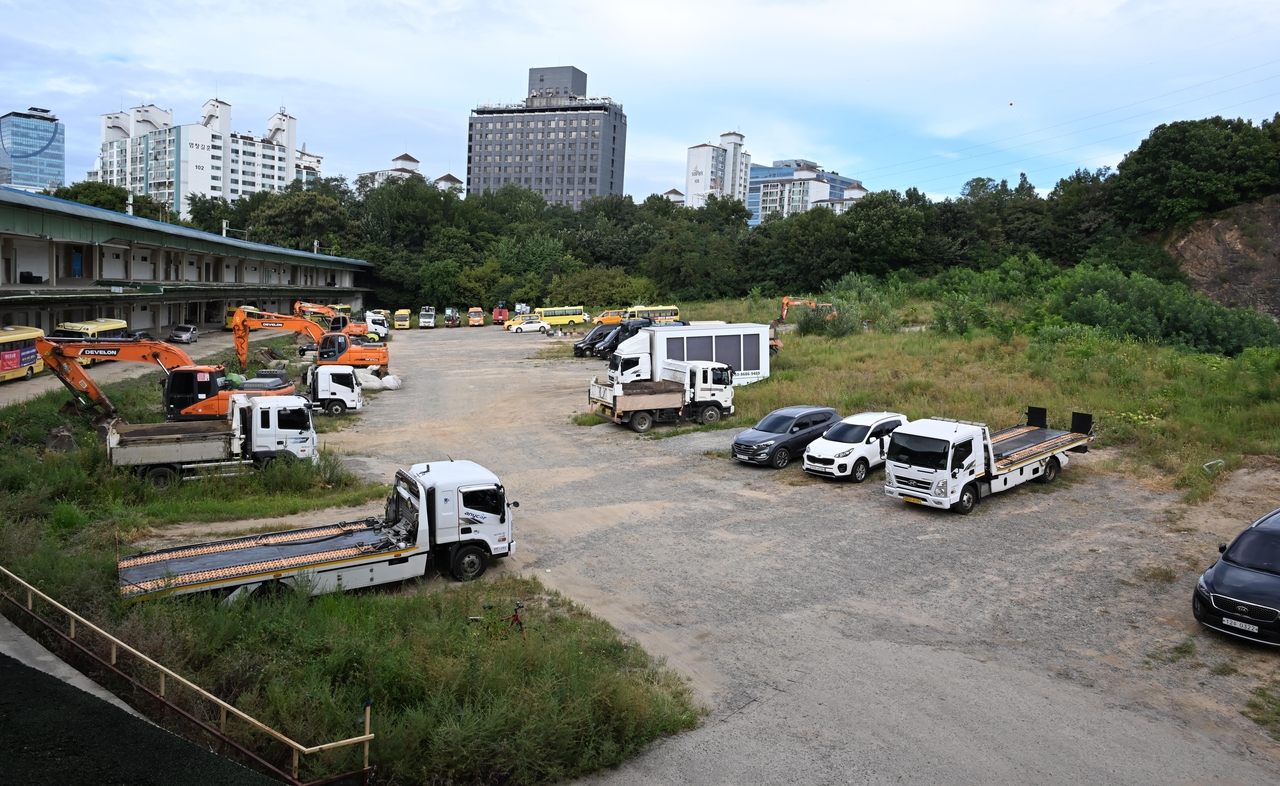
The site has a troubled history. In 1990, a private developer began a park development project on the condition that it build community facilities — a cultural center, a youth hall and a senior center — alongside revenue-generating facilities such as a golf driving range and parking lot. By 2000, however, only the commercial facilities had been completed, and the community amenities were never built. Gangseo-gu revoked the developer's designation and canceled the implementation plan in 2006.
The golf driving range was forcibly shut down in 2009, leaving behind abandoned structures and cut slopes that have sat neglected for nearly two decades. The government plans to supply 1,000 housing units on part of the degraded land, with a ground-breaking targeted for 2029.
Parents' biggest concern is the safety of children walking to school and the capacity of local schools. Residents say the streets around Yeomchang Park are narrow back roads threading between apartment blocks and multi-family homes, with a steady flow of tourist buses heading to a nearby hotel and commuter traffic adding to the congestion.
A resident in his 40s surnamed Yoon, who has lived in Yeomchang-dong for more than a decade, said his heart races every time he sees children weaving between tourist buses and commuter cars. "The integrated reconstruction of Woosung 1st and 2nd and Samcheolli apartment complexes is also under way," Yoon said. "I'm worried it will get even more dangerous if construction vehicles start coming in without any plan in place."
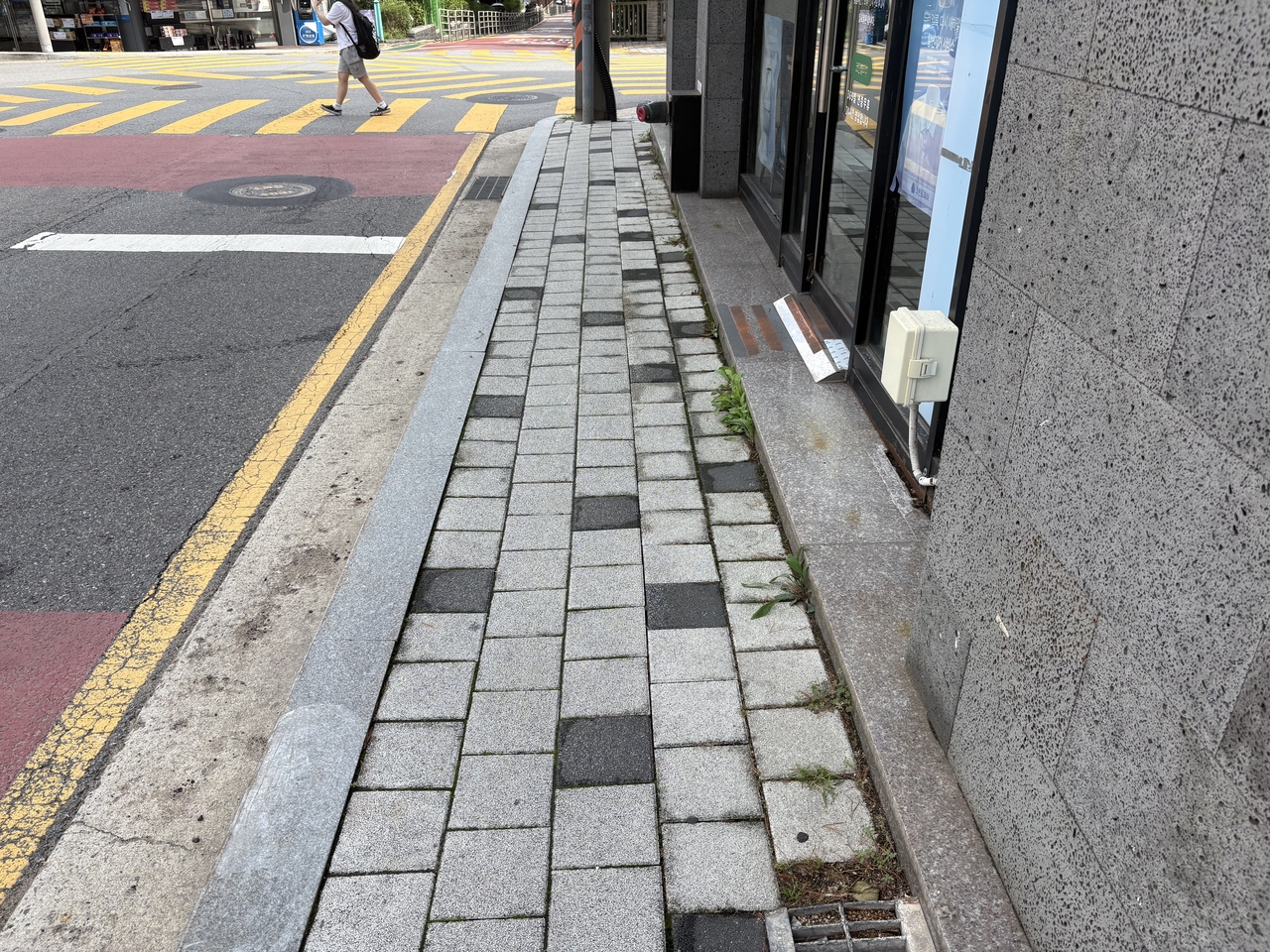
Yoon added that the sidewalk directly beside the residential complex next to Yeomchang Park is already too narrow for two people to walk side by side. "The right order is to secure residents' safety first, and then think about housing supply," he said.
Residents also raised concerns about the shortage of educational facilities. A resident surnamed Eom, who was walking home with her elementary school child, said there is not a single high school nearby and that the local elementary and middle schools are not large. Yeomchang Elementary School, located in the middle of the complex, is a 15-minute walk from Yeongil High School and 20 minutes from Sehyeon High School.
As opposition mounted, Gangseo-gu District Mayor Jin Kyo-hoon convened an expanded executive meeting at the district office on Tuesday and announced that a public briefing for residents would be held as soon as possible. "This is not about developing land by destroying a park — it is about building public housing on degraded land that has already lost its function as a park," Jin said at the meeting. "We will listen carefully to residents' opinions and find solutions."
Some residents said outright opposition to the housing supply was going too far. A resident in his 50s surnamed Han, who said he has lived in Yeomchang-dong for 20 years, noted that some neighbors mistakenly believe the entire park would be demolished to make way for apartments. "My understanding is that the degraded portion would be used while green space is preserved," Han said. "The briefing should clearly explain that housing on the neglected site, combined with park improvements and infrastructure upgrades, could actually make things better."
The local real estate market has turned cautious since the supply plan was announced. The head of a real estate agency in Yeomchang-dong said buyer inquiries had been reasonable through July but dropped sharply in August. "We got about 15 calls over the whole month, and even those rarely led to actual transactions," the agent said.
"Since the government announcement, residents have strongly come to see the supply plan as bad news," the agent added. Units in the 106-square-meter class at Yeomchang Woosung 2nd complex had previously traded at just above 1.3 billion won ($949,000), but listings at 1.3 billion won have sat unsold for weeks. The agent cautioned, however, that it was still difficult to tell whether the stagnation was due to the housing supply plan, the broader market mood or issues specific to individual listings.
The same agent offered a more optimistic long-term view, saying Yeomchang-dong is undervalued relative to neighboring Deungtchon-dong and Gayang-dong despite comparable school districts and transport links, simply because it has fewer households. "If reconstruction and new apartment development bring in large complexes, prices should start climbing," the agent said.
Experts said breaking through negative perceptions through communication would be key. Seo Gwang-chae, a real estate professor at Hanyang Cyber University, advised that planning rental units across a variety of sizes — rather than limiting them to small units — would be one way to broaden appeal and improve community acceptance.

shy@heraldcorp.com
quq@heraldcorp.com