Seoul submits next year's fire special account budget to city council
National government funding falls 17.1 billion won, but local sources add 42.9 billion won
Aging fire vehicle replacement budget up 90% to 16.5 billion won
Paramedic staffing bolstered; firefighter health and welfare support strengthened
The Seoul Metropolitan Government announced Sunday that it has set next year's fire special account budget at 1.1022 trillion won ($821 million), an increase of 25.8 billion won, or 2.4 percent, from this year. The city said the budget reflects spending needed to expand personal protective equipment for firefighters, ease the workload on high-volume paramedic units and improve aging working conditions.
The move appears to align with Seoul Mayor Oh Se-hoon's own stance on fire funding. At a budget briefing for reporters on Oct. 29, Oh acknowledged that fire financing "is genuinely a burden at the local government level," but added that the city accepts it "as Seoul's destiny." On how the city plans to use funds freed up by the central government's support for firefighter personnel costs, Oh said the city would direct them toward "expanding fire facilities and upgrading fire equipment."
The city also plans to strengthen health and welfare support for fire civil servants, including expanded meal support for firefighters on emergency standby, special health screenings for retirees, and professional psychological counseling and recovery programs.
Seoul said national government funding fell 17.1 billion won compared with this year, but the city offset that by increasing local revenue sources — including general account transfers and local resource facility taxes — by 42.9 billion won, resulting in an overall budget increase.
Of the total, policy project spending rose 8.3 billion won, or 4.1 percent, to 210.1 billion won. The city said it prioritized funding for essential fire services, including expanding fire vehicles and equipment, professionalizing paramedic operations and supporting staff welfare.
Local governments across the country have been grappling with a shrinking share of national funding in their fire budgets. The issue drew attention when Gyeonggi Province Governor Choo Mi-ae used the phrase "fiscal straw" to describe fire financing during a National Assembly audit by the Public Administration and Security Committee on Oct. 13, sparking controversy. Choo subsequently apologized for the remark on multiple occasions.
Under next year's fire budget, support for firefighter health and welfare will be strengthened. The meal support budget for firefighters on emergency standby has been set at 5.6 billion won, up about 14 percent from the previous year.
The city also plans to fund special health screenings for retired fire civil servants so that health management continues after they leave service. Support to ease the psychological burden firefighters face at disaster scenes will continue as well.
Some 370 million won has been allocated to operate the 119 Mind Recovery Center, which provides professional psychological counseling and recovery programs to systematically support firefighters' mental health and psychological rehabilitation.
To ease the workload on paramedics and raise the standard of emergency medical services, the city has set aside 3.55 billion won for a paramedic professionalization program — a roughly 43 percent increase from the previous year. Units that respond to 4,000 or more calls annually will receive additional staffing, and ambulances will be added through personnel redeployment. A three-person ambulance crew system will also be expanded to strengthen specialized emergency care for critically ill patients.
The city has also focused on replacing aging fire vehicles and expanding safety equipment for firefighters. Some 16.5 billion won — up about 90 percent from the previous year — has been earmarked to replace and reinforce aging fire vehicles, including pump trucks and water tankers.
An additional 6.3 billion won will go toward procuring specialized and negative-pressure ambulances to strengthen on-scene response capabilities for fires, rescues and medical emergencies.
The city will continue to bolster personal protective gear and rescue and paramedic equipment directly tied to the safety of frontline firefighters. Beyond the fire special account, the city plans to draw on available resources such as its disaster management fund to procure necessary field equipment in a timely manner.
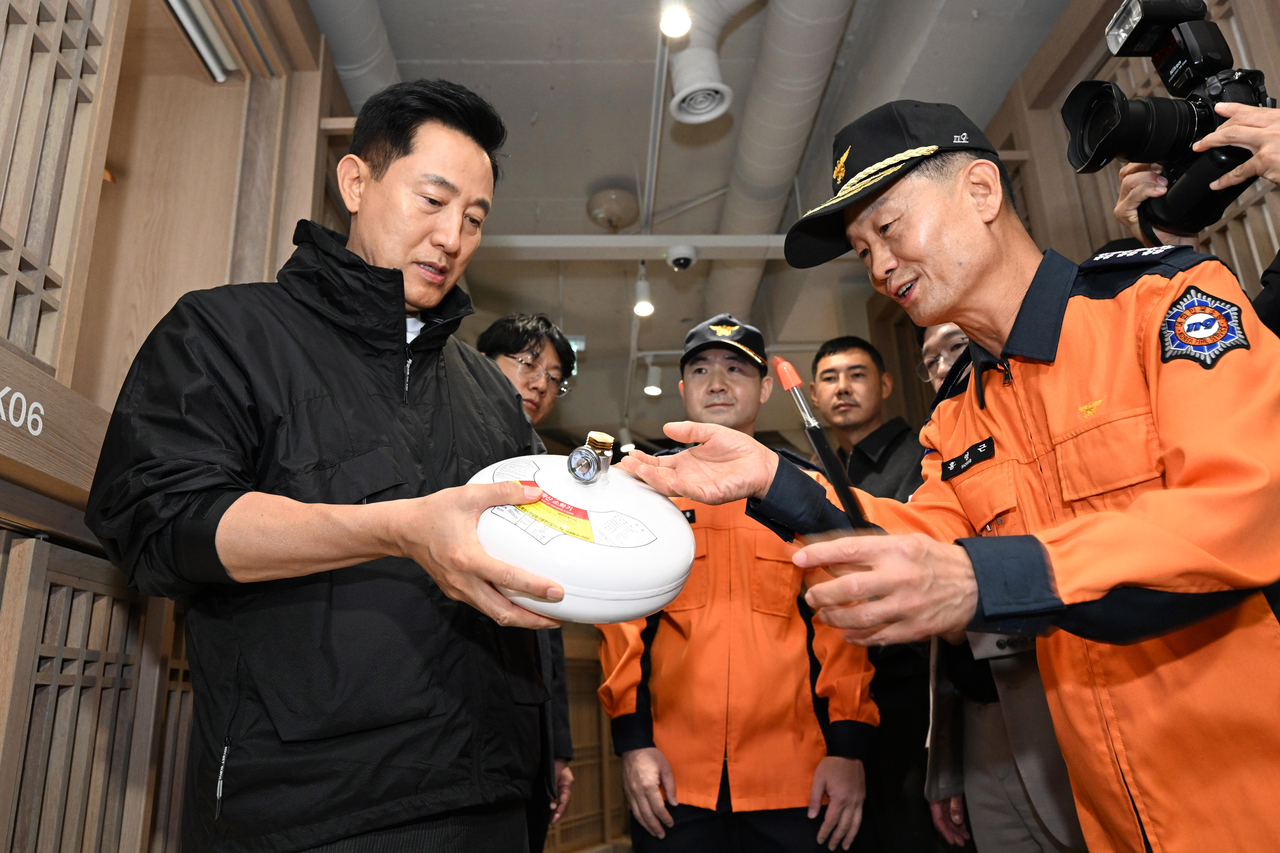
Investment in fire prevention and early response will also expand. Some 1.62 billion won — up about 20 percent from the previous year — has been allocated for a fire risk reduction and safety initiative that includes installing automatic fire-suppression devices effective in containing early-stage fires, with the aim of limiting the spread of fires and minimizing damage.
The city has also set aside 8.3 billion won for the construction of a combined fire services headquarters designed to improve efficiency in disaster management and field response. The project will consolidate major fire agencies under one roof to enhance information sharing and inter-agency cooperation, and is targeting a ground-breaking in May next year.
Firefighters' real-world response capabilities will be further developed through a new live-fire training facility set to be completed in May next year. Some 980 million won has been newly allocated for its operation, with training conducted in conditions that closely replicate actual fires to sharpen firefighters' adaptability and response skills.
Investment in upgrading aging fire stations will also increase. Some 6 billion won — up about 2.5 billion won from the previous year — has been allocated to relocate and rebuild the Georye 119 Safety Center, improving working conditions for firefighters and establishing a stable base for rapid field deployment.
The budget proposal was submitted to the Seoul Metropolitan Council on Oct. 30 and will be finalized after council deliberation and approval.
Hong Yeong-geun, head of the Seoul Metropolitan Government's Fire and Disaster Headquarters, said it was significant that essential fire service projects had been funded despite difficult fiscal conditions. "Going forward, we will carefully examine the priorities of equipment and projects needed in the field, and actively seek out and make use of available resources such as the disaster management fund," Hong added.
ken@heraldcorp.com