![2024년 10월 24일 인도 뭄바이의 Jio World Centre에서 열린 NVIDIA AI Summit India 2024에서, 엔비디아 CEO 젠슨 황이 발표하고 있다. 이날 그는 인도 시장을 겨냥해 소형 언어모델(SLM) ‘Nemotron‑4‑Mini‑Hindi‑4B’를 공개하며, 거대 언어모델(LLM) 대비 효율성과 지역 언어 처리 능력을 강조했다. 젠슨 황은 “힌디는 세계에서 가장 어렵게 언어모델화되는 지역이며, 인도가 이를 해결할 수 있다”라고 말했다. [엔비디아 제공]](https://wimg.heraldcorp.com/news/cms/2025/11/04/news-p.v1.20251029.20fad1fcae1647369655121353db116c_P1.jpg)

지난 몇 년 동안 인공지능(AI)은 더 큰 ‘언어모델(Language Model)’을 만드는 경쟁, 즉 덩치를 키우는 데 몰두해 왔다. AI에서 말하는 ‘모델’은 데이터를 학습해 언어를 이해하고 문장을 만들어내는 알고리즘의 두뇌다. 쉽게 말해, 질문을 이해하고 대답을 만들어내는 일종의 언어 생성 엔진인 셈이다. 지금까지 업계에서는 “더 많은 데이터를 학습시키고, 더 복잡한 계산을 돌릴수록 AI는 더 똑똑해진다”고 믿었다. 하지만 이제 그 믿음이 흔들리고 있다. AI의 미래는 가장 거대한 모델이 아니라, 더 효율적이고 현명한 모델, 즉 ‘소형 언어모델(Small Language Model·SLM)’이 이끌 가능성이 크다는 것이다.
이 작은 모델들은 단순히 크기를 줄인 기술이 아니라, AI를 더 똑똑하고 지속 가능한 방향으로 되돌리려는 새로운 시도다. LLM(대규모 언어모델)은 오랫동안 ‘규모가 곧 진보’의 상징이었다. 수천억 개의 파라미터를 가진 이 모델들은 거대한 데이터셋을 학습해 수많은 작업을 수행하며 자연스러운 언어를 생성한다.
그러나 그 거대함은 동시에 취약함을 낳는다. 훈련에는 막대한 계산 능력과 인프라가 필요하고, 지속적인 재학습 과정은 막대한 비용과 탄소 배출을 유발한다. 이런 투자가 반드시 정확성이나 안정성으로 이어지는 것도 아니다.
최근 연구들은 불과 몇 백 개의 악성 문서만으로도 모델이 오염될 수 있으며, 가장 발전된 모델조차 여전히 잘못된 정보를 만들어낸다고 지적한다.
이에 비해 소형 언어모델(SLM)은 수백만 개의 파라미터만으로 구성돼 기본 철학부터 다르다. 이 모델들의 강점은 규모가 아니라 정밀함과 품질 중심의 설계에 있다. 마이크로소프트(Phi-3), 구글(Gemma), IBM(Granite), 애플(OpenELM) 같은 기업들이 이제는 크기보다 효율을 택하고 있다. 이들은 도메인 특화형 모델을 만들어, 로컬 환경에서 작동하고, 특정 맥락에 맞게 조정되며, 스마트폰이나 엣지 디바이스에도 쉽게 통합될 수 있도록 설계한다.
SLM은 AI 혁신의 민주화를 이끈다. 이들은 고가의 GPU 없이도 노트북이나 개인 서버, 사설 클라우드에서 작동할 수 있다. 이런 접근성은 진입 장벽을 낮추며, 중소기업이나 공공기관도 AI 개발과 활용에 참여할 수 있게 만든다.
또한 고위험 데이터를 클라우드에 올리지 않아도 되기 때문에 보안 수준도 한층 강화된다. 비용 면에서도 유리하다. 훈련과 실행에 필요한 연산량이 적기 때문에 개발 주기가 짧고 실험 속도가 빠르다. 이는 대형 클라우드 기업에 대한 의존을 줄이며, 이용자에게 ‘지능의 주권’을 되돌려주는 변화다.
AI 시장의 진입 장벽이 낮아지면서, 소수의 실리콘밸리 기업이 독점하던 구조가 서서히 흔들리고 있다. SLM은 기후 영향 측면에서도 의미가 크다. GPT-4나 Gemini(제미나이) 같은 대형 모델은 한 번의 질의가 스마트폰 한 대 충전과 맞먹는 에너지를 사용한다는 분석이 있다. 이 수치가 매일 수십억 번 반복되면 그 에너지 비용은 막대하다. 반면 SLM은 가벼운 구조로 CPU에서도 효율적으로 구동된다. 이로써 전력 사용량을 대폭 줄이고, 기술 발전과 환경적 한계를 함께 고려한 지속 가능한 컴퓨팅을 가능하게 한다.
소형 AI 모델의 안전 우위(Safety and Alignment)
SLM은 투명성과 해석 가능성에서도 강점을 가진다. 구조가 단순하기 때문에 모델의 내부 과정을 추적하고 설명하기가 쉽다. 이는 의료, 법률, 금융 등 규제 산업에서 특히 중요하다. 또한 이러한 모델은 로컬이나 사내 데이터로 학습시킬 수 있어, 데이터 보호법 등 규제 요건을 충족시키면서 AI를 보다 안전하게 운용할 수 있다. 공공의 거대 모델에서 사적이고 감사 가능한 모델로의 이동은 기술적 변화이자 윤리적 전환이기도 하다. LLM은 다방면에서 능숙하지만 특정 분야에서는 깊이가 부족하다.
SLM은 반대로 특정 영역에 최적화된 전문가형 모델로 발전하고 있다. 의료 진단, 물류 최적화, 금융 분석 등 한정된 영역에서 더 높은 정밀도와 일관성을 보여준다.
또한 SLM은 인간의 가치와 규범에 맞게 조정하기가 더 쉽다. LLM을 조정하려면 방대한 인력과 시간이 필요하지만, SLM은 소수의 전문가가 빠르게 미세 조정(fine-tuning)을 할 수 있기 떄문이다. 이는 윤리적 검증과 실험을 더 빠르게 수행할 수 있게 한다.
이러한 구조는 국가 차원의 기술 자립에도 영향을 미친다. 거대 모델은 훈련 비용이 너무 높아 소수 글로벌 기업만이 다룰 수 있다.
그 결과, 기술력과 데이터 통제권이 일부 기업에 집중되는 디지털 과점이 형성된다. 반면 SLM은 각국이 자체적으로 개발하고 운영할 수 있어 기술 주권을 회복할 수 있는 수단이 된다. 다양한 가치와 문화가 반영된 다수의 모델이 공존하는 생태계야말로 AI 시대의 건강한 방향이다.
LLM의 성취를 부정할 수는 없다. 그들은 여전히 생성 능력의 한계를 넓히며 AI 연구의 최전선을 이끌고 있다. 그러나 진정한 진보는 단순한 규모의 확장이 아니라 적합성(Relevance)에 있다.
AI의 미래는 가장 큰 모델이 아니라 “주어진 목적에 가장 적합한 모델”이 결정할 것이다. 다가올 시대는 규모가 아닌 의미로 정의되는 AI의 시대다. ‘소형 언어모델’은 단순히 효율을 높이는 기술이 아니라, 인공지능을 인간처럼 상황을 이해하고 목적에 맞게 사고하도록 되돌리는 하나의 철학적 시도다.
![Jensen Huang, CEO of NVIDIA, on stage at the NVIDIA AI Summit India 2024 held on October 24, 2024, at the Jio World Centre in Mumbai. During this keynote, he unveiled the Small Language Model (SLM) ‘Nemotron‑4‑Mini‑Hindi‑4B’, highlighting its efficiency and ability to handle regional languages like Hindi compared to larger language models (LLMs). The background shows NVIDIA branding and the AI Summit stage, emphasizing his statement that “Hindi is one of the most challenging languages for language model development, and India can lead the solution.” [nvidia]](https://wimg.heraldcorp.com/news/cms/2025/11/04/news-p.v1.20251104.666373a82b5346f68e12458c3df9beec_P1.jpg)
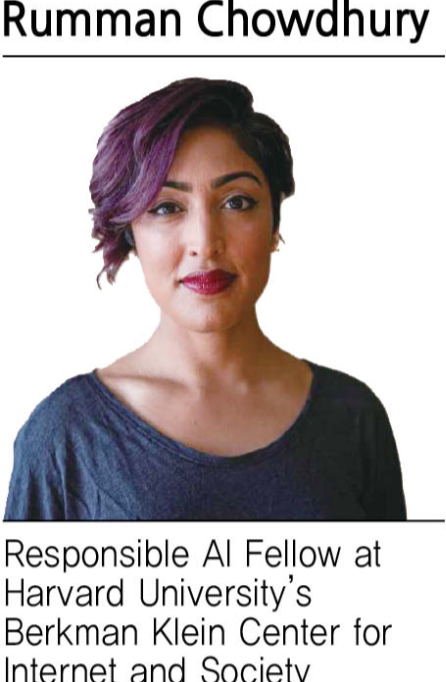
A Comparison of Small and Large Language Models
For the past several years, artificial intelligence has been defined by its obsession with scale. The prevailing narrative has been: bigger models, better intelligence. But the future of AI may not belong to the most massive models-it may belong to the most efficient. Small language models (SLMs) are quietly emerging as the smarter, more sustainable, and strategically superior alternative to their massive cousins, the large language models (LLMs) that currently dominate headlines and data centers alike.
Bigger is not necessarily better. Large language models have become symbolic of progress through volume. With hundreds of billions of parameters, they are trained on unimaginable data scales to generate fluent, contextually rich language across countless tasks. Yet, their very size creates fragility. They require immense computational power, massive infrastructure, and continuous retraining-each step measured in millions of dollars and megatons of carbon emissions. In addition, this does not necessarily translate to more accuracy or security - recent studies show that a few hundred malicious documents can poison a language model, and even the most advanced models are still delivering fabricated and inaccurate information.
It’s time to explore alternatives. In contrast, small language models, often containing millions rather than billions of parameters, represent a fundamentally different philosophy. Their power lies not in raw scale but in precision based on quality curation. Companies like Microsoft (Phi-3), Google (Gemma), IBM (Granite), and Apple (OpenELM) are now betting on smaller, domain-specific models capable of being deployed locally, tuned for context, and integrated seamlessly into edge devices.
Here’s how they’re different. First, small models democratize AI innovation. They can operate efficiently on laptops, smartphones, and in private cloud environments without specialized GPUs. This accessibility drastically lowers barriers to entry, allowing small businesses, research institutions, and public-sector organizations to participate meaningfully in the AI revolution. In addition, it can improve security by avoiding cloud-based hosting for extremely high-risk applications.
From a cost perspective, training and running an SLM can be much cheaper than employing a large model. The reduced computational demand means shorter iteration cycles, faster prototyping, and the ability to tailor solutions without dependence on hyperscale providers. In plain economic terms, SLMs return sovereignty to users who would otherwise rent intelligence from a handful of global corporations. This exposes the artificial barrier to entry to the AI marketplace which benefits the oligopoly of a few highly resourced Silicon Valley companies.
Finally, SLMs tackle the salient issues of climate impact. Every query to a large model like GPT-4 or Gemini has an energy cost that ripples across data centers and power grids. Estimates suggest that a single LLM query can consume as much energy as charging a smartphone, multiplied across billions of interactions daily. SLMs drastically reduce this footprint. Their lightweight architectures can run efficiently on CPUs rather than carbon-hungry GPUs, cutting energy demands by orders of magnitude.By enabling energy-smart computing, SLMs align technological progress with planetary limits, a trade-off large models cannot sustain indefinitely.
Safety and Alignment
Another advantage lies in transparency. SLMs’ smaller architectures are inherently more interpretable. Developers can audit them, track decision pathways, and apply explainability tools without the “black-box” opacity that plagues trillion-parameter LLMs. This clarity is particularly critical in regulated domains like healthcare, law, and finance-sectors that demand accountability for algorithmic decisions.
Small models also afford better data governance. They can be trained on local or proprietary datasets-say, an in-house corpus of legal contracts or diagnostic notes-ensuring compliance with data protection laws. In an age defined by privacy concerns and increasing regulatory scrutiny, the move from public supermodels to private, auditable models represents not just a technological shift but an ethical one.
LLMs are generalists: brilliant at everything, perfect at nothing. Their training across immense, varied datasets allows for general fluency but often dilutes domain expertise. SLMs invert that paradigm. Fine-tuned on carefully curated datasets, they excel at single domains, such as medical diagnostics, logistics optimization, market analysis with levels of precision and consistency that large models struggle to match, while also remaining narrowly scoped and defined as to remain auditable.
Smaller models are easier to align with human values, not because they are inherently more moral, but because their boundaries are transparent and their feedback loops manageable. Fine-tuning an LLM is a major industrial effort, often involving millions of synthetic human judgements. In contrast, an SLM can be refined by small, expert teams using limited data, allowing for faster ethical iteration and alignment testing.
That agility supports the ethical ambitions of AI governance frameworks now emerging globally. A small, adjustable model ecosystem encourages pluralism-numerous independent models reflecting diverse values and norms-rather than a handful of globally homogenized intelligences trained on the same digital monoculture. For governments, this diffusion is critical. Reliance on large, proprietary AI systems creates dependency risks: technological sovereignty erodes when only a few global players can host, train, or audit models of sufficient scale. SLM ecosystems, trained and governed domestically, can restore strategic autonomy by embedding intelligence closer to where it’s used.
None of this is to deny the achievements of LLMs. They remain vital research platforms that push the frontier of generative capacity. But their dominance has obscured a fundamental truth: real progress depends on relevance, not raw power. The future of AI will not be written by the biggest model but by the right model for the job.
The near future will be a transition from an AI culture defined by magnitude to one defined by meaning. Small language models are not merely an efficiency upgrade; they are a philosophical correction, realigning artificial intelligence with human intelligence: bounded, contextual, and purposeful.
bonsang@heraldcorp.com


![임영웅 51억에 산 집, 이젠 120억…하하·정동원도 사는 ‘강북판 타워팰리스’[초고가 주택 그들이 사는 세상]](https://wimg.heraldcorp.com/news/cms/2026/10/17/news-p.v1.20261016.f574b812626d48019a4018618b827c5b_T1.jpg?type=h&h=640)
![“샌디스크도 아니었다”…S&P500 상승률 1위, 7배 뛴 이 종목[서학개미 주식회사]](https://wimg.heraldcorp.com/news/cms/2026/10/15/news-p.v1.20251010.236fb20db3324e3bbd6f1dba7ec63bff_T1.jpg?type=h&h=240)
![[르포] 공장 들어서자 ‘밥 냄새’가 훅…쿠첸 ‘티타늄 밥솥’ 의 비밀[그 회사 어때?]](https://wimg.heraldcorp.com/news/cms/2026/10/16/news-p.v1.20260923.16e9b0f48f08469fa1014f2864f8e8fc_T1.jpg?type=h&h=240)
![장기금리와 그린스펀의 수수께끼…이번엔 뒤집혔다 [지안루카 베니그노]](https://wimg.heraldcorp.com/news/cms/2026/10/14/news-p.v1.20261012.37af49395c5e42388798ef9d8de6e08b_T1.jpg?type=h&h=240)