피케티·고메즈 카레라 연구원 공동 인터뷰
국가 첨단기술 지원, 분배구조 형태에 달려
인공지능, 번영도구 되려면 정치적 선택 중요
장기성장 위해선 지속가능성 처음부터 설계
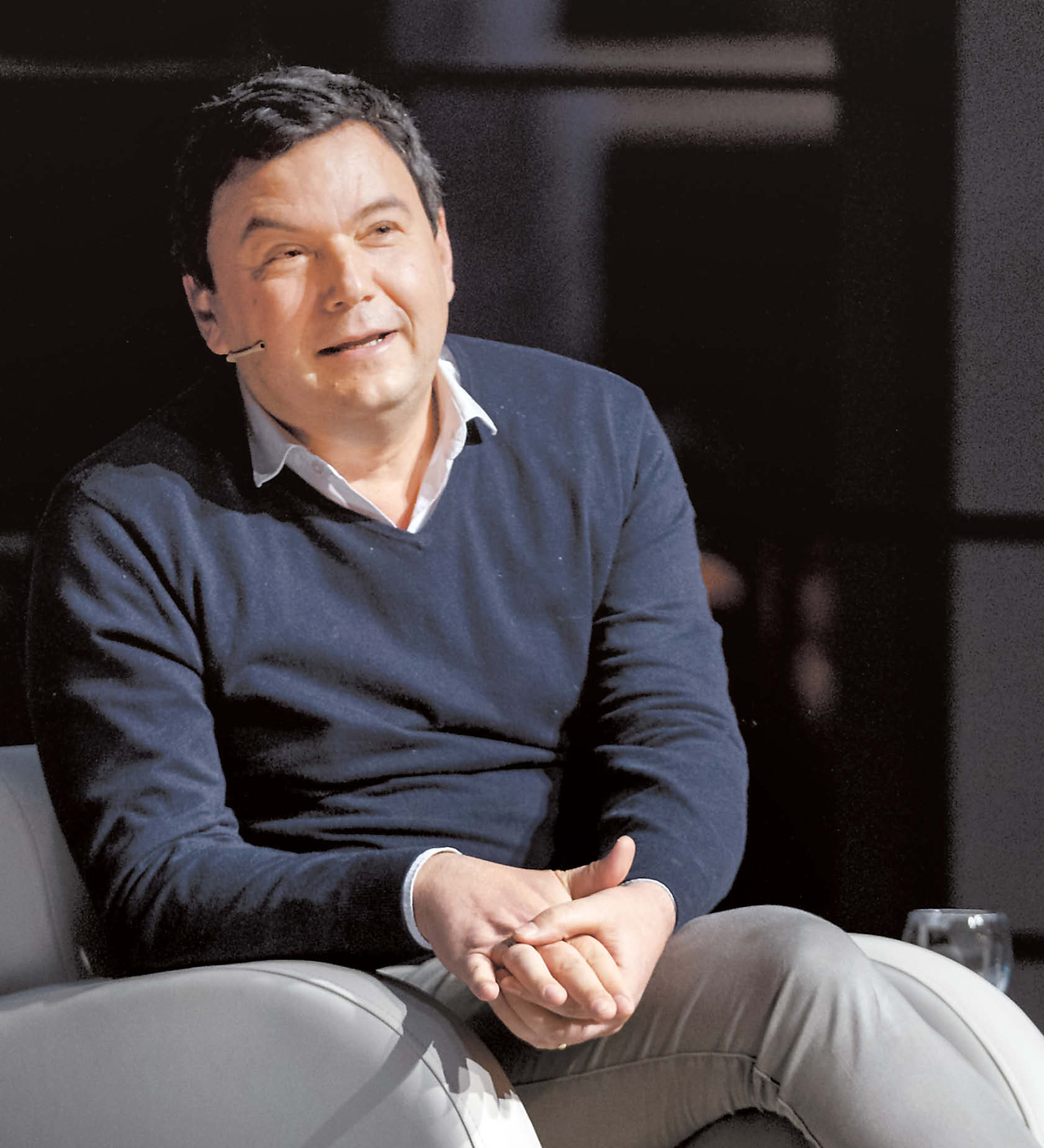
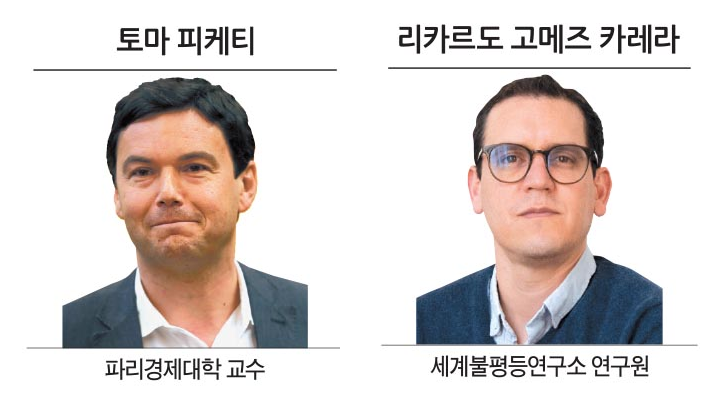
세계적 석학 토마 피케티 파리경제대 교수는 본지 서면 인터뷰에서 “혁신과 재분배가 긴장관계에 있다는 생각을 버려야 한다”고 말했다. 21세기 조건에 맞는 사회 민주적 전환이 없다면, 높은 불평등이 장기지속하는 체제로 진입할 위험에 처했다고 경고했다. 그는 정치가 제대로 작동해야 한다는 점을 거듭 강조했다. 인공지능(AI)·가상자산 등이 번영의 도구가 되고, 불평등을 완화하는 데 기여토록 하려면 제도·정치적 선택이 중요하다고 했다. 다음은 피케티 교수·세계불평등연구소(WIL)의 리카르도 고메즈 카레라 연구원과 진행한 공동 인터뷰의 일문일답.
-불평등은 역사적 정점에 가까워지고 있나, 아니면 극도의 불평등이 장기 지속하는 체제로 진입하고 있나.
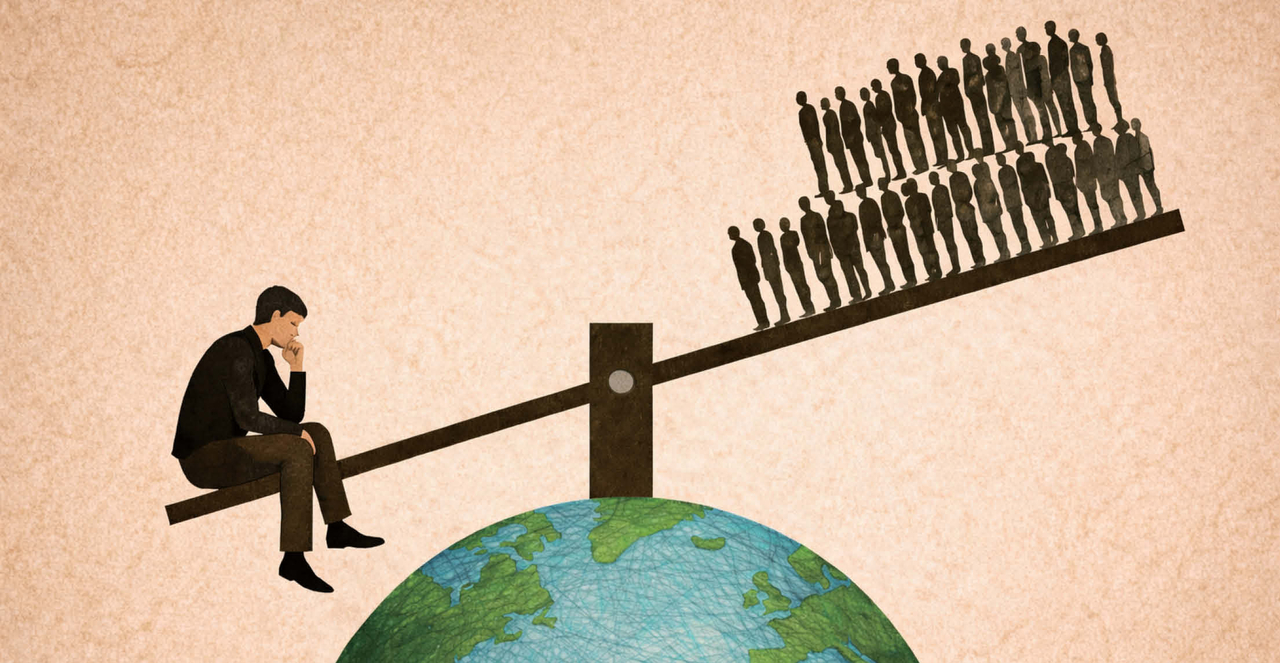
▶나는 우리가 불평등의 역사적 정점에 자연스럽게 다가가고 있다고 보지 않는다. 매우 장기적인 관점에서 보면, 극심한 불평등은 예외가 아니라 오히려 정상 상태였다. 지속적인 불평등 완화 국면은 드물었고, 취약했으며, 정치적 조건에 크게 좌우됐다. 불평등이 스스로 정점을 찍고 자동으로 하락하게 만드는 경제적 메커니즘에 대한 증거는 없다.
이는 우리가 실제로 매우 높은 불평등이 장기적으로 지속되는 체제로 진입할 위험에 처해 있음을 의미하지만, 그것이 새로운 경제 법칙 때문은 아니다. 오히려 그런 체제는 정치적·이념적 선택의 결과일 것이다.
오늘날의 국면을 과거의 고불평등 시기와 구분 짓는 건 불평등의 ‘수준’ 자체가 아니라, 그것이 정당화되는 방식과 민주주의와의 공존이다. 높은 불평등은 형식적으로는 민주적인 제도 안에서 지속되며, 능력주의적 서사를 통해 정당화된다. 그러나 상당 부분은 세습된 이점(inherited advantage), 인적 자본에 대한 불평등한 접근, 즉 불평등한 기회에서 비롯된다. 역사적 증거는 20세기 동안 소득 불평등을 극적으로 줄이고, 동시에 민주적 참여와 교육·보건에 대한 공공 투자를 확대했던 사회들이야말로 가장 생산적이었다는 점을 보여준다. 이는 불평등이 발전을 위해 감수해야 할 필수적인 대가라는 주장에 정면으로 도전한다.
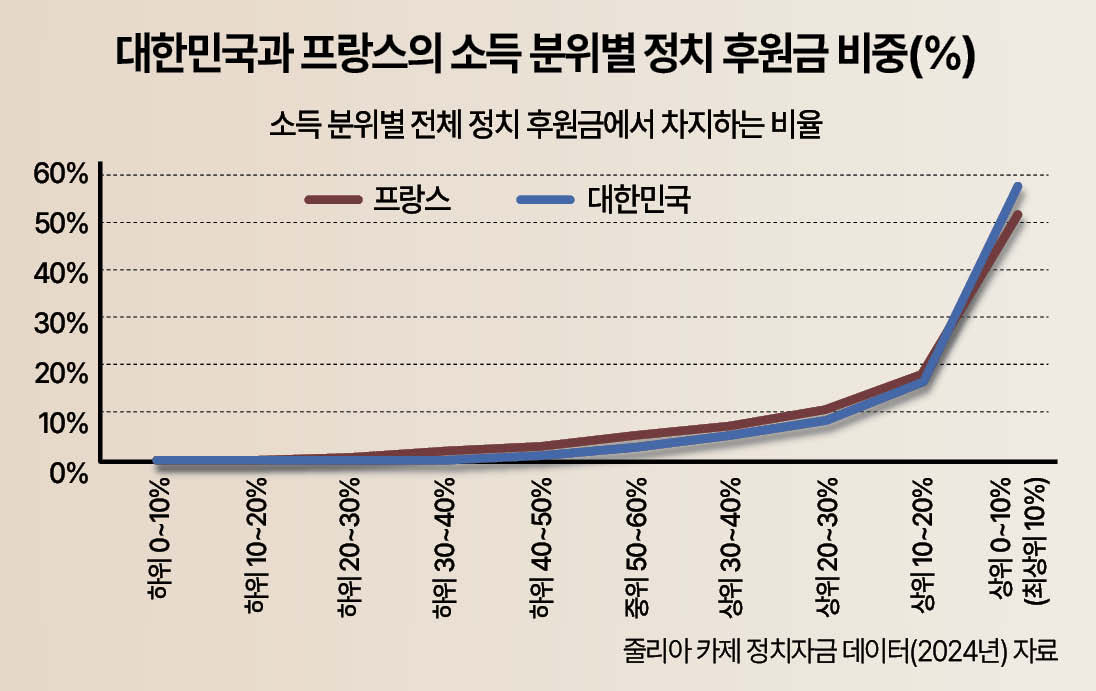
최상위 부유층의 정치 과정에 대한 과도한 영향력과 노동계급의 대표성 약화가 결합하면서, 민주주의가 재분배적 변화를 실현할 수 있는 역량이 약화하고 있다. 21세기 조건에 맞게 갱신된 사회 민주적 전환이 없다면, 높은 불평등은 가장 안정적인 균형 상태로 남을 가능성이 크다.
-경제적 불평등에 대한 진단이 왜 정치·제도적 변화로 이어지지 않나.
▶지식이 정치적 행동으로 전환되지 않았기 때문이다. 지난 10년간 불평등에 대한 ‘진단’은 개선됐지만, 정치적 대응은 종종 그 반대 방향으로 움직였다. 최상위 자산 보유자들의 강력한 로비와 의제 설정 능력, 조세 경쟁과 자본 이동성으로 인해 각국 정부가 단독 행동을 두려워하는 상황, 지속적인 재분배 연합을 형성하지 못하는 분절된 유권자 구조가 원인이다.
이런 의미에서 높은 불평등의 지속은 경제 분석의 실패를 의미하지 않는다. 충분히 강력한 정치적·제도적 견제 세력이 부재하다는 점을 반영한다.
사회는 능력, 재산권, 세계화, 효율성에 대한 서사를 형성해 극단적인 불평등을 정당화하고, 정치적으로 가능하다고 여겨지는 범위를 제한한다. 엘리트들이 재분배에 저항하는 이유는 데이터를 부정하기 때문이 아니라, 지배적인 이념과 제도적 배열이 그들의 이해관계를 보호하기 때문이다. 그 결과, 증거의 축적만으로는 불평등 체제를 흔들 수 없다. 중요한 건 이러한 서사에 도전할 수 있는 대안적 정치 연합이 등장할 수 있느냐다.
권력의 균형을 다시 맞출 수 있는 새로운 정치 연합, 제도 개혁, 민주적 조직 형태가 없다면, 오늘날의 불평등 체제가 단지 더 잘 기록됐다는 이유만으로 해체될 것이라고 기대할 근거는 거의 없다.
-경제정책은 분배보다 성장을 우선하는 경향이 있다. 성장 우선 패러다임은 한계에 도달했다고 보나.
▶성장을 먼저 하고 분배는 나중에 걱정하자는 생각은 이미 소진됐다. 이 관점은 성장을 중립적이고 거의 자연적인 과정으로 간주하며, 혜택이 결국 사회 전반으로 확산할 것이라는 가정에 기반한다. 그러나 역사와 현대의 증거는 정반대를 보여준다. 성장은 언제나 제도, 권력관계, 소유 구조에 의해 형성되며, 의도적인 재분배 메커니즘이 없다면 기존의 불평등을 교정하기보다 오히려 강화하는 경향이 있다.
일정한 성장 수준에 도달하면 불평등이 자동으로 감소할 것이라는 실증적 근거는 없다. 오히려 높은 불평등 자체가 사회적 결속을 약화하고, 교육과 혁신에 대한 접근을 제한하며, 민주적 정당성을 훼손함으로써 장기 성장에 해를 끼친다. 이런 의미에서 분배는 성장이 확보된 이후에 다뤄야 할 부차적 문제가 아니라, 사회가 어떤 유형의 성장을 경험하게 될지를 결정하는 핵심 요소다.
따라서 성장 우선 패러다임을 대체해야 할 것은 성장의 거부가 아니라, 경제적 성공에 대한 재정의다. 재분배, 공공 서비스, 민주적 참여를 효율성의 제약으로 볼 것이 아니라, 생산적인 투자로 인식해야 한다. 누진 과세, 교육에 대한 광범위한 접근, 기업 내 공동 결정, 재산권의 확산은 고성장기에만 허용되는 사치가 아니라, 포용적이고 지속 가능한 발전의 제도적 토대다. 진정한 선택지는 성장과 평등 사이가 아니라, 권력과 부를 집중시키는 성장 모델과 사회 정의와 민주적 통제를 중심으로 경제적 진보를 조직하는 성장 모델 사이에 있다.
-한국 등 주요국은 AI와 반도체 등 첨단산업을 중심으로 한 국가 주도 성장 전략을 추진하고 있다. 이것의 맹점은 뭔가.
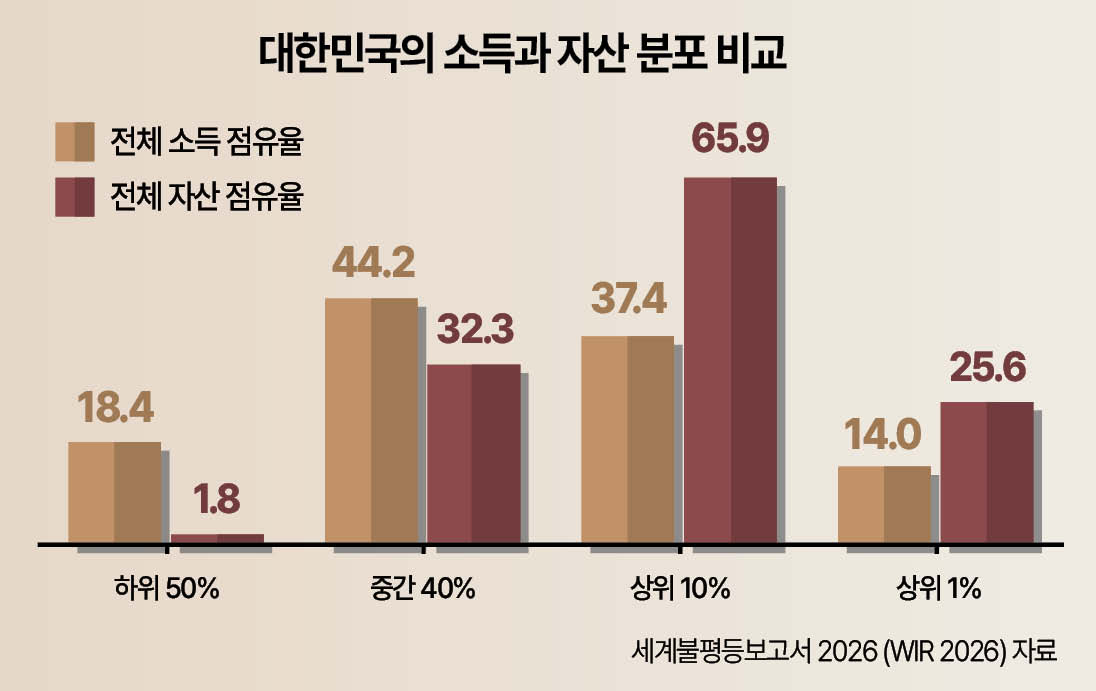
▶기술적으로 정교하고 전략적으로 성공적인 경우라 하더라도, 국가 주도 성장에는 본질적으로 평등적인 요소가 내재해 있지 않다. 공공 조정, 산업 정책, 장기 투자는 반도체나 인공지능과 같은 최첨단 분야에서 혁신을 가속하는 데 매우 효과적일 수 있다. 그러나 불평등을 동시에 다루지 않으면 이러한 전략은 반복적으로 익숙한 패턴을 재현한다. 즉, 국가는 위험을 사회화하지만 성과는 사유화되며 극도로 집중된다. 생산성 향상은 실제로 존재하고 인상적일 수 있지만, 소득·부·정치적 영향력의 불평등 확대와 공존하는 경우가 대부분이다. 강력한 재분배 제도가 동반되지 않은 성장 우선 전략은 체계적으로 높고 지속적인 불평등을 만들어낸다.
주요한 맹점 중 하나는 기술 고도화가 언젠가는 분배 문제를 스스로 해결해 줄 것이라는 믿음이다. 기술 진보는 자동으로 광범위한 번영으로 이어지지 않는다. 오히려 최첨단 기술은 자본의 교섭력을 강화하고, 지식재산과 데이터에 대한 수익을 증가시키며, 고숙련 노동자의 좁은 집단에 보상을 집중시키는 경향이 있다.
핵심 질문은 국가가 첨단 기술을 지원해야 하는가가 아니라, 어떤 소유 구조, 어떤 거버넌스, 특히 어떤 분배 구조하에서 지원할 것인가다. 불평등은 운명이 아니며 고정된 것도 아니다. 그것은 제도적·정치적 선택의 결과다. 불평등을 해결하지 못하는 성장 전략은 불공정한 결과를 낳을 뿐 아니라, 장기 발전이 의존하는 사회적·민주적 토대를 스스로 잠식한다.
-AI가 불평등을 확대할 거란 주장이 많다. 이를 완화하기 위한 선택은 뭔가.
▶기술 자체엔 분배 논리가 내장돼 있지 않다. 중요한 것은 사회가 소유, 노동, 접근권, 생산성 성과의 공유를 어떻게 조직하느냐다.
적절한 정책 선택이 이뤄지지 않으면 AI가 불평등을 크게 확대할 수 있는 매우 현실적인 경로가 존재한다는 점도 분명히 해야 한다. 가장 명백한 경로는 노동 대체다. 노동 보호가 약하고 공공 개입이 제한된 환경에서 AI가 도입되면, 일자리를 대체하고 임금 양극화, 고용 불안, 노동자의 교섭력 약화를 초래할 수 있다. 이는 AI의 본질적 특성이 아니라, 기술 도입이 사회적 목표가 아닌 비용 최소화 논리에만 맡겨진 결과다.
AI가 불평등을 완화하기 위해서는 몇 가지 조건이 필수적이다. 경쟁 정책, 디지털 독점 규제, 데이터와 알고리즘에 대한 새로운 집단적·공공적 소유 형태를 통해 AI의 소유와 거버넌스를 민주화해야 한다. 생산성 향상분은 이윤과 부에 대한 강력한 누진 과세를 통해 공유되고, 보편적 교육·훈련·공공 서비스에 재투자돼야 한다.
보다 근본적으로, 우리는 혁신과 재분배가 긴장 관계에 있다는 생각을 버려야 한다. 역사적으로 가장 혁신적이고 생산적인 사회는 사회적 포용과 민주적 제도에 가장 많이 투자한 사회였다. AI는 새로운 디지털 과두제를 강화할 수도 있고, 광범위한 번영의 도구가 될 수도 있다. 그 결과는 알고리즘이 아니라 정치에 달려 있다.
-디지털자산은 금융을 민주화할 것으로 보는가 아니면 새로운 자본 축적의 전선에 불과한가.
▶불평등의 관점에서 볼 때, 디지털 자산이나 암호화폐가 금융을 자연스럽게 민주화한다는 주장에는 신중할 필요가 있다. 역사는 새로운 자산 계층이 자본 축적의 광범위한 역학에서 벗어나는 경우가 거의 없음을 보여준다. 실제로 디지털 자산의 소유는 이미 매우 집중돼 있으며, 초기 참여자와 대규모 투자자가 이익의 불균형적인 몫을 차지한다. 수익은 대체로 이미 금융 자원, 기술적 역량, 정보 접근성을 가진 이들에게 귀속된다. 그런 점에서 암호화폐는 새로운 자본 축적의 전선에 더 가깝다.
그렇다고 해서 디지털 기술이 불평등 완화와 무관하다는 의미는 아니다. 그러나 효과는 자동적이지 않다. 다른 모든 형태의 자본과 마찬가지로 핵심은 거버넌스다. 투명성, 규제, 과세, 이러한 기술의 사회적 활용 방식이 중요하다. 강력한 공공 제도와 재분배 정책 없이는 디지털 자산이 기존의 부의 위계를 강화할 가능성이 크다.
-한국과 같이 장기 성장을 추구하는 국가가 경제·사회 정책을 설계할 때 염두에 둬야 할 핵심은 뭔가.
▶장기 성장을 추구하는 국가들을 위한 가장 중요한 교훈은 성장, 형평, 지속 가능성이 처음부터 함께 설계돼야 한다는 점이다. 이는 소득과 부의 집중, 지구적 한계(planetary constraints)를 구속력 있는 거시경제적 제약으로 진지하게 받아들여야 함을 의미한다. 역사는 성장만으로는 공유된 번영이 만들어지지 않는다는 사실을 보여준다.
이러한 관점에서 소득과 부에 대한 누진 과세, 교육·보건·저탄소 전환에 대한 대규모 공공 투자는 성장을 저해하는 요소가 아니라, 사회적으로 정당하고 환경적으로 지속 가능한 발전 경로의 전제 조건이다. 이것이 없다면 국가는 단기적 기술적 성공을 이루는 대신, 장기적인 사회적 결속과 지구의 거주 가능성(habitability of planet)을 희생할 위험에 처하게 된다. 궁극적으로 지속적인 번영의 경로는 경제적 역량이나 기술에 의해 미리 결정되는 것이 아니라, 집단적 정치적 선택과 민주적 제도의 강도에 의해 형성된다. 이런 의미에서 장기 성장은 기술적 과제라기보다 민주적 과제다. 홍성원 기자
토마 피케티는 누구
프랑스 출신 경제학자로 소득·자산 불평등 연구의 세계적 권위자다. 파리경제대(PSE) 교수이자 이 대학을 거점으로 한 세계불평등연구소(WIL) 설립을 주도했다. 런던정경대(LSE)와 매사추세츠공대(MIT)에서도 교수로 재직하며 연구·강의를 했다.
대표작 ‘21세기 자본’에서 자본수익률이 경제성장률을 상회하면 불평등이 심화된다는 구조적 메커니즘을 제시해 세계적인 반향을 일으켰다. 이후 ‘자본과 이데올로기’ 등을 펴내며 불평등의 역사적·정치적 기원을 분석했고, 누진과세와 국제적 조세 협력의 필요성을 강조해 왔다.
이 때문에 좌파 성향의 경제학자로 분류되기도 하지만 스스로는 사회민주주의적 개혁을 주장하는 실증 경제학자라는 입장을 밝히고 있다.
“State-led growth can boost innovation. But prosperity requires tackling inequality”
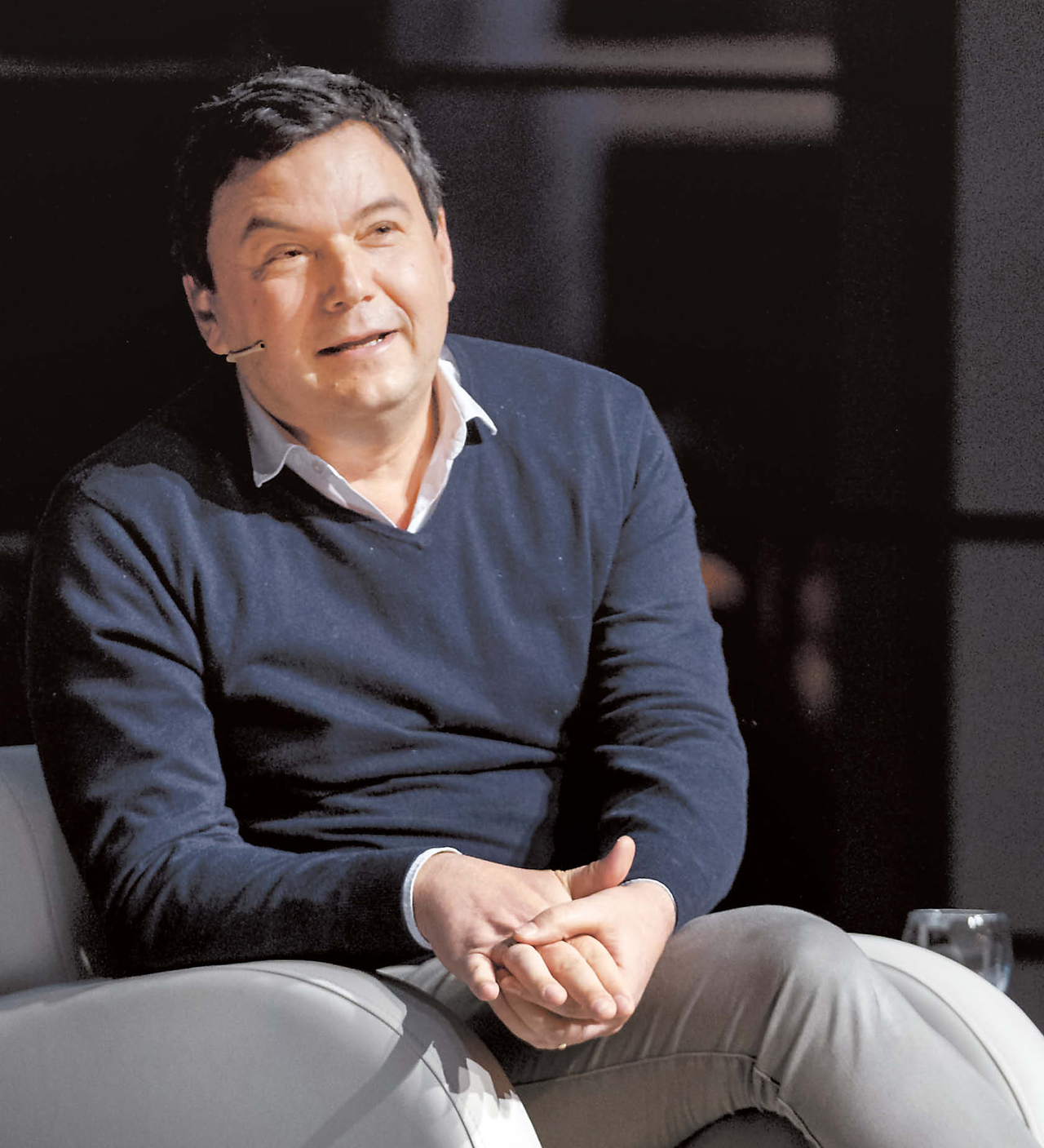
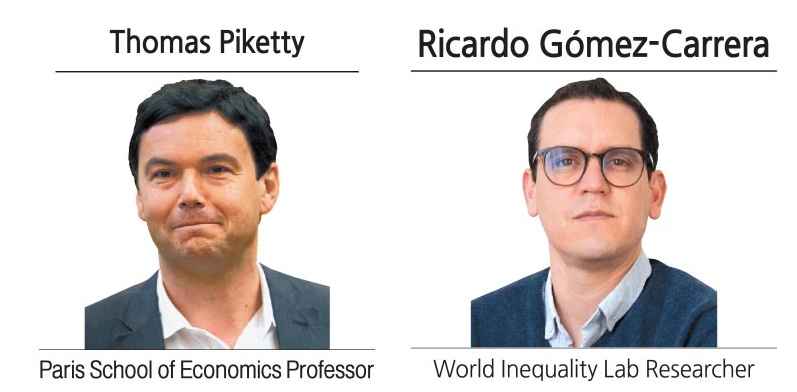
Thomas Piketty, a world-renowned scholar and professor at the Paris School of Economics, said in a written interview with The Herald Business that “we must abandon the idea that innovation and redistribution are in tension.” He warned that without a renewed social-democratic transformation adapted to 21st-century conditions, societies risk entering a regime in which high inequality becomes a long-lasting structural feature. He repeatedly emphasized that politics must function properly. Whether artificial intelligence (AI) and digital assets become tools of shared prosperity and contribute to reducing inequality, he argued, depends on institutional and political choices.
The following is a Q&A conducted with Professor Piketty and Ricardo Gómez Carrera, a researcher at the World Inequality Lab (WIL).
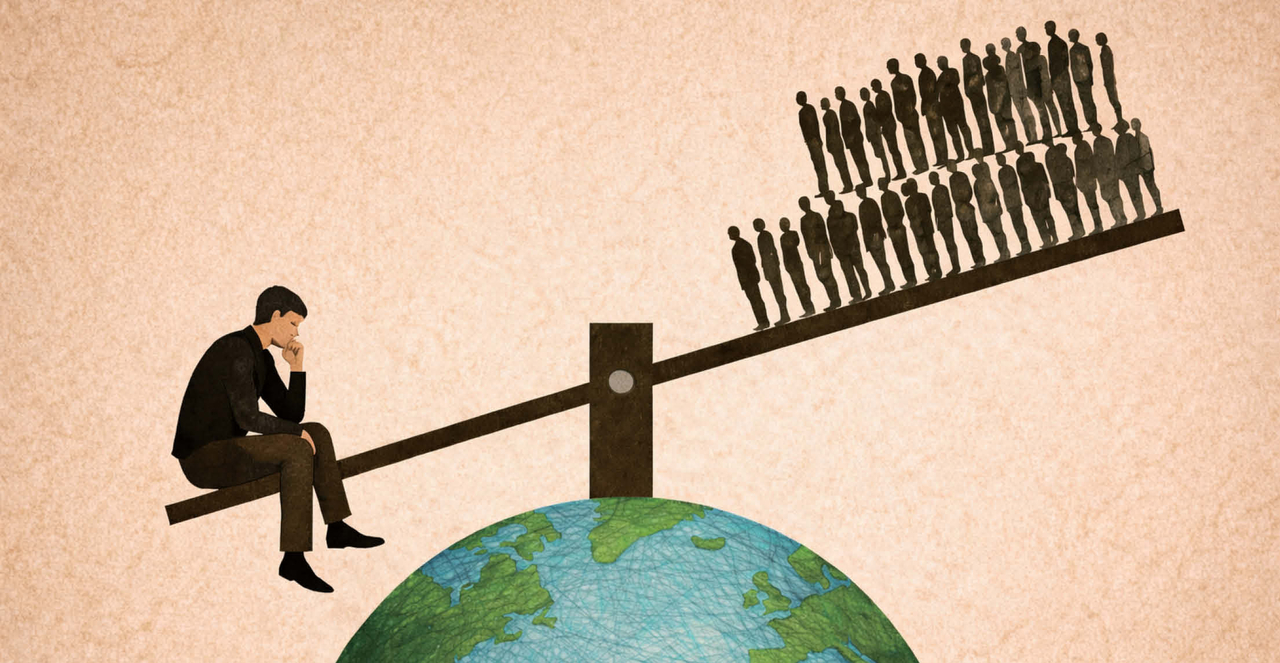
-Is inequality approaching a historical peak, or are we entering a regime in which extreme inequality becomes a long-lasting structural condition?
▶I would not say that we are naturally approaching a historical peak of inequality. Over the very long run, extreme inequality has been the norm rather than the exception, and periods of sustained inequality reduction have been rare, fragile, and politically contingent. As we document in our recent paper “Equality and Development: A Comparative & Historical Perspective (1800-2025)”, inequality remained extremely high in most societies until the early 20th century and only declined significantly in a limited set of countries, notably Western and Nordic Europe, during a specific historical window marked by major institutional transformations. There is no evidence of an automatic economic mechanism that would cause inequality to peak and decline on its own.
This means that we are indeed at risk of entering a long-lasting regime of very high inequality, but not because of any new economic law. Rather, such a regime would reflect political and ideological choices. When the return on capital (for instance, the rate at which financial assets increase) persistently exceeds economic growth, wealth concentration tends to rise unless counteracted by strong institutions such as progressive taxation, broad access to education, and social protection (Piketty, 2014). Andreescu et al. (2025a) add a global and historical confirmation that societies that did not build inclusive institutions simply never experienced sustained inequality compression, and continue today to display income distributions comparable to those of Europe around 1900.
Bauluz et al. (2025) strongly reinforce the argument that there is no automatic tendency toward declining inequality. The paper adds powerful macro-wealth evidence showing that global wealth-to-income ratios have reached historically unprecedented levels since 1980, driven not only by savings but by large and persistent capital gains. Thus, inequality today is not self-correcting; recent dynamics are closer to re-entrenchment than to a turning point. Bauluz et al. (2025) also provide global confirmation that these outcomes are institutionally and politically contingent, not technologically inevitable. Moreover, Chancel et al. (2025) show in another dimension that inequality is not self-correcting because climate change actively reinforces wealth concentration: climate damages fall disproportionately on the bottom 50%, while the rich are protected by wealth and may even increase their share if they dominate ownership of the green transition.

What distinguishes the current period from earlier high-inequality episodes is not the level of inequality itself, but its justification and its coexistence with democracy. Today, high inequality often persists within formally democratic systems and is legitimized through meritocratic narratives, even though much of it is driven by inherited advantage and unequal access to human capital, and therefore unequal opportunities. The historical evidence in Andreescu et al (2025a) shows that the most productive societies are precisely those that dramatically reduced income inequality during the 20th century, while also expanding democratic participation and public investment in education and health. This directly challenges the idea that inequality is a necessary price to pay for development. It also documents how inequality tends to re-entrench once political coalitions weaken.
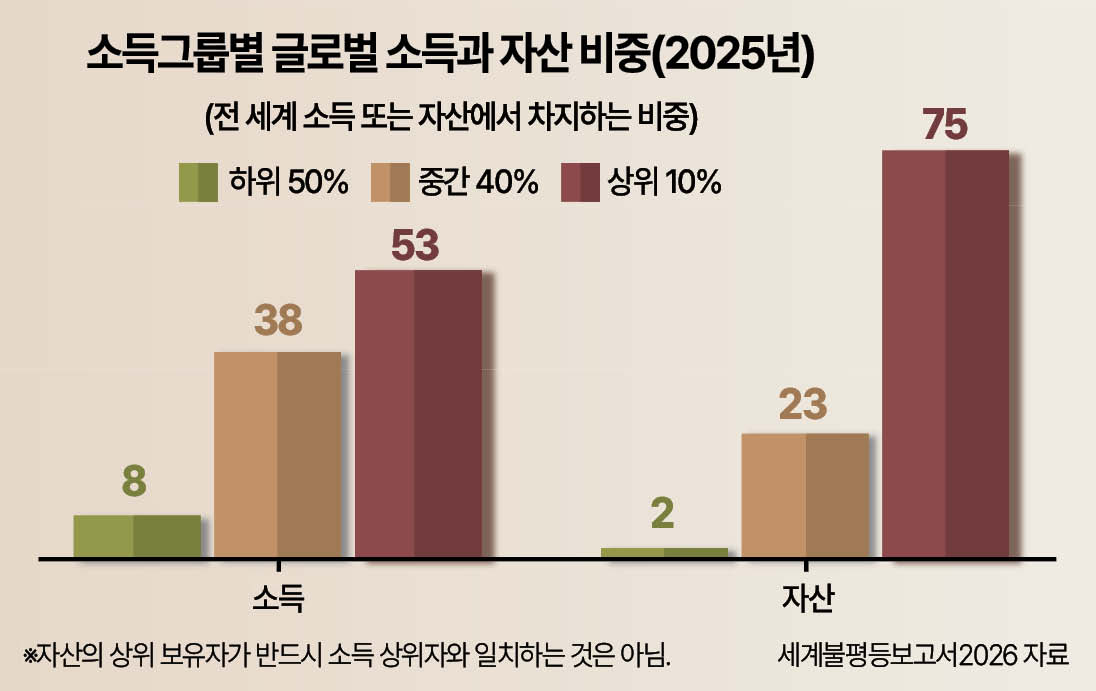
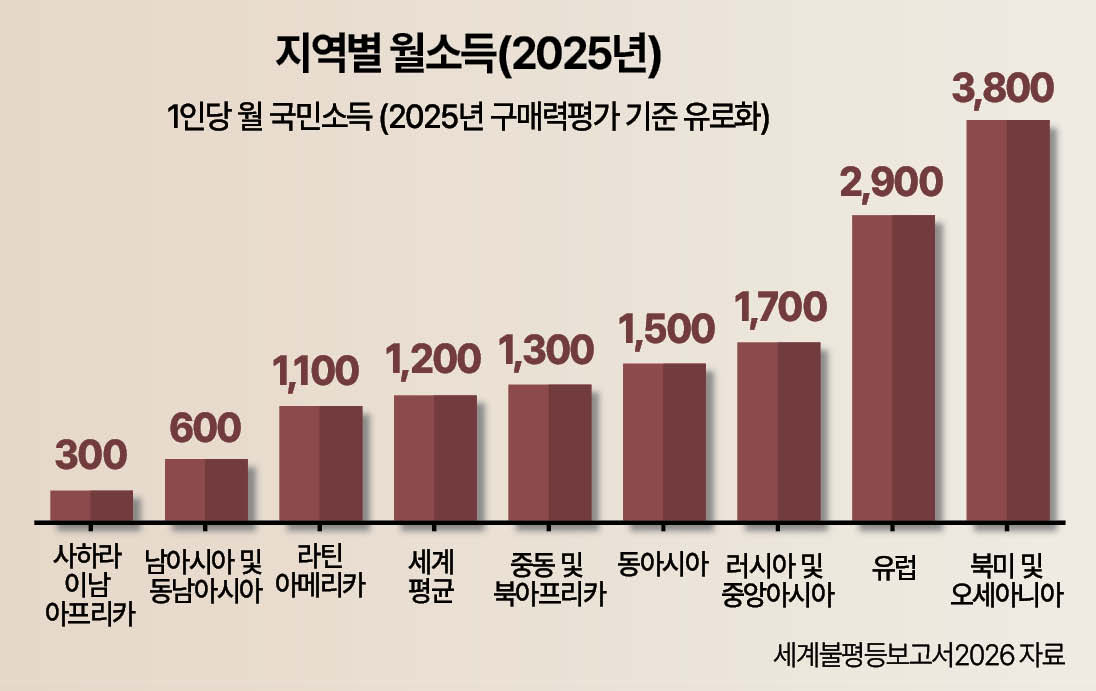
Moreover, the World Inequality Report 2026 adds a clearer picture of how this high-inequality regime is becoming more entrenched and multidimensional. It shows that inequality is not only persistent but intensifying at the very top, with extreme wealth concentration rising faster than average wealth growth, while the bottom half of the population continues to hold almost no wealth. It also documents how income and wealth inequalities interact with climate responsibility, gender inequality, and unequal access to education, which creates reinforcing feedback loops that make inequality more resilient within democratic systems (Chancel et al., 2026).
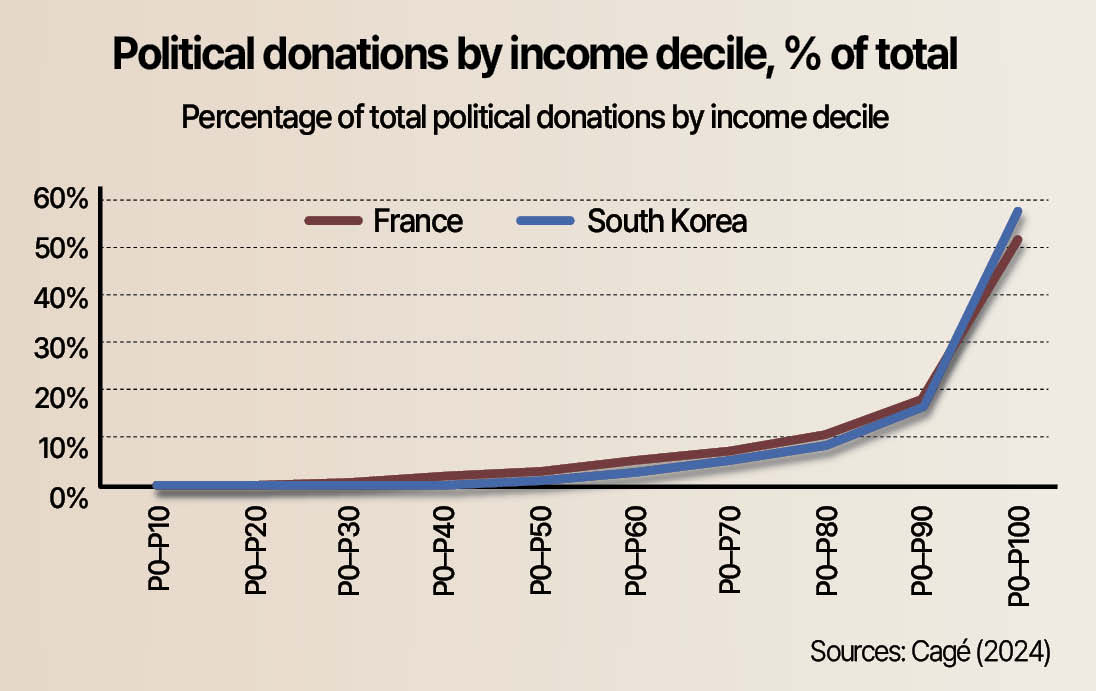
The World Inequality Report 2026 also highlights the political mechanisms through which inequality entrenches itself. The disproportionate influence of the wealthiest on political processes, combined with the declining representation of the working class, weakens the capacity of democracies to deliver redistributive change. At the same time, growing divides by education, territory (rural vs. urban), and social status make it increasingly difficult to form stable political coalitions in favor of redistribution. In this context, inequality, apart from reflecting economic forces, also reshapes political competition itself. It fragments electorates and undermines the collective action required to reduce disparities (Chancel et al., 2026).
Inequality is also entrenched through persistent international mechanisms of unequal exchange that shape wealth accumulation across countries over centuries (Nievas and Piketty, 2025) and through asymmetric and gendered appropriation of productivity gains in time itself (Andreescu et al., 2025b), for instance, who captures productivity increases as income and who captures it as free time. Moreover, inequality is not only entrenched through wealth and political power, but also through massive, stable gaps across countries and regions in per-child education and health spending, which have not converged since 1950 and increase inequality of opportunities in the long run (Bharti et al., 2025).
But inequality is not fixed. Inequality regimes are politically constructed and therefore politically reversible (Piketty, 2020). History teaches us that reductions in inequality require deliberate, large-scale institutional change. Without renewed social-democratic transformations adapted to 21st-century conditions, high inequality is likely to remain the most stable equilibrium.
-Why has the growing diagnosis of economic inequality so rarely translated into meaningful political or institutional change?
▶Because knowledge has not translated into political action. Over the last decade, the “diagnosis” of inequality has improved, but the political response has often moved in the opposite direction: intense lobbying capacity and agenda setting by top wealth holders, tax competition, and capital mobility that make governments fear acting alone, and fragmented electorates that struggle to form durable redistribution coalitions.
In that sense, the persistence of high inequality today does not reflect a failure of economic analysis. It reflects the absence of sufficiently powerful political and institutional counterweights. Inequality regimes are sustained by ideology and power, not by ignorance (Piketty, 2020). Societies develop narratives about merit, property, globalization, and efficiency that legitimize extreme inequality and delimit what is considered politically feasible. The reason elites resist redistribution is not that they deny the data but because prevailing ideologies and institutional arrangements protect their interests. As a result, the accumulation of evidence does not, by itself, destabilize inequality regimes. What matters is whether alternative political coalitions capable of challenging these narratives can emerge.
This is where the historical perspective becomes essential. The large inequality compression observed in Western and Nordic Europe during the twentieth century followed profound institutional ruptures, including the expansion of democratic participation, the rise of labor movements, progressive taxation, and massive public investment in education and health (Andreescu et al., 2025a). These transformations required shifts in power relations and sustained social mobilization, often in the face of strong elite opposition.
The World Inequality Report 2026 complements and frames the present landscape as a crisis of democratic capacity: inequality persists not for lack of solutions, but because power is organized asymmetrically, and the groups that would benefit from progressive taxation, stronger labor institutions, and universal public services are not always represented with the same intensity as those who lose from them. Moreover, they are fragmented. The left, in particular, oscillates between orienting its policies toward an urban, highly educated, and culturally progressive elite or reconnecting with a more diverse working class that is fragmented and battered by decades of disinvestment in public services, especially in rural areas. The fragmentation of the working class extends to geography: it votes left in urban areas and right in rural areas.
Traditional class-based political alignments have fractured, territorial divides within countries have widened, and working-class voters are increasingly fragmented or underrepresented (Chancel et al., 2026). These dynamics weaken the formation of stable majorities in favor of redistribution and public investment, reinforcing the persistence of inequality even where public concern is widespread. The World Inequality Report 2026 also shows that globalization has outpaced democratic governance: capital mobility and financial integration constrain national policy space, while global institutions capable of enforcing tax justice and regulating capital remain weak.
Extreme concentration of income and wealth weakens democratic representation, amplifies the political influence of top groups, and reduces the capacity of the working and middle classes to form stable redistribution coalitions. In this sense, inequality becomes self-reinforcing as it undermines the very political conditions required to reverse it. This helps explain why, despite unprecedented data availability and scholarly consensus, post-1980 inequality regimes have proven so resilient.
The post-1980 period is particularly instructive. The resurgence of inequality in many countries was justified by the claim that redistribution had gone too far and that greater inequality was necessary to restore growth and innovation. Yet historical evidence suggests the opposite (Andreescu et al., 2025a). Societies that achieved the strongest productivity growth over the long run were precisely those that combined relatively low inequality with inclusive institutions. By contrast, the recent rise in inequality has coincided with slower productivity growth, weaker collective investment, and declining trust in democratic institutions. The blockage, therefore, is not economic feasibility, but political capacity.
Without renewed political coalitions, institutional reforms, and forms of democratic organization capable of rebalancing power, there is little reason to expect that today’s inequality regimes will dissolve simply because they are better documented.
-Economic policy has tended to prioritize growth over distribution. Do you believe the growth-first paradigm has reached its limits?
▶The idea that societies must prioritize growth first and worry about distribution later is exhausted. It rests on the assumption that growth is a neutral, almost natural process whose benefits will eventually diffuse across society. Yet history and contemporary evidence suggest the opposite. Growth is always shaped by institutions, power relations, and ownership structures, and without deliberate redistributive mechanisms, it tends to reinforce existing inequalities rather than correct them. Growth-centered narratives appear less as scientific truths than as political ideologies used to legitimize postponing redistribution (Piketty, 2020).
For instance, wealth accumulation has vastly outpaced income growth since 1980, largely due to valuation effects rather than productive investment (Bauluz et al. 2025). Growth alone has not disciplined inequality; instead, it has often coincided with rising capital-output ratios and higher capital shares. In addition, growth alone does not generate convergence between countries when terms of trade and financial flows are asymmetric (Nievas and Piketty, 2025). Growth without changing the rules of exchange across countries reproduces divergence; distribution and bargaining power must be treated as preconditions for sustainable growth. Importantly, growth that expands carbon-intensive capital is economically self-defeating, as climate damages erode both private and public wealth (Chancel et al. 2025). Growth-first also fails because it ignores the gendered distribution of time, not just income and wealth. A replacement paradigm must treat time, care, and leisure as distributive variables alongside income and wealth (Andreescu et al., 2025b).
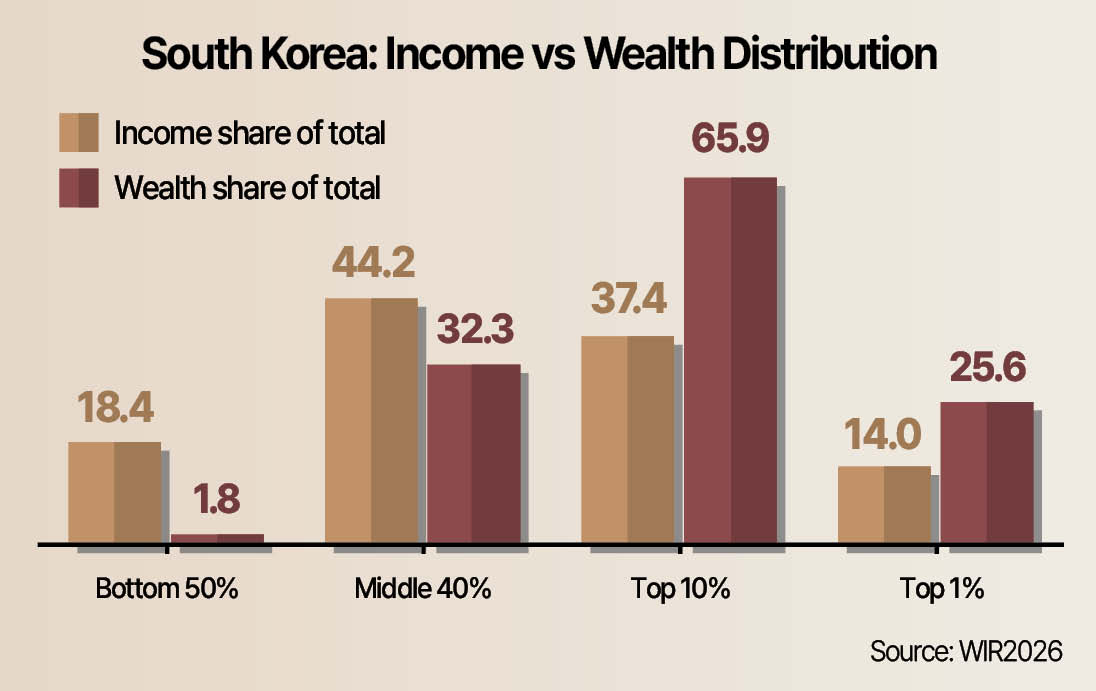
As for the World Inequality Reports, they have documented that countries facing similar growth conditions can follow radically different inequality trajectories depending on their tax systems, labor institutions, education policies, and political coalitions. There is no empirical basis for believing that inequality will decline automatically once growth reaches a certain threshold. On the contrary, high inequality itself undermines long-run growth by weakening social cohesion, limiting access to education and innovation, and eroding democratic legitimacy. In that sense, distribution is not a secondary concern to be addressed after growth has been secured; it is a central determinant of the type of growth societies experience.
This conclusion is strongly reinforced by the long-run historical evidence assembled in Equality and Development: A Comparative & Historical Perspective, 1800-2025. Using two centuries of global data, the paper shows that there is no trade-off between equality and development in the historical record. Societies that achieved the highest and most sustained productivity growth were also those that succeeded in compressing income and wealth inequalities through mass education, progressive taxation, and inclusive political institutions. These transformations did not wait for growth. Redistribution and social investment functioned as engines of development rather than as residual outcomes of economic expansion. Human capital spending is itself one of the strongest predictors of long-run productivity growth, with estimated macro returns around 10% annually, and 15-20% in poorer countries, especially for public education (Bharti et al., 2025).
What should replace the growth-first paradigm is therefore not a rejection of growth, but a redefinition of economic success. Instead of treating redistribution, public services, and democratic participation as constraints on efficiency, we should recognize them as productive investments. Progressive taxation, broad access to education, co-determination in firms, and the diffusion of property rights are not luxuries reserved for high-growth periods; they are the institutional foundations of inclusive and sustainable development. The real choice is not between growth and equality, but between growth models that concentrate power and wealth and those that deliberately organize economic progress around social justice and democratic control.
The evidence assembled in the World Inequality Report 2026 pushes this conclusion one step further. It shows that global growth over the past decades has been accompanied by historically extreme levels of income and wealth concentration, with the richest groups capturing a disproportionate share of gains while large parts of the world remain excluded. The report documents how inequality today is multidimensional-spanning income, wealth, gender, climate responsibility, international finance, and political power-and how these dimensions reinforce one another. In this context, growth-first strategies fail to reduce inequality and actively weaken the political coalitions and democratic institutions required to govern growth in the first place. Reducing inequality, besides being a question of fairness, is also a condition for economic resilience, democratic stability, and environmental sustainability. Growth that is not deliberately structured around redistribution and collective investment is not a solution to today’s crises; it is part of the problem.
-Many major economies, including South Korea, are pursuing state-led growth strategies centered on advanced industries such as AI and semiconductors. What do you see as the blind spots or risks of this approach?
▶There is nothing inherently egalitarian about state-led growth, even when it is technologically sophisticated and strategically successful. Public coordination, industrial policy, and long-term investment can be extremely effective in accelerating innovation in frontier sectors like semiconductors or artificial intelligence. But history repeatedly shows that if these strategies are pursued without addressing inequality at the same time, they tend to reproduce a familiar pattern: the state socializes risks, while the returns to innovation are privatized and highly concentrated. Productivity gains can be real and impressive, yet they typically coexist with rising inequality in income, wealth, and political influence.
In Equality and Development: A Comparative Historical Perspective (1800-2025), we show that economic modernization and structural transformation, including episodes of rapid industrial upgrading, have very rarely produced inclusive outcomes on their own. Growth-first strategies systematically generate high and persistent inequality when they are not accompanied by strong redistributive institutions. The World Inequality Report 2026 reinforces this conclusion by showing that, today, income and, especially, wealth gains remain overwhelmingly concentrated at the very top.
From this perspective, one of the main blind spots is the belief that technological upgrading will eventually solve distributional problems by itself. Technological progress does not automatically translate into broadly shared prosperity. On the contrary, frontier technologies tend to amplify the bargaining power of capital, increase returns to intellectual property and data, and reward a narrow segment of highly skilled workers.
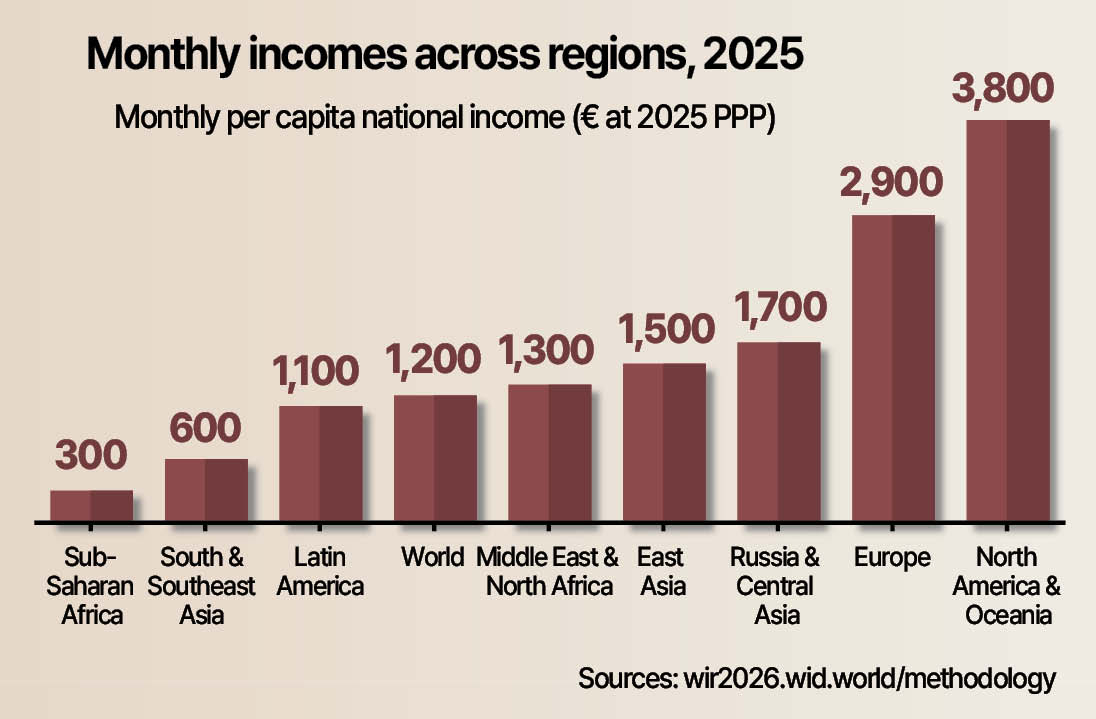
A second major risk lies in political stability. State-led growth strategies require durable social and political coalitions. Yet inequality undermines precisely those coalitions. When large parts of the population perceive that public resources are mobilized primarily to support national champions or already advantaged groups, trust in institutions erodes. The World Inequality Report 2026 documents how rising inequality fragments democracies, weakens working-class representation, and fuels territorial and political divides that make redistribution increasingly difficult. Even highly effective industrial strategies can become politically fragile when their social benefits are narrowly distributed.
Finally, I would emphasize that the central question is not whether states should support advanced technologies, but under what ownership, governance, and, especially, distributional arrangements. The World Inequality Report 2026 is very clear on this point: inequality is not destiny, it is not fixed, it is the result of institutional and political choices. Growth strategies that fail to address inequality produce unfair outcomes and also undermine the social and democratic foundations on which long-term development depends.
-There is widespread concern that AI will exacerbate inequality. What policy or institutional choices could help mitigate this outcome?
▶Technology does not come with a built-in distributive logic. What matters is how societies choose to organize ownership, labor, access, and the sharing of productivity gains.
That said, it is also important to be clear about the very real ways in which AI could substantially increase inequality if appropriate policy choices are not made. One obvious channel is labor displacement. If AI is introduced in a context of weak labor protections and limited public intervention, it can replace jobs and lead to wage polarization, job insecurity, and declining bargaining power for large segments of the workforce. This is not an inherent feature of AI, but the result of allowing technological adoption to be driven solely by cost minimization rather than social objectives.
A second channel concerns skills and access. More highly educated and already advantaged workers are far better positioned to use AI as a productivity-enhancing tool, while others risk being confined to more precarious or deskilled tasks. Without massive public investment in education, lifelong training, and the development of critical thinking skills, AI will amplify existing educational and social divides. In this sense, inequality does not arise from the technology, but from unequal access to the capacity to use and shape that technology.
There is also a broader issue of power and governance. If AI systems substitute for human judgment rather than complement it, and if they are controlled by a small number of firms through opaque algorithms and concentrated data ownership, decision-making power becomes increasingly centralized. This can weaken worker autonomy, erode democratic accountability, and reinforce existing asymmetries of economic and political influence unless transparency, regulation, and collective governance are actively enforced.
Finally, AI has material and environmental dimensions that are often overlooked. The expansion of data centers, energy consumption, and the extraction of natural resources required for digital infrastructure can exacerbate environmental inequalities, with disproportionate costs borne by poorer regions and populations. Without regulation, these costs are externalized, reinforcing both domestic and global inequality and promoting climate damage.
This is precisely why institutional choices are decisive. If AI ends up exacerbating inequality, it will not be because of the technology itself, but because of political decisions that concentrate ownership of AI-related capital, data, and infrastructure in the hands of a small minority, while weakening labor protections and progressive taxation. As documented in the World Inequality Report 2026, countries with similar technological capabilities experience radically different inequality trajectories depending on their tax systems, wage-setting institutions, education policies, and systems of social protection. There is no reason AI should be any different.
For AI to reduce inequality, several conditions are essential. The ownership and governance of AI must be democratized through competition policy, regulation of digital monopolies, and new forms of collective or public ownership of data and algorithms. Productivity gains must be shared through robust progressive taxation of profits and wealth, combined with reinvestment in universal education, training, and public services. Labor institutions must be strengthened so that workers have real bargaining power over how AI is introduced and how wages, working time, and job quality evolve. Environmental regulation must ensure that the resource costs of AI are minimized and not shifted onto the most vulnerable.
More fundamentally, we need to abandon the idea that innovation and redistribution are in tension. Historically, the most innovative and productive societies have also been those that invested the most in social inclusion and democratic institutions. AI can either reinforce a new form of digital oligarchy or become a tool for broad-based prosperity. The outcome will depend not on algorithms, but on politics.
-Do you see digital assets as a force for the democratization of finance, or merely as a new frontier for capital accumulation?
▶From the perspective of inequality, I would be cautious about the claim that digital assets or cryptocurrencies naturally democratize finance. History suggests that new asset classes rarely escape the broader dynamics of capital accumulation. In practice, ownership of digital assets is already highly concentrated, early adopters and large investors capture a disproportionate share of the gains, and returns tend to accrue to those who already possess financial resources, technical skills, and access to information. In that sense, cryptocurrencies look more like a new frontier of capital accumulation.
That does not mean that digital technologies are irrelevant for reducing inequality, but their effects are not automatic. As with any form of capital, the key issue is governance: transparency, regulation, taxation, and the social uses of these technologies. Without strong public institutions and redistributive policies, digital assets are likely to reinforce existing wealth hierarchies rather than challenge them. Whether they contribute to democratization or to further concentration is ultimately a political choice.
-For countries like South Korea that are seeking long-term growth, what core principles should guide the design of economic and social policy?
▶Looking ahead beyond the World Inequality Report 2026, the main lesson for countries seeking long-term growth is that growth, equity, and sustainability must be designed together from the outset, taking seriously income and wealth concentration, as well as planetary constraints as binding macroeconomic limits. History shows that growth alone does not produce shared prosperity. The countries that combined rapid development with social stability did so by investing massively in education, health, and social protection, while building strong progressive tax systems to finance these investments democratically. Crucially, these transformations required strong political will and broad democratic participation, ensuring that economic gains were translated into collective priorities rather than captured by narrow elites. In this perspective, progressive taxation of income and wealth, together with large-scale public investment in education, health, and the low-carbon transition, is not a drag on growth but a precondition for a socially legitimate and environmentally viable development path; without it, countries risk achieving short-term technological success at the cost of long-term social cohesion and the habitability of the planet. Ultimately, the path to durable prosperity is not predetermined by economic capability or technology, but shaped by collective political choices and the strength of democratic institutions; in this sense, long-term growth is less a technical challenge than a democratic one.
hongi@heraldcorp.com


![임영웅 51억에 산 집, 이젠 120억…하하·정동원도 사는 ‘강북판 타워팰리스’[초고가 주택 그들이 사는 세상]](https://wimg.heraldcorp.com/news/cms/2026/10/17/news-p.v1.20261016.f574b812626d48019a4018618b827c5b_T1.jpg?type=h&h=640)
![“샌디스크도 아니었다”…S&P500 상승률 1위, 7배 뛴 이 종목[서학개미 주식회사]](https://wimg.heraldcorp.com/news/cms/2026/10/15/news-p.v1.20251010.236fb20db3324e3bbd6f1dba7ec63bff_T1.jpg?type=h&h=240)
![[르포] 공장 들어서자 ‘밥 냄새’가 훅…쿠첸 ‘티타늄 밥솥’ 의 비밀[그 회사 어때?]](https://wimg.heraldcorp.com/news/cms/2026/10/16/news-p.v1.20260923.16e9b0f48f08469fa1014f2864f8e8fc_T1.jpg?type=h&h=240)
![장기금리와 그린스펀의 수수께끼…이번엔 뒤집혔다 [지안루카 베니그노]](https://wimg.heraldcorp.com/news/cms/2026/10/14/news-p.v1.20261012.37af49395c5e42388798ef9d8de6e08b_T1.jpg?type=h&h=240)