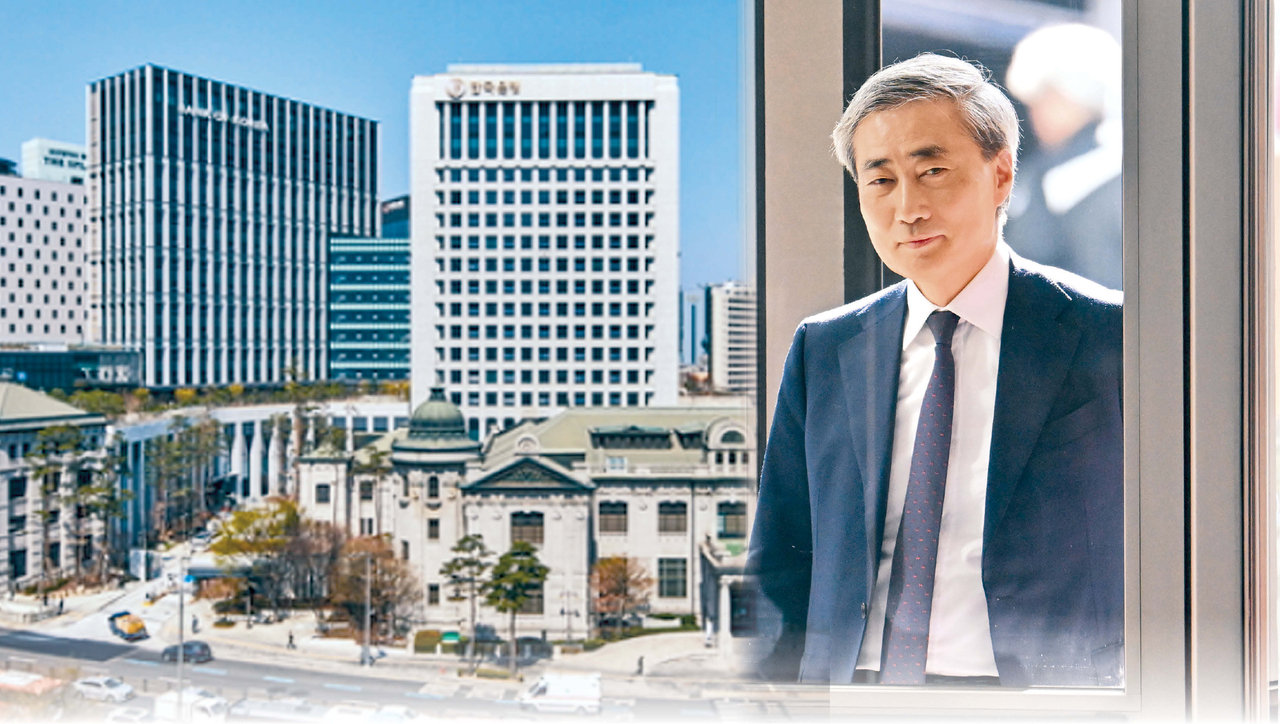
![신현송 한국은행 총재 후보자가 지난달 31일 오전 서울 중구의 한 빌딩에 준비된 인사청문회 준비 사무실로 출근하고 있다. 배경 사진은 서울 중구에 있는 한국은행 본부 건물의 모습. [임세준 기자·한국은행 제공]](https://wimg.heraldcorp.com/news/cms/2026/04/06/news-p.v1.20260406.e63f86cd21814c1d8151601823c85e26_P1.jpg)
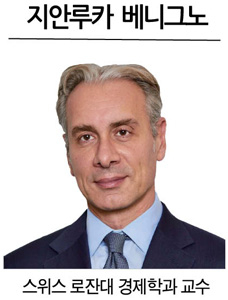
나는 2000년대 초반 신현송 한국은행 총재 후보자를 처음 만났다. 나는 갓 박사 학위를 마친 상태였고, 그는 이미 런던정경대(LSE)의 저명한 인사였다. 당시 금융학과에 재직 중이던 그는 경제성과연구소(CEP)의 금융안정프로그램에 나를 기꺼이 받아줬다.
당시 나의 배경은 전통적인 국제 거시경제학에 치우쳐 있었다. 경제의 금융 측면에는 그리 능숙하지 못했다. 글로벌 금융위기가 닥치기 전까지만 해도 거시경제학에서 금융이라는 영역은 담론의 변두리에 머물러 있었다. 안타깝게도 신 후보자의 통찰로부터 직접 혜택을 입은 기간은 짧았다. 그가 학문적 성취를 바탕으로 곧 프린스턴대로 자리를 옮겼기 때문이다. 하지만 그때의 인상은 내게 깊이 각인됐다.
그 후로도 우리는 여러 번 마주쳤다. 가장 최근의 조우는 불과 한 달 전으로, 내가 국제결제은행(BIS)을 방문했을 때였다. 우리는 카페테리아에서 잠시 만났는데, 그는 세미나에 다시 들어가기 전 커피 한 잔을 챙기느라 서두르는 모습이었다. 내가 그를 만나는 것은 언제나 즐거운 일이라고 말하자, 그는 친절하게도 나에게 같은 말을 해줬다. 이미 그때 시장에는 그가 다른 명망 있는 학문적 보직들과 함께 한국은행 총재 후보로 거론되고 있다는 소문이 돌고 있었다. 과연 그의 다음 행보가 어디가 될지 나 역시 궁금하던 참이었다.
중앙은행 총재들은 종종 정책적 본질을 깊이 파악하기보다, 편의상 갖다 붙이기 쉬운 ‘이분법적 라벨(꼬리표)’로만 논의되곤 한다. 익숙한 ‘비둘기파와 매파’의 구분이 그 중 하나다. 정책 입안자가 성장을 지원하기 위해 인플레이션을 더 용인하는 편인지, 아니면 물가 안정을 수호하기 위해 빠르게 긴축을 단행하는 편인지를 묻는 것이다.
또 다른 하나는 학자 출신과 비학자 출신의 대비다. 마치 중앙은행을 이끌어야 할 적임자가 학자인지, 시장 전문가인지, 아니면 정무적 감각을 갖춘 인물인지가 핵심 질문인 것처럼 말이다. 이러한 꼬리표들이 완전히 무의미한 것은 아니다. 그것은 시장과 평론가들이 복잡한 정책적 역할을 빠르게 파악하기 위해 사용하는 일종의 약칭이다. 그러나 중앙은행이 직면한 도전이 단편적이지 않을 때, 이러한 꼬리표들은 정작 중요한 본질을 가릴 위험이 있다.
신 후보자가 지명된 이후 한국에 도착해 가진 첫 언론 인터뷰가 꽤 시사하는 바가 컸던 이유가 바로 여기에 있다. 그는 자신을 매파나 비둘기파라는 흔한 어휘로 표현하거나, 학자와 비학자라는 낡은 대비 속에 가두지 않았다. 대신 시작부터 자신만의 독특한 색깔을 드러냈다. 그는 정책을 매파나 비둘기파로 나누는 이분법적 분류를 명시적으로 거부했다. 그보다 중요한 것은 금융 시스템과 실물 경제 사이의 상호작용을 이해하고, 상황에 유연하게 대응하는 것이라고 주장했다. 복잡한 세계에서 고정된 꼬리표보다 판단력과 분석력이 더 중요하다는 점을 초기에 명확히 보여준 것이다.
이 지점이 내가 현재 그의 한국은행 총재 지명을 둘러싼 논의를 흥미롭게 지켜보는 이유 중 하나다. 하지만 내 견해로는 중앙은행이 비학자보다 학자를 선호해야 한다는 식의 논의는 중요하지 않다. 그것은 너무 투박하고 실제로는 사안의 본질을 이해하는 데 그리 유익하지 않기 때문이다.
진짜 질문은 ‘오늘날의 중앙은행 업무가 어떤 종류의 능력을 요구하는가’다. 더 파편화하고 충격에 취약해진 세계에서 총재들에게는 기존의 표준적인 ‘물가안정목표제’라는 틀 그 이상의 역량이 필요하다. 분석적 깊이, 정책 경험, 통화 정책과 금융 시장, 재정 문제를 넘나들며 명확하게 사고할 수 있는 능력이 요구된다. 신 후보자가 특히 흥미로운 인물인 이유는 단순히 ‘학자’라서가 아니라, 깊이 있는 학문적 성과와 핵심 정책 문제에 대한 수년간의 긴밀한 실무 경험을 결합하고 있기 때문이다. 그는 2014년부터 2026년 3월까지 BIS에서 경제보좌관을 지냈으며, 2025년 1월부터는 통화경제국장을 맡아왔다.
유용한 역사적 비교 대상은 벤 버냉키 전 미국 연방준비제도(Fed) 의장이다. 버냉키가 그토록 중요한 중앙은행가가 될 수 있었던 것은 단순히 학계 출신이었기 때문이 아니다. 그의 학문적 성취가 당대의 문제들에 준비돼 있었기 때문이다. 대공황과 일본 경제에 대한 그의 연구는 2007년과 2008년 세계가 혼란에 빠졌을 때 즉각적으로 유효한 프레임워크가 됐다. 그는 학문적 명성을 중앙은행의 장식품으로 가져온 게 아니었다. 기존의 정책 범주가 무너져 내릴 때 현상을 해석할 수 있도록 돕는 사유의 체계를 가져온 것이었다.
신 후보자의 경력은 오늘날의 세계에 이와 비슷하면서도 다른 방식으로 부합한다. 그의 오랜 연구는 통화 정책과 금융 시장의 결합, 즉 대차대조표, 레버리지, 유동성, 중개기관의 역할, 시장 구조가 거시경제적 결과로 환류되는 증폭 기제에 집중돼 왔다. 한때 이러한 주제들은 주류 거시경제학의 변두리에 머무는 기술적이고 부차적인 질문으로 취급받았다. 하지만 이제는 더 이상 부차적이지 않다. 위기 이후의 세계, 현재의 지정학적 환경에서 이러한 이슈들은 정책 문제의 핵심에 자리 잡고 있다.
세상은 점점 험난해지고 있고, 신 후보자의 첫 일성들은 왜 그의 경력이 이 시대에 적합한지를 잘 보여준다. 첫 번째 도전은 ‘통화와 금융의 결합’이다. 중동에서 발생하는 충격은 단순히 인플레이션만의 얘기가 아니다. 그것은 에너지 가격을 올리고 금리 전망을 바꾸며, 환율을 움직이고 금융 여건을 긴축시킨다. 또한 시스템 내 레버리지가 높은 부문의 취약성을 노출시킨다. 한국과 같은 경제 구조에서 이는 특히 직접적인 타격이 된다.
대외 충격은 인플레이션이나 금융 중 하나로 깔끔하게 포장돼 오지 않는다. 수입 에너지 가격, 외환 시장, 자금 조달 여건, 광범위한 위험 재평가를 통해 동시에 밀려온다. 로이터는 한국이 세계 4위의 원유 수입국이며 원유의 약 70%를 중동에서 들여온다는 점을 지적한다.
이러한 관점은 원화 환율에 대한 그의 언급에서도 드러났다. 그는 특정 환율 수준에 지나친 의미를 부여하기보다, 환율을 금융 시스템의 위험 흡수 능력을 나타내는 지표로 읽어야 한다고 제안했다. 또한 견조한 자본 유입과 외환 스와프 사용의 증가를 근거로 대외 리스크가 관리 가능한 수준이라고 짚었다. 이는 단순히 정책 금리에만 매몰된 중앙은행가의 언어가 아니다. 시장의 구조와 대차대조표라는 렌즈를 통해 통화 정책을 바라보는 사람의 언어다.
두 번째 도전은 ‘통화와 재정의 결합’이다. 거대한 대외 충격이 가계와 기업을 덮칠 때 정부가 손을 놓고 있는 경우는 거의 없다. 정부는 추가경정예산, 보조금, 이전 지출, 또는 목표를 설정한 구제책을 동원한다. 한국이 최근 발표한 26.2조원 규모의 추경안이 좋은 예다. 이 패키지는 에너지 비용 완화, 민생 안정, 산업 및 공급망 지원이라는 세 가지 우선순위에 맞춰 설계됐다. 총액 중 4.8조원은 인구의 약 70%인 3580만 명에게 소득과 지역에 따라 차등 지급되는 현금 지원액이며, 5조원은 연료비 억제 및 나프타 공급 안정 등에 투입된다. 이 예산은 2026년의 전체 공공 지출 규모를 늘리지만, 신규 채권 발행보다는 주로 초과 세수를 통해 재원을 조달한다.
중앙은행의 관점에서 특히 흥미로운 점은 이 패키지가 전형적인 적자 재정 부양책으로 제시되지 않았다는 점이다. 정부는 재정수지 악화 없이 거의 전적으로 초과 세수로 조달될 것이라고 말한다. 이것이 통화 정책의 과제를 없애주는 것은 아니지만, 그 성격은 변화시킨다. 중앙은행은 이것이 얼마나 거시경제적 지원 성격인지, 상대 가격의 충격을 얼마나 완화하는지, 에너지 충격의 전이를 부드럽게 함으로써 2차 인플레이션 압력을 강화하기보다 오히려 줄이는 요인이 될 수 있는지를 판단해야 한다.
신 후보자 자신은 이미 현재까지 발표된 규모와 설계를 고려할 때 인플레이션 영향은 제한적일 것이라는 견해를 내비쳤다.
모든 재정 대응이 똑같은 방식으로 인플레이션을 유발하는 것은 아니며, 모든 공급 충격에 동일한 통화 정책 반응을 보일 필요도 없다. 이를 위해서는 교조적인 반사작용이 아닌 날카로운 분석이 필요하다. 공급 측면의 1차 효과와 2차 효과의 지속성을 구분하고, 정책적 긴장이 단순 긴축을 요구하는 때와 더 정교하고 차별화된 대응을 요구하는 때를 구별할 줄 아는 총재가 필요한 것이다.
이 두 가지 도전은 실제 상황에서 분리돼 있지 않다. 점점 더 중첩되고 있다. 현대의 중앙은행가는 인플레이션, 대차대조표, 시장 작동 원리, 재정 지원, 조정 과정의 정치경제학을 동시에 고려해야 한다. 이것이 총재의 프로필이 중요한 이유 중 하나다. 그 직책은 당연히 판단력을 요구하지만, 판단은 분석이라는 토대 위에서만 올바르게 작동한다. 애초에 문제를 올바르게 정의하는 능력에 달려 있는 것이다.
그렇기에 신 후보자의 등장은 매우 흥미롭다. 그는 단순히 공직으로 자리를 옮기는 학자도, 기술적 자격만 갖춘 정책 내부자도 아니다. 그는 학문적 연구와 정책 경험이 진정으로 서로를 강화하는 드문 유형의 정책 입안자 그룹에 속한다. BIS에서의 수년은 그의 초기 학문적 성과 위에 거시경제와 금융이 만나는 지점, 차세대 중앙은행의 난제들이 발생할 지점을 고민하며 보낸 시간이었다.
결국 총재는 단순히 회의를 주재하거나 위원회 의견을 취합하는 자리가 아니다. 그 직업은 지적인 리더십을 요구한다. 어려움 속에서 도전 과제를 설정하고, 선택지를 정교화하며, 정책에 일관성을 부여하는 능력 말이다. 몇 달 전 나는 중앙은행의 독립성과 그 진정한 의미, 그리고 왜 책임성이 독립성과 대조되는 것이 아니라 그 일부인지에 대해 쓴 적이 있다.
지적인 리더십 역시 그 논의에 포함돼야 한다. 독립성은 단순히 법적 보호나 정치적 압력으로부터의 거리에서만 나오는 것이 아니다. 그것은 중앙은행의 리더십이 문제를 명확히 정의하고, 선택지를 솔직하게 설명하며, 정책에 일관된 분석적 토대를 제공하는 역량에 달려 있다. 그것이 바로 학계에서나 정책 자문가로서 신 후보자를 오랫동안 돋보이게 했던 점이다. 통화·금융·재정적 충격이 겹쳐오는 오늘날의 세계에서, 그것이 가장 가치 있는 자격 요건일지도 모른다.
A Modern Governor
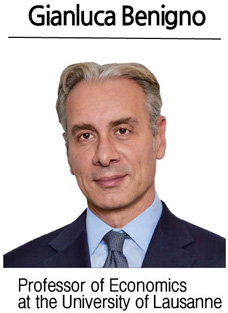
I first met Hyun Song Shin in the early 2000s, when I had just come out of my PhD and he was already a prominent figure at the London School of Economics. He was then in the Finance Department and welcomed me into his programme on financial stability at the Centre for Economic Performance. At the time, I came from a more traditional international macroeconomic background and was much less versatile on the financial side of the economy. Before the global financial crisis, that side of macroeconomics still sat too much at the margins of the discussion. My spell benefiting directly from Hyun’s insights was unfortunately a short one, as he soon moved to Princeton on the back of his academic contributions. But the impression stayed with me.
We crossed paths many times after that. The most recent occasion was only about a month ago, during a visit I was making to the BIS. We met briefly in the cafeteria, with him hurrying out of a seminar for a quick coffee before heading back. I said that it was always a pleasure seeing him, and he was kind enough to say the same to me. Already then, there were rumours that he might be in line for the governorship of the Bank of Korea, alongside talk of other prestigious academic appointments. Indeed, I was wondering where he would go next.
Central bank governors are often discussed through labels that are easier to apply than to interpret. One is the familiar dovish-hawkish distinction: is a policymaker more willing to tolerate inflation in support of growth, or more inclined to tighten quickly in defense of price stability? Another is the contrast between academic and non-academic governors, as if the key question were whether a central bank should be led by a scholar, a market practitioner, or a political operator. These labels are not entirely meaningless. They reflect the habit of reducing complex policy roles to a few shorthand traits that markets and commentators can quickly grasp. But they also risk obscuring what matters most, especially at moments when the challenge facing a central bank is not one-dimensional.
That is why Hyun Song Shin’s first interview after the nomination was so revealing. Instead of presenting himself in the usual vocabulary of hawk versus dove, or fitting neatly into the old contrast between academic and non-academic central bankers, he seemed to put a distinct signature on the role from the outset. He explicitly rejected the binary labeling of policy as hawkish or dovish and argued instead that what matters is understanding the interaction between the financial system and the real economy, then responding flexibly to the situation. It was an early indication that, for him, judgment and analysis matter more than fixed labels in a complex world.
That is one reason I find the current discussion around his nomination as governor of the Bank of Korea so interesting. But the important point, in my view, is not that central banks should prefer academics to non-academics. That would be too crude, and in practice not very illuminating. The real question is what kind of skills central banking now requires. In a more fragmented and shock-prone world, governors need more than a standard inflation-targeting framework. They need analytical depth, policy exposure, and the ability to think clearly across monetary policy, financial markets, and fiscal questions. Shin is especially interesting not because he is “an academic,” but because he combines serious scholarship with years of close engagement on core policy problems. He served as BIS Economic Adviser from 2014 to March 2026 and as Head of the Monetary and Economic Department from January 2025.
A useful historical comparison is Ben Bernanke. What made Bernanke such an important central banker was not simply that he came from academia. It was that his scholarship had prepared him for the problems of his time. His academic work on the Great Depression and on Japan gave him a framework that became directly relevant when the world moved into turmoil in 2007 and 2008. He did not bring academic prestige to the central bank as an ornament. He brought a body of thought that helped him interpret events when conventional policy categories were breaking down.
Shin’s profile fits today’s world in a comparable, though different, way. His long-standing work has centered on the nexus between monetary policy and financial markets: balance sheets, leverage, liquidity, the role of intermediaries, and the amplification mechanisms through which market structure feeds back into macroeconomic outcomes. These were once treated as somewhat technical or secondary questions, sitting at the edge of mainstream macroeconomics. They are no longer secondary. In the post-crisis world, and even more in the current geopolitical environment, they are close to the centre of the policy problem.
That world is becoming harder, and Shin’s own first comments already show why his profile fits it. The first challenge is the monetary-financial nexus. A shock coming from the Middle East is not just an inflation story. It can push up energy prices, alter the rate outlook, move exchange rates, tighten financial conditions, and expose fragilities in leveraged parts of the system. For an economy such as Korea, this matters in particularly direct ways. External shocks do not arrive neatly packaged as either inflation or finance. They move through imported energy prices, currency markets, funding conditions, and the broader repricing of risk. Reuters notes that South Korea is the world’s fourth-largest oil importer and sources about 70 percent of its oil imports from the Middle East.
That same perspective was visible in Shin’s comments on the won. Rather than attaching too much significance to a particular exchange-rate level, he suggested that the exchange rate should be read as an indicator of the financial system’s ability to absorb risk. He also pointed to stronger capital inflows and the growing use of FX swaps as reasons why external risks remain manageable. That is not the language of a central banker focused only on the policy rate. It is the language of someone who sees monetary policy through the structure of markets and balance sheets.
The second challenge is the monetary-fiscal nexus. When large external shocks hit households and firms, governments rarely stand aside. They reach for supplementary budgets, subsidies, transfers, or targeted relief. South Korea’s newly unveiled supplementary budget is a good example. The package, worth KRW 26.2tn, is designed around three priorities: easing energy costs, stabilising livelihoods, and supporting industry and supply chains. Of that total, KRW 4.8tn is allocated to direct cash support for around 35.8mn people, roughly 70 percent of the population, with payments differentiated by income and region. Another KRW 5.0tn is directed to fuel price controls, transport cost reductions, and measures to stabilise naphtha supply, while KRW 9.7tn goes to local government and education funding to support regional economies. The budget raises total public spending for 2026 and is being financed largely through excess tax revenue rather than new debt issuance.
What makes this especially interesting from a central banking perspective is that the package is not being presented as a conventional deficit-financed stimulus. The government says it will be funded almost entirely through excess tax revenue, with no deterioration in the fiscal deficit. That does not remove the monetary-policy challenge, but it does change its character. The central bank has to judge how much of this is macroeconomic support, how much is relative-price cushioning, and how much may reduce rather than intensify second-round inflation pressure by softening the energy shock’s transmission to households and firms. Shin himself has already suggested that, given the scale and design announced so far, the inflationary effect is likely to remain limited.
Not every fiscal response is inflationary in the same way, and not every supply shock should trigger the same monetary reaction. That requires sharp analysis rather than doctrinal reflex. It requires a governor who can distinguish first-round supply effects from second-round persistence, and who understands when policy tensions call for simple tightening and when they call for a more differentiated response.
These two challenges are not separate in practice. They increasingly overlap. The modern central banker has to think simultaneously about inflation, balance sheets, market plumbing, fiscal support, and the political economy of adjustment. This is one reason the profile of the governor matters so much. The office demands judgment, of course, but judgment does not float freely above analysis. It depends on the ability to frame the problem correctly in the first place.
That is what makes Hyun Song Shin’s candidacy so interesting. He is not simply a scholar moving into public office. Nor is he simply a policy insider with technical credentials. He belongs to a smaller category of policymakers whose academic work and policy experience genuinely reinforce each other. His years at the BIS, on top of his earlier academic contributions, have been spent thinking about exactly those areas where macroeconomics and finance meet and where the next generation of central banking problems is likely to arise.
In the end, a governor is not just a chair of meetings or an aggregator of committee opinion. The job requires intellectual leadership: the capacity to frame the challenge, sharpen the choices, and bring coherence to policy in difficult times. A few months ago, I wrote about central bank independence, what it really means, and why accountability is part of it rather than its opposite. Intellectual leadership belongs in that discussion too. Independence is not only a matter of formal protections or distance from political pressure. It also depends on the capacity of a central bank’s leadership to define the problem clearly, explain the choices honestly, and give policy a coherent analytical foundation. That is what has long set Hyun Song Shin apart, both in his academic work and in his years as a policy adviser. In a world of overlapping monetary, financial, and fiscal shocks, that may be the most valuable qualification of all.
hongi@heraldcorp.com


![임영웅 51억에 산 집, 이젠 120억…하하·정동원도 사는 ‘강북판 타워팰리스’[초고가 주택 그들이 사는 세상]](https://wimg.heraldcorp.com/news/cms/2026/10/17/news-p.v1.20261016.f574b812626d48019a4018618b827c5b_T1.jpg?type=h&h=640)
![“샌디스크도 아니었다”…S&P500 상승률 1위, 7배 뛴 이 종목[서학개미 주식회사]](https://wimg.heraldcorp.com/news/cms/2026/10/15/news-p.v1.20251010.236fb20db3324e3bbd6f1dba7ec63bff_T1.jpg?type=h&h=240)
![[르포] 공장 들어서자 ‘밥 냄새’가 훅…쿠첸 ‘티타늄 밥솥’ 의 비밀[그 회사 어때?]](https://wimg.heraldcorp.com/news/cms/2026/10/16/news-p.v1.20260923.16e9b0f48f08469fa1014f2864f8e8fc_T1.jpg?type=h&h=240)
![장기금리와 그린스펀의 수수께끼…이번엔 뒤집혔다 [지안루카 베니그노]](https://wimg.heraldcorp.com/news/cms/2026/10/14/news-p.v1.20261012.37af49395c5e42388798ef9d8de6e08b_T1.jpg?type=h&h=240)