[코리아헤럴드=슈퍼리치섹션 이지윤 기자]독일계 글로벌 화학 및 제약기업 머크(Merck KGaA)는 세계에서 가장 오래된 가족기업 중 하나다. 지난 1668년 작은 약국을 인수한 이후 오늘날 매출 115억 유로(약 15조 원ㆍ2014년 기준)를 올리는 글로벌 기업으로 성장하는 동안 오너일가가 지배력을 뺏긴 적이 단 한번도 없다.
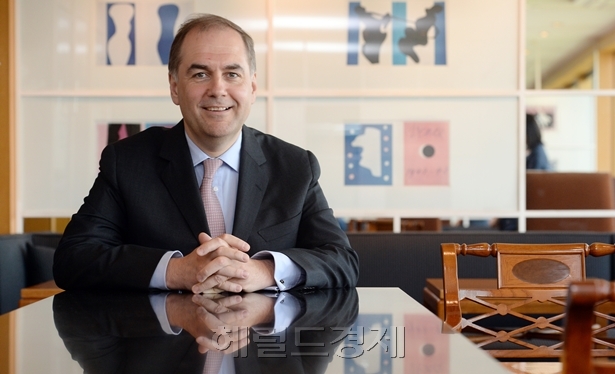
머크의 지분 70%를 소유하고 있는 지주회사 이머크(E.Merck KG)의 요하네스 바일로우 회장은 최근 한국방문 시 가진 코리아헤럴드와의 단독 인터뷰에서 “권한과 책임을 정확히 알고 겸손하게 행동하는 머크가(家)의 DNA가 350년 가족경영의 비밀이다”고 설명했다.
지난해 1월 머크의 12대 회장이 된 그는 최근 삼성의 경영승계 문제가 최대 화두로 떠오르고 있는 것에 대해 “이재용 삼성전자 부회장의 고민을 깊이 이해한다”고 언급했다. 아울러 디스플레이분야 등 향후 삼성과의 파트너십에 대해서도 기대감을 드러냈다.
국민총생산의 80%가 가족기업을 통해 발생하는 독일에서는 가족경영에 대한 선입견이 없다. 오히려 장점이 많은 경영방식으로 인식되고 있다.
외부 투자자들을 의식하는 전문경영인들과는 달리 오너일가는 장기적인 관점에서 투자 결정을 하고 직원들 역시 훨씬 안정감을 느끼며 일할 수 있다는 것이다.
물론 머크와 같은 대기업들이 수세기 동안 치열하게 고민한 경영 및 승계방식이 그 근간을 이뤘기에 가능한 얘기다.
바일로우 회장은 “머크도 설립 초기에는 형제들이 서로 CEO를 하겠다고 다투기도 했다”며 “독일 내에서도 이런 경영권 다툼 때문에 회사 경영이 어려워지는 사례를 적지 않게 볼 수 있다”고 말했다.
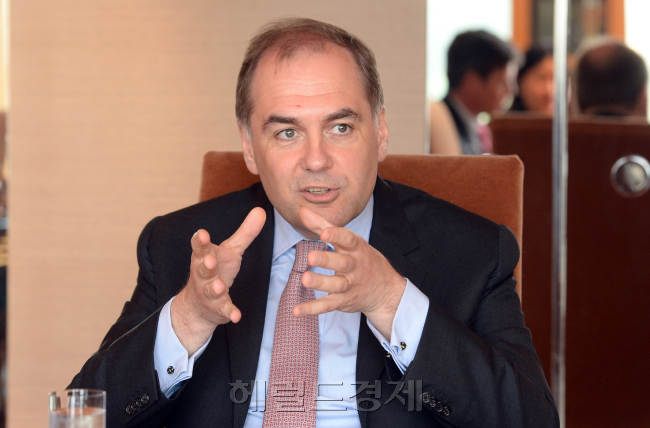
하지만 그는 “이는 어느 기업이든 예외 없이 극복해 내야 하는 자연스러운 과정”이라고 덧붙였다.
머크는 1920년대부터 외부인사를 경영진으로 참여시켰다. 소유와 경영을 철저히 분리하면서 지배구조는 다소 복잡해졌다.
현재 머크가의 후손은 약 200여명이며 이 중 151명이 머크지분의 70% 소유한 주주들이다. 대부분 본업이 따로 있고 배당금을 받고 있다.
지주회사인 이머크는 이들이 출자한 합작회사로 총회를 열어 5년 임기의 가족 대표 10명을 뽑아 가족 위원회를 구성한다.
가족위원회는 다시 머크 후손 5명, 외부 경영전문가 4명 파트너위원회 멤버를 선출한다. 이 파트너위원회에서 머크의 최고 경영진 5명을 다시 뽑는다.
국내에서 대기업 상속자들의 그릇된 행동이 여러 차례 논란이 된 바 있는데 머크 일가는 그 영향력에 비해 호화로운 삶을 지양한다. 특히 가족들은 매년 받는 배당금의 대부분을 회사에 재투자 하고 향후 투자나 인수합병에 힘을 보탠다.
바일로우 회장은 “회사에 투자하는 것보다 더 나은 투자처를 찾지 못했기 때문”이라며 “회사에 영향력을 미치지만 그렇다고 그 영향력을 독점하려고도 하지 않는다. 오너가족들은 그들의 책임과 권한을 정확히 알고 있다”고 설명했다.
승계절차 역시 철저하다.
특별한 경우가 아니면 상속자들이 어린 나이에 회사에 일하는 경우는 거의 드물다. 머크 이외에 다른 기업에서 충분히 경험을 쌓고 경영능력을 인정 받아야 경영에 참여할 수 있고 역시 가족위원회의 과반 이상의 동의를 얻어야 한다.
바일로우 회장 역시 1994년 입사 전까지 IBM 등 다양한 기업에서 근무 경험을 쌓았다.
“회사 직원들은 당연히 오너패밀리의 경영능력에 대한 선입견이 있을 수 밖에 없다. 그 부담을 견디는 건 숙명이다.”
그는 머크의 350년 장대한 역사에서 존재감을 드러내야겠다는 야망은 특별히 없다고 말했다. “나는 한 줄의 알약들 중 하나일지도 모르겠다. 물론 그 한 알이 다른 알보다 덜 중요하다고 이야기할 수도 없을 것이다”
그는 지난 5월 말 머크의 평택 OLED 어플리케이션센터 개소식 참석을 위해 한국을 방문했다. 머크는 디스플레이산업이 유망해지면서 삼성디스플레이, LG디스플레이 등 한국기업들과의 협력을 강화해나갈 예정이다.
/jylee@heraldcorp.com
(다음은 영어기사)
Merck, the modest family
Chairman shares secrets of successful family management over more than 300 years
Merck, the German pharmaceutical and chemical giant, is one of the oldest family-run companies in the world. Since starting as a small pharmacy in Darmstadt in 1668, the company has been controlled by the founding family.
“We do want to have some influence but don’t want to have all the influence. The key to our success is the family knows exactly what its responsibilities are and where to stop,” said Johannes Baillou, chairman of E. Merck KG, the holding company of the Merck Group, and a member of the 12th generation.
The 49-year-old chairman who took office last year visited Korea on May 27 to celebrate the opening of the company’s new OLED application center in Pyeongtaek, Gyeonggi Province.
Amid keen interest in a leadership transition to a new generation at big business groups like Samsung, he unveils some secrets of Merck’s centuries-old successful family management.
Family members of Korean conglomerates sometimes wield undue influence throughout group companies despite their small direct shareholdings.
Their social and economic privileges and the power games among them have often led to skepticism about family management itself.
In Germany, where almost 80 percent of the gross national product comes from family-run businesses, however, family business and corporate management are considered two different things.
Family members do not focus on short-term profits for outside investors. They make an investment decision with a long-term perspective. Employees also feel safer under the strong ownership.
“When family members are close to the founder, they have more important roles to play,” the chairman said, adding that in the early stages, cousins sometimes fought amongst each other to become CEO and Merck was no exception.
“But it is just a natural phenomenon. It’s like a transition from a monarchy to a republican or democratic society. It goes through a completely different process and takes time.”
That’s why the Merck family has poured considerable resources into making a better governance system for centuries. The company separated the ownership and management earlier than others ― since the 1920s ― to secure transparency.
Under a unique dual board system, non-family members constitute the executive board along with family members, while the supervision of the management is put under the control of the family.
“We have managed leadership transition based on trust between the executive board and family board,” said Baillou, who also serves as vice chairman of the family and executive boards.
Of some 200 family members, 151 are shareholders of the company, with their combined shares reaching 70 percent. They are not paid a salary but instead receive annual dividends. Everything they earn from the company is saved within the company.
“We save the money for future investment,” he said. “For family members, there is simply no better investment than leaving all the money within the company.”
In 1995, the company listed the remaining 30 percent shares on the Frankfurt Stock Exchange to create Merck KGaA.
According to him, all the family members have regular jobs and have a far from extravagant lifestyle. It is a well-known story that the Merck family doesn’t own a private jet.
“(Private jets) simply don’t make sense from the business point of view. If you travel in a private jet, you lose contact with the real world,” he said.
One of the chairman’s important roles is training young family members to better understand the business through diverse programs, rather than encouraging them to join the company at early ages.
They can join the executive board when they prove their management competency at other companies and get approval from more than half the family board members.
“Being a member of the executive board is tough and being a family board member is even tougher,” he said. “Other people in the company would think, ‘He is on the board only because he is a family member.’ You have to find a person who can handle this burden.”
Baillou, who studied law at the University of Vienna and business economics at Vienna University of Economics and Business, also worked for companies, including IBM, for years before joining the family board in 1994.
Handling the balance between change and continuity is the biggest responsibility for the chairman, who considers himself as part of a long chain of family leaders in Merck’s 347 years of history.
He also expressed sympathy for Samsung Electronics vice chairman Lee Jay-yong, the heir apparent, who is often quoted as saying: “The largest source of my stress is maintaining that the company as it is today is not enough.”
“I’m just one person like in a string of pills. But none of the pills are more important than others,” he said.
“I don’t need to make my place in history. I may be known for something exceptional by making a huge mistake,” he joked.
Upon the opening of the new 7 million euro ($7.6 million) R&D center in Korea, the chairman renewed Merck’s commitment to the Korean market, home to its key clients such as Samsung and LG. The company is especially pinning high hopes on the soaring display business for their diverse adoption across industries.
“Korea has seen stunning growth over the past decades and Merck is delighted to be part of the success story,” he said.
![“손잡고 함께 산책”…치매 어머니 돌보는 은환씨가 간직한 소원 [온기]](https://wimg.heraldcorp.com/news/cms/2026/09/23/news-p.v1.20260915.2d8e9fa4a0f44e4ca3c7ac86e5362722_T1.jpg?type=h&h=640)
![“용돈은 25만원, 주말엔 임장족”…그렇게 산 금호동 아파트, 2년 만에 8억 올랐다 [경상도 청년의 성동구 입성기②]](https://wimg.heraldcorp.com/news/cms/2026/09/27/news-p.v1.20260923.b4e0040b555744f98c41d6e0cffa1622_T1.png?type=h&h=240)
![“아빠는 다섯명을 살리고 하늘나라로 갔어” 7년 전 그날의 결심…아내도 남편의 마지막 길을 따른다 [온기]](https://wimg.heraldcorp.com/news/cms/2026/09/25/news-p.v1.20260918.9c747ea742d548d08d53a86c08bd9e1b_T1.jpg?type=h&h=240)
![미장이냐 국장이냐…S&P500 vs 코스피, 꼭 따져봐야 할 투자법 [주린이 1억 벌기 프로젝트]](https://wimg.heraldcorp.com/news/cms/2026/09/23/news-p.v1.20260922.32604c39055e4031aed7ec0b27501f81_T1.png?type=h&h=240)









![트럼프 “美정부문서 AI 대신 SI로 바꿀 것…‘슈퍼지능’이 더 정확”[1일1트]](https://wimg.heraldcorp.com/news/cms/2026/09/23/rcv.YNA.20260923.PAF20260923139101009_T1.jpg?type=h&h=320)

![[단독] 고령·치매환자 계좌서 돈 빠질 때 보호자한테 알림 간다](https://wimg.heraldcorp.com/news/cms/2026/09/23/news-p.v1.20260922.e9d536bd902444bf9d77a2f7e81783cf_T1.jpg?type=h&h=320)




![트럼프 “이란 대통령 만날 수 있다”…“쓸어버리는 것도 선택지” 압박[1일1트]](https://wimg.heraldcorp.com/news/cms/2026/09/21/rcv.YNA.20260921.PAP20260921163301009_T1.jpg?type=h&h=320)


![[단독]“텅 빈 상가 수두룩” 장사 얼마나 안되면…정부가 대신 갚아 준 돈 1.8조](https://wimg.heraldcorp.com/news/cms/2026/09/17/news-p.v1.20250310.d7358db8a3174b83b9810913910fb50c_T1.jpg?type=h&h=320)